


Indie developers launch games every day. Most vanish from the Steam storefront within a week – not because the gameplay is bad, but because the visuals did not catch the eye. A screenshot in the store is the first and often the only chance to convince a player to click “Wishlist.” The capsule, the art style, and the overall feeling of the image decide everything before a person even reads the description.
The problem is not that an indie team has little money. Rather, a limited budget often leads to poor decision-making: the style is chosen based on “what our only artist can do” rather than “what works for this game and this audience.” The result is technically correct art that does not sell the game and is not memorable.
This article is about how various indie game art styles are chosen, produced, and scaled without unnecessary losses. It also identifies common pipeline bottlenecks for teams that try to do everything internally.
Why Studios Outsource Art Style and Production
Access to Expertise that is not Available Internally
A concept artist and a technical artist are different specializations. A small team almost never keeps both on staff at the same time. The result: a concept is created beautifully in Photoshop, but when it comes to implementation in the engine, it turns out that the texel density is inconsistent, draw call counts are spiking, and LODs were never even considered. Reworking consumes 20–30% of the sprint budget. An outsourcing partner with an in-house technical artist flags these issues early before the concept is finalized, not after.
Real Economics: Outsource vs. Hiring
A senior concept artist on staff costs $4,000–$7,000 per month plus taxes, equipment, onboarding, and downtime between tasks. An outsource studio takes a fixed rate for the project and scales according to peak load: if you need three artists for two months, you get three artists, without long-term obligations.
Speed at Peak Load
A common scenario: there are three weeks left until Steam Next Fest, and 40 assets need to be closed. One staff artist physically cannot cope. An outsource partner with an established pipeline closes the task on time – precisely because they already have a team that does not require a ramp-up period.
A Fresh Look at Visuals
When an artist works on the same characters for three months, they develop “tunnel vision.” An external team sees the art through the player’s eyes – and often notices a discrepancy between the style and the genre or target audience before it goes public.
Reducing Technical Debt
Incorrect retopology now leads to lag in the game upon release. Incorrectly configured PBR textures lead to bugs on mobile devices. An outsource studio that is geared toward production-ready results integrates technical control into the process rather than leaving it for “later.”
Which Art Styles Work in Indie: Analysis Without Illusions
Before choosing a style, you need to honestly answer three questions: who is your audience, what is your budget, and what is your team (or your contractor) realistically capable of producing in the allotted time.
Pixel Art remains the most accessible entry point, but that does not mean it is “cheap.” Stardew Valley, Celeste, Dead Cells – each of these games invested serious art resources specifically into pixel art. If you create it in a hurry and without a game style guide, the result looks like a collection of assets from an Asset Store, not a game with an identity. The key error: an inconsistent palette and a mismatched scale of props relative to the character. This kills the sense of integrity instantly.
Hand-Drawn style offers high emotional potential (Hollow Knight, Gris, Ori and the Blind Forest), but it also carries the highest production risk. When one artist works on the project, the style remains consistent. When there are three or four of them – without a clear indie art style documentation – a visual mess occurs that is immediately apparent. Fixing this at the end of production costs no less than a full rework.
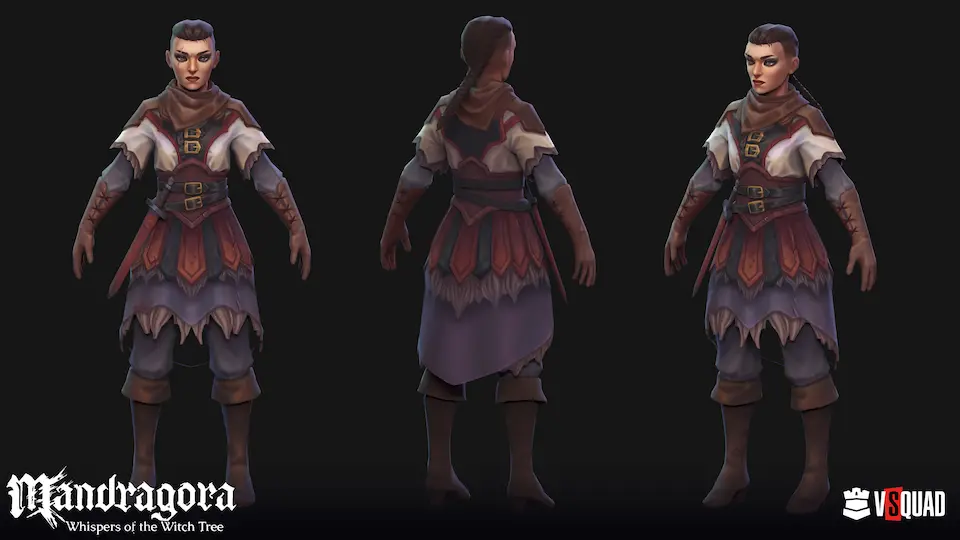
Low-poly 3D is more than just a “budget” option. It is a conscious aesthetic decision that works well for atmospheric games (Firewatch, Astroneer). The main trap: low-poly does not mean “without technical requirements.” Incorrect optimization of a low-poly model on a mobile platform causes the same problems with draw calls as a high-poly asset, unlike more balanced 3D game art styles.
Cartoon/Stylized is the dominant style in mobile and casual games. Clash Royale and Brawl Stars are examples of how a consistent cartoon style becomes part of the brand. For an indie team, this is a risk: the market for mobile game art styles is oversaturated, and it is difficult to stand out without a well-thought-out direction.
Vector/Flat is a minimalist and well-scalable style. It works for puzzles and hyper-casual games. Its strength lies in the simplicity of iteration: corrections are made quickly, and platform adaptation does not require reworking assets.
The specific choice between different game art styles always comes down to one thing: consistency. A game with complete visual unity in any style looks better than a game with “beautiful” assets that do not fit into a single picture.
When we at VSQUAD started a project for an indie team, the first thing the art director did was review existing assets for consistency. In 7 out of 10 cases, the problem was precisely there: the style was formally one, but every artist interpreted it in their own way.
Poly-count and technical limitations for mobile are analyzed in detail in the official Performance Guidelines for Unreal Engine 5 – where the logic of working with draw calls and LOD chains is also described. But knowing the theory and applying it in a pipeline are different things. Unity, in turn, publishes a detailed guide on optimizing art assets for mobile games, which covers UV packing, texel density, and working with PBR textures for limited hardware. Both sources describe the same problem from different sides: art without technical control is not just “unattractive”; it represents direct losses in performance at the finish line.
What Exactly Can be Delegated: Scope of Outsourcing
I often hear: “We are afraid to give art to the outside – what if we lose control over the style.” The fear is understandable, but it is solved not by refusing to outsource, but by the correct scope and process. Here is what is realistically delegable:
| Task | Delegate | Keep Internally |
|---|---|---|
| Art style guide development | Yes - if there is no in-house AD | Yes - if there is a clear vision |
| Character concept art | Yes | - |
| Environment / props concept | Yes | - |
| 3D modeling and retopology | Yes | - |
| Texturing (PBR) | Yes | - |
| Technical Art / optimization | Yes - critical for mobile | - |
| Animation (base set) | Yes | - |
| Final art direction | - | Keep with the team |
| Narrative and game design | - | Keep with the team |
| Marketing materials (capsule, screens) | Yes - often underestimated | - |
Outsourcing covers the production part. The creative direction – the vision, narrative, and “what the game is for” – remains with you. This is a boundary that is important to maintain.
What the Process of Working with an Outsource Studio Looks Like: 6 Steps
For unprepared teams, outsourcing looks like this: “Send the brief → waiting → received → something is wrong → reworking.” For prepared teams, it is different. A professional contractor does not ask for “just a brief” – they lead you through a structured process from task setting to asset delivery.
1. Define Scope and Goals
Before the first call, you need to fix: the target platform (PC / Mobile / Console), the budget for polygons and texture atlases, the deadline by milestone, and the total volume of assets. If this is not done, the contractor will not be able to give an adequate estimate, and you will receive either an inflated quote or an underestimated one that will later come back to haunt you.
At this step, an error is cheap. At the final step, it is very expensive.
2. Research Potential Partners
Filter by domain expertise: not “a studio with a beautiful portfolio,” but “a studio with experience specifically in your type of tasks.” If you need unique video game art styles for mobile – look for cases with mobile optimization. If you need hand-drawn 2D for a console – look for confirmed console projects.
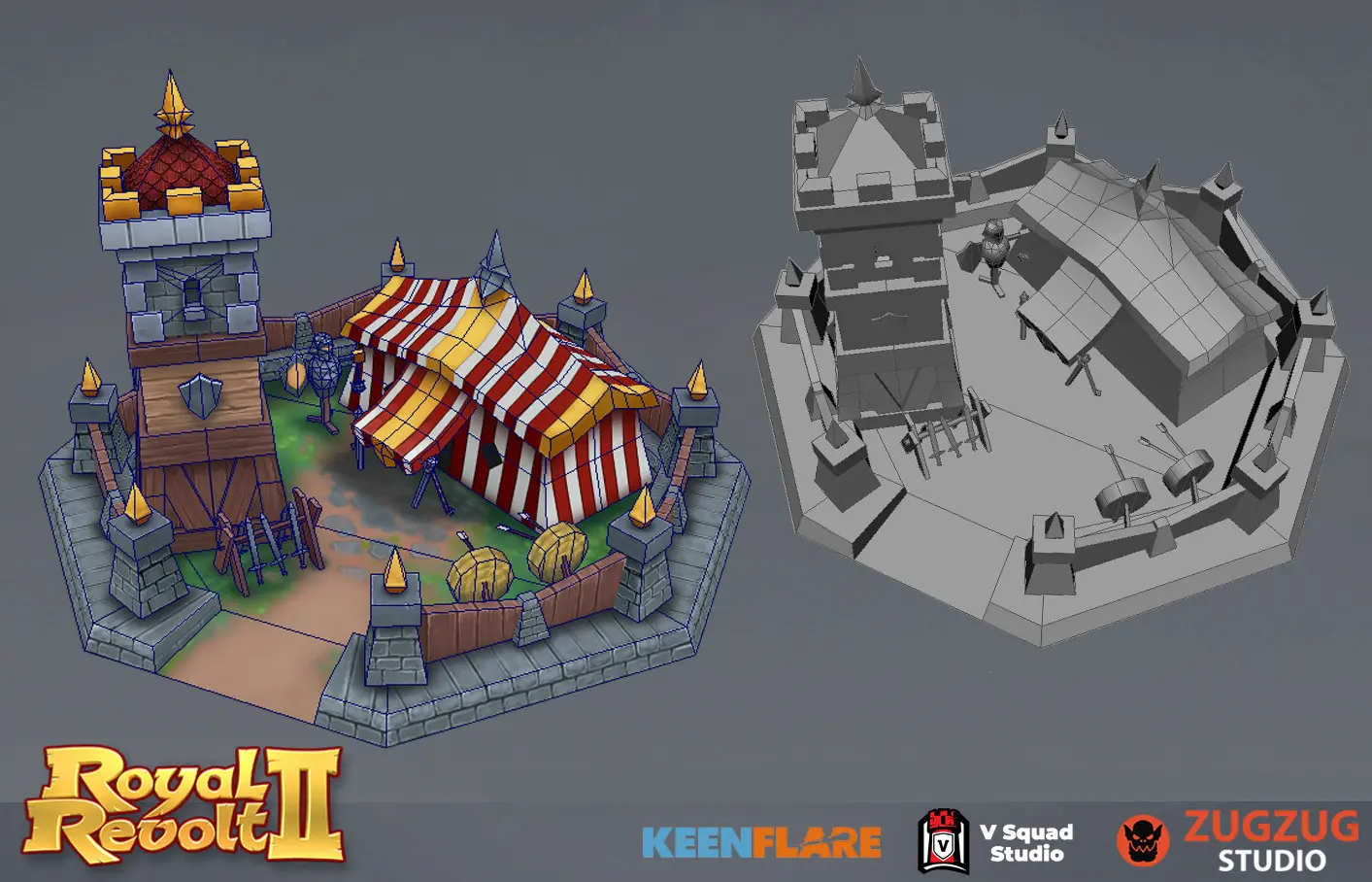
A good indicator: the studio shows not only the final render but also the wireframe, the LOD chain, and the technical specifications of the asset.
3. Evaluate Portfolios and Validate Quality
A beautiful image on ArtStation is not equivalent to a production-ready asset. Check: what the wireframe versions of the models look like, if there are data on polycount in the cases, and if the texel density is maintained. For 2D styles – look at how the assets look in the engine, not just in the portfolio.
Request a test task for a fixed payment – this is standard practice. Any studio that refuses a test without explanation is a red flag.

Fun Fact
Do you know why Minecraft has such a “random” visual? Markus Persson originally chose the voxel style not for aesthetic reasons, but because cubic blocks were technically the easiest to implement alone in a short time. What started as a technical compromise became one of the most recognizable unique video game art styles in history. The right limitation is not always the enemy of good design.
4. Align Expectations and Fix Deliverables
This is where communication breaks down most often. You need to agree on: the delivery format (FBX / OBJ / PSD with layers), the milestone structure with dates, the number of revision rounds, and the handoff format (directly in Perforce or via Dropbox).
At VSQUAD, we integrate into the client’s pipeline – we work in their Jira, their Slack, and their version control system. It is not “we brought the finished product – you deal with it”: every iteration is recorded in the tracker, and the status is visible in real-time. This is exactly how we maintained synchronization with the main team on Wayfinder during the parallel production of several asset packages.
5. Track Progress by Milestones
Regular check-ins are not bureaucracy; they are insurance. Standard: a sync once a week + intermediate deliverables at each milestone (for example: blockmesh → detailing → texturing → final review). If the contractor disappears for two weeks and shows up with a “finished result” – that is not a process; it is a lottery.
A specific control metric: by Milestone 1, blockout versions of all characters with polycounts within the budget must be submitted and confirmed. No blockout – no transition to the next stage.
6. Evaluate Results and Iterate
The final review is not “I like it / I don’t like it.” It is a validation against the originally fixed Technical Specifications: compliance with the style, technical specifications, and completeness of deliverables. If something is wrong, the iteration loop starts immediately, not after a week of correspondence.
A good contractor includes iteration rounds in the contract in advance. A poor one charges extra for every correction because the specifications “changed.”
Do you want to analyze your pipeline before production starts? Get a 30-minute review with the VSQUAD art director – for free.
Novices vs. VSQUAD: Where the Pipeline Breaks
| Situation | Typical Result | With VSQUAD |
|---|---|---|
| No art style guide | Every artist draws "their own thing" - the final art falls apart visually | An art style guide is developed at Stage 1; all assets are validated against it |
| Concept without technical limits | +20–25% time for refinement during implementation, missed milestones | A tech artist checks the concept before finalization - draw calls and LOD strategy are determined in advance |
| Freelancer for everything at once | One person cannot be an AD, a concept artist, and a technical specialist at the same time | An art director + concept artist + technical artist work synchronously within one contract |
| No milestone structure | The client sees the result at the end and starts reworking. Deadlines shift by a month+ | The milestone structure is fixed in the contract. Intermediate deliveries are mandatory |
| Communication "by email" | Corrections are lost, versioning breaks, nobody remembers who agreed to what | We work in the client's system: Jira, Slack, Perforce - tracking iterations in real-time |
The art production launch checklist for indies: art style guide structure, technical limits by platform, milestone plan template.
About Us
VSQUAD Studio has been operating since 2015, specializing in art outsourcing for game studios – from indie teams to AAA publishers. We cover the full cycle: from concept art to production-ready 3D assets, animation, and VFX. In 10 years, we have completed 50+ projects, including Wayfinder, Darksiders Genesis, Battle Chasers, Ruined King, and SMITE.
Our services for 3D characters and 3D environments are not just “finished in Photoshop.” These are assets assembled with your engine, platform, and polygon budget in mind.
We integrate into the client’s pipeline within 48 hours. We work in your version control system, your task tracker, and according to your milestones. In 2024, we received the Consumer Choice award as one of the leading providers of complex art services in game development.
FAQ
Developing a specific set of video game art styles or an art style guide costs from $800 to $2,500 depending on the depth of the study. A concept for one character costs from $150 to $600. A full art package for a mobile game (10–15 characters + UI) starts from $5,000.
The final figure depends on three factors: the complexity of the style (hand-drawn is more expensive than pixel), the number of iterations in the contract, and the presence of technical documentation at the start. The more specific the brief, the more accurate the estimate and the fewer unexpected extra payments.
Full rights to all final assets are transferred to the client after the final payment under the contract. This is a standard condition – it is written explicitly, without ambiguity. Intermediate versions and source files (PSD, ZBrush, Blender) are handled by a separate agreement.
What is important to clarify in advance:
– Are source files included in the deliverables
– Can the assets be used in sequels / ports
– Can the studio use the work in its portfolio (standardly – yes, unless there is an NDA)
The number of revision rounds is fixed in the contract before the start of work. Our standard: 2–3 rounds of corrections for each milestone. Corrections within the Technical Specifications are free. Corrections that change the originally agreed scope are discussed separately.
The most frequent source of conflict is corrections that appear because the specifications were not fixed in sufficient detail. Therefore, we spend time clarifying the brief at the beginning, rather than dealing with the consequences at the end.
Deadlines are fixed in the contract with a link to specific milestones. If VSQUAD does not meet the agreed deadline through our fault, it is a matter of compensation specified in the contract. This is not a “we will try,” but an obligation.
In practice: the milestone structure allows for the discovery of a delay at an early stage, rather than three days before the release. This is why we insist on intermediate deliveries rather than a scheme where “we submit everything at the end.”
We adapt to your tools, not the other way around. We work in Jira, Trello, Notion, Perforce, Git LFS, Slack, Discord – depending on what you use. Onboarding takes no more than 48 hours.
We do not bring “finished work and leave” – iterations, versioning, and intermediate approvals go through your channels. This eliminates the “we did not know what they were doing” problem at the final review.
Yes. Among our clients are teams of 2–3 people who were funded through Kickstarter or Epic MegaGrants. The minimum entry threshold for a budget starts from $1,500 for a separate package of assets. We understand that an indie team has no buffer for reworks, so we pay special attention to the clarity of the specifications and the milestone structure from the very beginning. You can see our experience working with indie projects in our portfolio.
Choosing the Right Video Game Art Styles for Your Success
The choice of video game graphic styles is not an aesthetic decision. It is a production and marketing one. The right style, implemented in compliance with technical requirements and visual consistency, is what distinguishes a game that is noticed from a game that is forgotten at the first screen.
Attempts to close the entire art pipeline within a small team almost always lead to one of three things: a missed deadline, technical debt, or visual mess. Not because the team is bad, but because the scale of the task does not match the resource.
Outsource = reduction of production risks and a predictable result at every milestone.
VSQUAD = a contractor that integrates into your pipeline in 48 hours, maintains a technical standard through an Art Director + Tech Artist + concept artist in one team, and delivers production-ready assets, not just beautiful renders.
Are you ready to discuss your project? Contact us → 📩 head@vsquad.art or schedule a call.
Get in touch
Got a project in mind? We usually reply within a day.