


Imagine this: a studio spent three months modeling a character, only to find out later that it does not fit into the overall visual universe of the game. A redo is required. Losses occur. The deadline is pushed back. Yet, a single professional concept art session at the very beginning could have prevented all of this.
When people ask what is a concept art, they need to understand it is not just pretty pictures created before development starts. It is a tool that saves money, synchronizes the team, and sets the visual tone for the entire project. Without it, developers are moving blindly. With it, they know exactly where they are going.
What is concept art in practice, how is the process of its creation organized, and why does your project risk sliding into chaos without it? We will cover all of this below.
Concept Art Meaning: What it Really is
Let’s try to understand the concept itself. The concept art meaning is not about a beautiful picture on the wall. It is about function.
A formal concept art definition sounds like this: a visual representation of an idea before its implementation into the final product. It is a working tool, not an art gallery. It is a sketch that helps a team of 30 people speak the same language – designers, programmers, animators, and a producer with a roadmap.
It is important not to confuse this with “conceptual art” – a movement in modern art where the idea is more important than the form. What does concept mean in art within the context of gamedev is all about application. Art exists so that production can move forward. Without it, every team member will imagine the game world in their own way, and in the end, you will get a collection of unrelated assets instead of a game.
According to the authoritative industry publication Game Developer, concept art is the visualization of something that does not yet exist, used to define the overall look & feel of a project at the start. It is hard to argue with that.
Concept Artist Meaning: Who These Specialists are and What They Do
What is a concept artist? This is a question that sounds simple, but the answer is much deeper than “a person who draws.”
The concept artist meaning refers to a specialist at the intersection of visual art, narrative thinking, and production logic. They do not just create beautiful images. They solve problems: how should a villain look so that the player understands at first glance that they are a threat? What is the silhouette of a sword that remains readable against a dark background? How can the atmosphere of a post-apocalypse be conveyed through the color palette of a location?
The concept artist definition describes a role that handles the following in practice:
– Studying the brief, genre, and target audience.
– Gathering reference libraries and mood boards.
– Generating a multitude of quick sketches – specifically a multitude, not just one.
– Going through iterations with the art director.
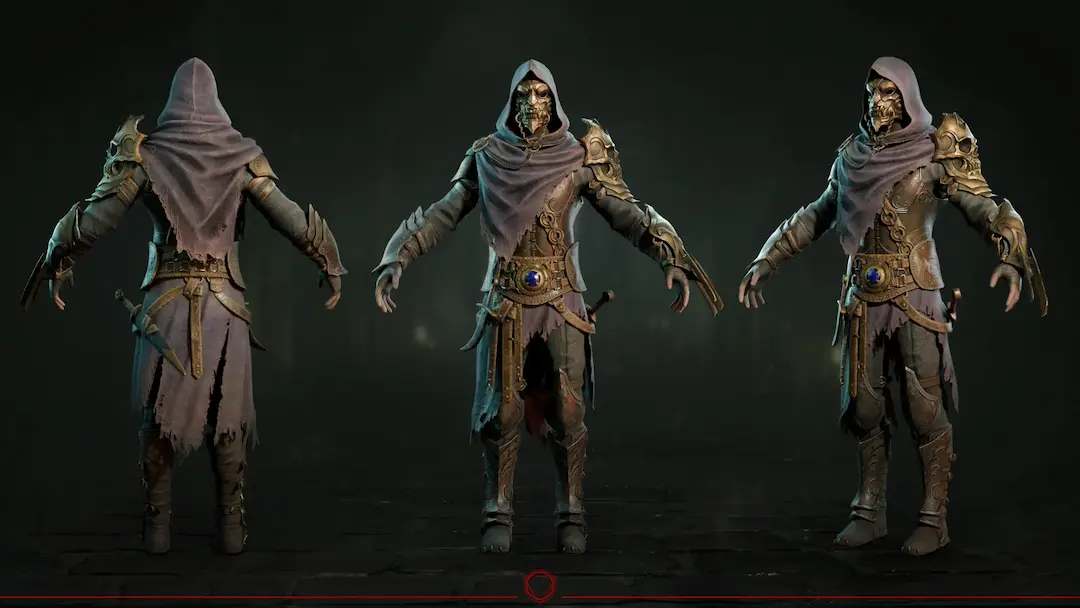
– Creating final concepts with annotations for 3D artists and animators.
– Maintaining visual consistency throughout the entire project.
So, what do concept artists do in a large studio? They might be narrow specialists focusing only on characters or environments. In an indie setting, it might be one person for all tasks at once. And this is where the client’s primary pain points emerge: hiring one good concept artist who draws characters, environments, and props equally well is practically impossible. The market is not structured that way.

Fun Fact
The first concept artists appeared not in gamedev, but at Disney in the 1930s and 40s. Mary Blair created visual concepts for Peter Pan and Alice in Wonderland – bright, almost abstract images that set the emotional tone for the animation. Gamedev adopted this practice half a century later, and now no major project can do without it.
Concept Art Process: From Idea to the Final Concept
The concept art process is not a linear path. It is a loop of iterations, and the sooner you understand this, the calmer your nervous system will be during production.
1. Research and Reference Gathering
Before the first sketch, the artist spends time immersing themselves in the context. This involves real photos, historical sources, competitor analysis, and studying stylistic trends. Without this stage, concepts turn out generic – beautiful, but soulless. A recognizable style is born from a deep understanding of sources, not from a vacuum.
2. Quick Sketches and concept sketches
A concept sketch definition is a rough, quick draft used to test an idea. It is not the final version or a presentation for the client. It is a tool for thinking. At this stage, the artist generates dozens of options: different silhouettes, proportions, and poses. What are concept sketches in a working pipeline? They are a way to cheaply test a hypothesis before investing hours into detailing.
As noted by Game Developer in their material on concept and production planning, value sketching – working with light and shadow in early sketches – allows for a quick assessment of emotional tone and composition without diving into details. Iterating on a sketch is incomparably cheaper than redoing things already in production.
3. Iterations and Feedback Loops
The first concept almost never becomes the final one. And that is normal. The art director provides comments, the game designer points out functional contradictions, and the producer reminds everyone of technical limitations. The artist refines it. Again. And again.
The problem arises when a team does not build a structured iteration process. Then, edits come in chaotically, the concept changes endlessly, and the deadline is already tomorrow.
4. Detailing and Color Pass
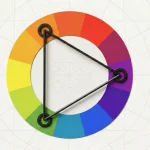
Once the form is approved, work begins on materials, textures, and color. How does metal reflect light? How does leather wear out? Annotations are added for 3D artists: scale, texture, and characteristic details. This is not just “painting it pretty” – it is a technical document for the next link in the pipeline.
5. Final concept artwork
The finished concept artwork is not just a picture for an artbook. It is a working reference that the modeler, texture artist, and animator will work with for weeks. The quality of the concept directly affects the speed and accuracy of all subsequent production.
Technical Concept Art Deliverables: Production Checklist
This table outlines the essential components included in a professional concept art hand-off package that were not detailed in the main text.
| Deliverable Type | Key Components Included | Primary Recipient | Production Purpose |
|---|---|---|---|
| Character Turnarounds | Front, side, and back views (A-pose or T-pose) in orthographic projection. | 3D Modeler | Ensures accurate proportions and silhouette from all 360 degrees. |
| Material Callouts | High-detail "zoom-in" spheres showing texture (e.g., weathered leather, oxidized copper). | Texture/Surfacing Artist | Defines physical properties like roughness, glossiness, and wear patterns. |
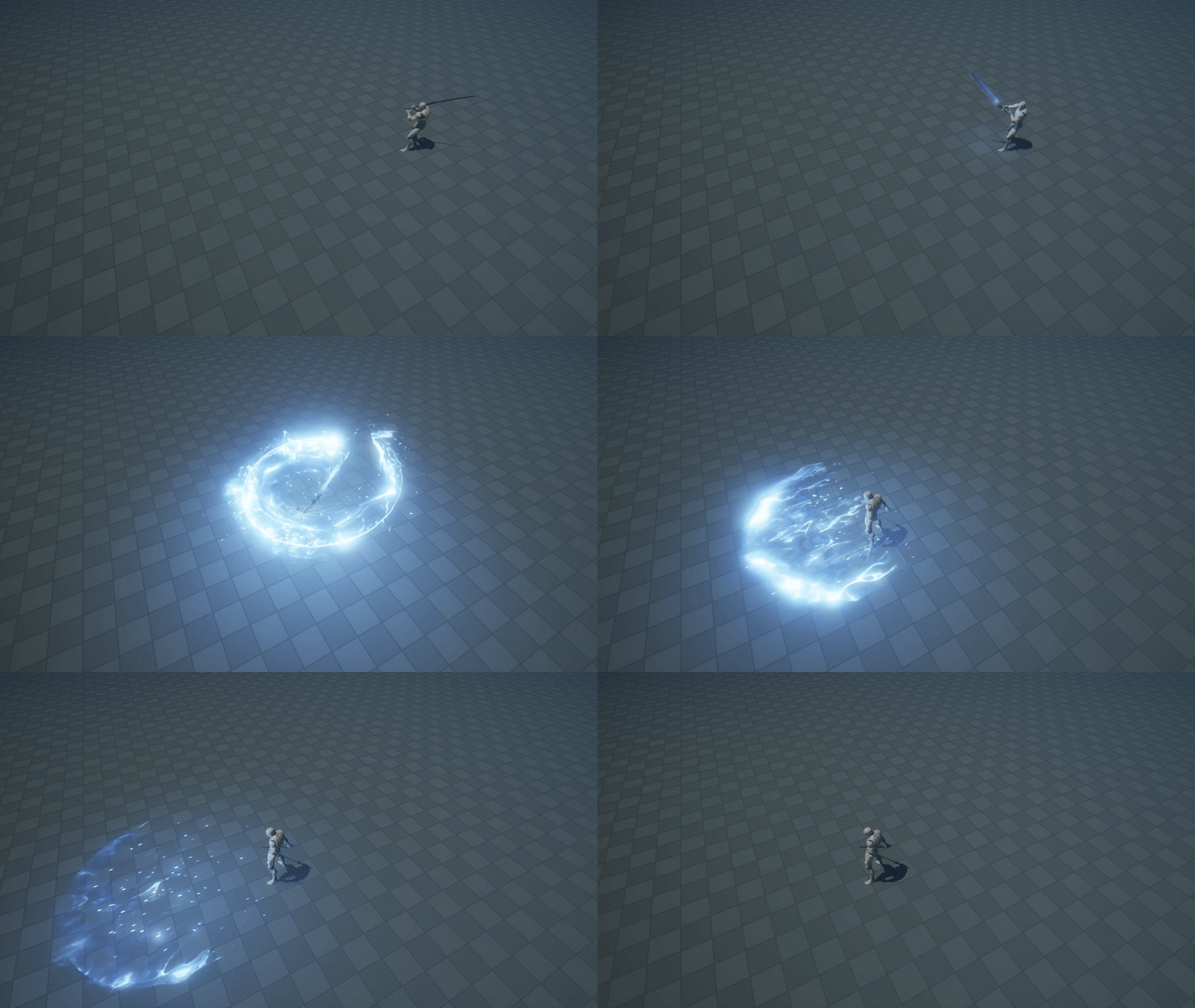
| VFX & Logic Sheets | Frame-by-frame sketches of magic effects, muzzle flashes, or mechanical deployment. | VFX Artist / Animator | Provides a blueprint for particle behavior and mechanical movement logic. |
| Prop Breakdowns | Exploded views of complex items, showing internal parts or hidden mechanisms. | Prop Artist | Clarifies how an object functions and how it should be constructed in 3D. |
| Lighting Keys | Mood paintings showing the same environment under different conditions (Day/Night/Fog). | Lighting Artist / Level Designer | Sets the technical parameters for engine-based lighting and atmospheric effects. |
| Paint-overs | Artistic layers applied over "greybox" or low-poly 3D models from the engine. | Environment Artist | Bridges the gap between raw level design and the final artistic vision. |
Types of Concept Art: What Exactly Concept Artists Draw
The types of concept art in gamedev cover practically all visual elements of a project.
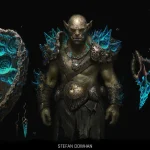
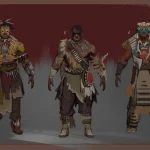
Characters are the most recognizable type. The concept art examples here are vast: from Geralt in The Witcher to the characters of Final Fantasy. The task is to convey personality, history, and a role in the narrative through visuals. Every detail of the costume, the proportions of the body, and the facial expressions are not accidental.
Environments and Locations define the atmosphere of the world. Post-apocalypse, fantasy, cyberpunk – it all starts with location concepts that set the emotional tone before the player even takes their first step.
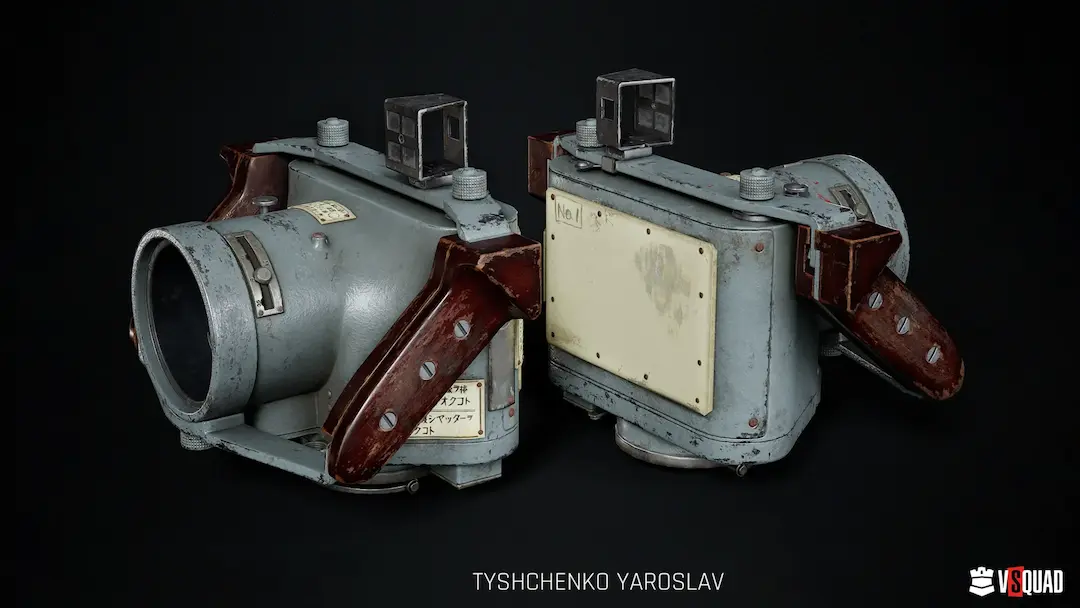
Props and Weapons – here, the concept artist thinks like an engineer. This includes cross-section sketches, joint diagrams, and movement trajectories. A prop concept defines the scale, material, and function of an object.
Vehicles and Technology are especially important for military, sci-fi, and racing games. Hard surface work requires precise silhouettes and logical construction.
UI/UX Design – yes, this is also concept art. The design of menus, icons, and HUD elements is designed just like a character.
Concept Art Style and Style Guide: Why They are Not the Same
The concept art style is the visual language of a specific project. Realism, stylization, pixel art, cel-shading – the choice of style determines everything: from the workload on artists to the expectations of the audience.
The concept art design must be documented in a style guide. This is a document that fixes this language. It includes color palettes, principles of form construction, rules for working with light, and acceptable deviations. Without a style guide, a team of five artists will draw five different games.
This is exactly where studios without experience regularly stumble. They start without a guide, thinking “we’ll figure it out as we go.” Later, they discover that locations from different levels look as if they belong to different projects. Redoing things at the production stage costs money. A lot of money.
How to Create Concept Art: A Real Look at the Process
How to create concept art is a question often searched for by people who have recently discovered the topic. And the honest answer is: it is a long, iterative process that requires a strong foundation in drawing, color theory, and narrative thinking.
Concept art for beginners often starts with a mistake – trying to draw detailed final concepts right away. In reality, you first learn a readable silhouette, then form, then light. And only then, the details.
Learning how to be a concept artist in gamedev is also about the ability to work in a team, listen to the art director, and iterate quickly. Technical skill is a necessity, but it is not sufficient on its own.
A concept drawing definition is any sketch whose goal is not beauty, but the communication of an idea. This is the fundamental difference from illustration: concepts are created for production, not for an exhibition.
About Us
VSQUAD Studio is a full-cycle outsource studio founded in 2015. Over 10 years, we have gone through hundreds of concept art iterations, dozens of projects, and many situations where strong concept artwork saved production from chaos. We have worked on Wayfinder, Darksiders Genesis, Ruined King, SMITE, and many other projects. We can connect to your pipeline within 48 hours with a team of artists, animators, and technical specialists. Our work has been presented at Steam Festival and Gamescom Latam, and our projects have received funding from Epic MegaGrants.
Concept art is exactly the point where we begin helping teams build a visual identity before expensive production starts.
FAQ
Concept art is created for the production process – it is a working document for the team. An illustration is an independent work for an audience. A concept can be rough and schematic if it accurately conveys an idea to a modeler or animator.
A specialist who translates textual ideas and descriptions into a visual language. They work at the intersection of creativity and technical documentation: their concepts become references for 3D artists, texture artists, and animators.
Yes. Even a small team benefits from a clear visual direction. A concept allows you to avoid expensive redos during production and helps the team work in sync rather than “everyone according to their own feeling.”
In a professional pipeline, three to eight iterations before approval is normal and built into the process. Attempts to cut iterations to save time usually have the opposite effect: the final result is worse, and edits arrive during the modeling stage.
Analyze competitors, the target audience, and technical limitations. The style must match the genre and mechanics: horror requires one visual language, while casual mobile games require a completely different one. A style guide fixes the chosen language and is mandatory when working with a team of two or more artists.
Not only can it be done – it is often more efficient than keeping in-house concept artists. An outsource studio with an established pipeline provides stable quality, fast iterations, and the necessary volume without the overhead of maintaining a permanent team. The main thing is to choose a studio with a real portfolio in your genre.
Why Professional Concept Art Design is the Foundation of Your Project
Concept art is not a “nice bonus” to production or an expense item that can be cut. It is the point where all key visual decisions of the project are made. Dealing with them at the sketch stage is significantly cheaper than redoing finished assets.
Want to build the right concept pipeline the first time? Contact us → 📩 head@vsquad.art or schedule a call.
Get in touch
Got a project in mind? We usually reply within a day.