


The mobile market looks tempting. Two stores, billions of devices, a relatively low barrier to entry. But behind this facade hides one of the most brutal production landscapes in the gaming industry.
Android device fragmentation – over 24,000 unique configurations according to the Android Compatibility Definition – turns a mundane “port” into months of technical hell. This makes Android mobile game development particularly complex due to device fragmentation.
iOS, for all its closed nature, hits differently. The App Store Review requires compliance with dozens of technical metrics, and a single critical bug at the last minute can wipe out months of work.
Studios taking on mobile development on their own for the first time regularly face the same set of problems: a build takes 6 hours instead of one, tests on real devices reveal crashes three days before submission, and optimizing draw calls turns into a separate two-week sprint.
For a studio without an experienced Android game developer, these are not exceptions – this is the standard scenario without a properly structured pipeline.
In this guide, we provide no-nonsense insights into how mobile game development works on Android and iOS from the inside, exactly where the process breaks down, and why an outsourced Android game development studio mitigates most of these risks before they turn into financial losses.

Why Studios Outsource Android and iOS Development
Access to Niche Mobile Expertise Not Available In-House
The fields of Android game development services and iOS game programming are two separate engineering disciplines that are not interchangeable. A good PC Unity developer is not equivalent to a mobile optimization specialist.
Working with the Metal API on iPhone, configuring Vulkan for Android mid-range devices, and understanding the thermal constraints of a SoC are skills built over years of working on specific projects. Hiring such specialists into an in-house team for the sake of a single title is economically impractical.
Economics: Outsourcing is 30–50% Cheaper Than In-House Hiring
Real market figures for 2024–2025: maintaining a single mid-level mobile developer in Western Europe or the US costs $8,000–$12,000 per month, including taxes and overhead.
An outsourced Android game development company with a streamlined process covers the same volume of tasks for $4,000–$7,000. On a project lasting 8–12 months, the difference becomes critical for the budget.
Speed and Scalability for Sprints
Mobile production thrives on peak workloads: before a release, during live events, or when updating for a new OS version. The in-house team is either overloaded or idle.
An outsourcing partner, acting as a dedicated iOS game development company, scales resources for a specific milestone – without the hiring and onboarding that typically takes 4–8 weeks.
Fresh Perspective on Technical Solutions
A team that has been working on a single project for years inevitably accumulates “technical blindness.” Decisions made 18 months ago are no longer optimal for current versions of the Android/iOS SDK, but no one inside notices this.
Partnering with external iOS game development companies brings fresh, up-to-date practices – this literally means less legacy code and less technical debt in production.
Reducing the Risk of Technical Debt
Without experience on a specific platform, developers make “working” decisions that become a problem six months later: improperly organized asset bundles, lack of LODs for low-end devices, textures without proper compression (ETC2/ASTC).
Fixing this in production costs 3–5 times more than if it had been taken into account initially.

Why Mobile Production Breaks Down Without a Systematic Approach
Most problems in mobile development occur not at the coding stage – they are established during the architectural decision phase. Here is exactly where.
Draw calls and batching. On mobile GPUs, unlike desktop, the draw calls budget is strict: more than 100–150 per frame on an average Android device, and the FPS begins to drop. Teams coming from PC development regularly ignore this until the final stage. The result: an extra 3–4 weeks spent on refactoring shaders and rebuilding atlases right before the release.
Android fragmentation. A device that works perfectly on a Pixel 8 might crash on a Xiaomi Redmi Note 10 due to different implementations of OpenGL ES or Vulkan. Without a farm of real devices (or a service like Firebase Test Lab), these problems are discovered only after publication in Google Play – leading to poor reviews and a drop in rating.
App Store Review. Apple rejects builds for 10–15 different reasons, some of which are far from obvious: usage of private APIs, an incorrect Privacy Manifest, or screenshots that do not match actual gameplay. Each rejection means 1–3 business days for fixes and re-evaluation. For a studio without experience in iPhone game development services, this literally means a blown launch window.
Memory optimization. iOS strictly limits available RAM: on an iPhone SE, it is around 1.4 GB before a system kill occurs. Textures without a proper mipmap chain and audio without streaming are the first candidates for an OOM (Out of Memory) crash. This can only be caught on real devices, not in a simulator.
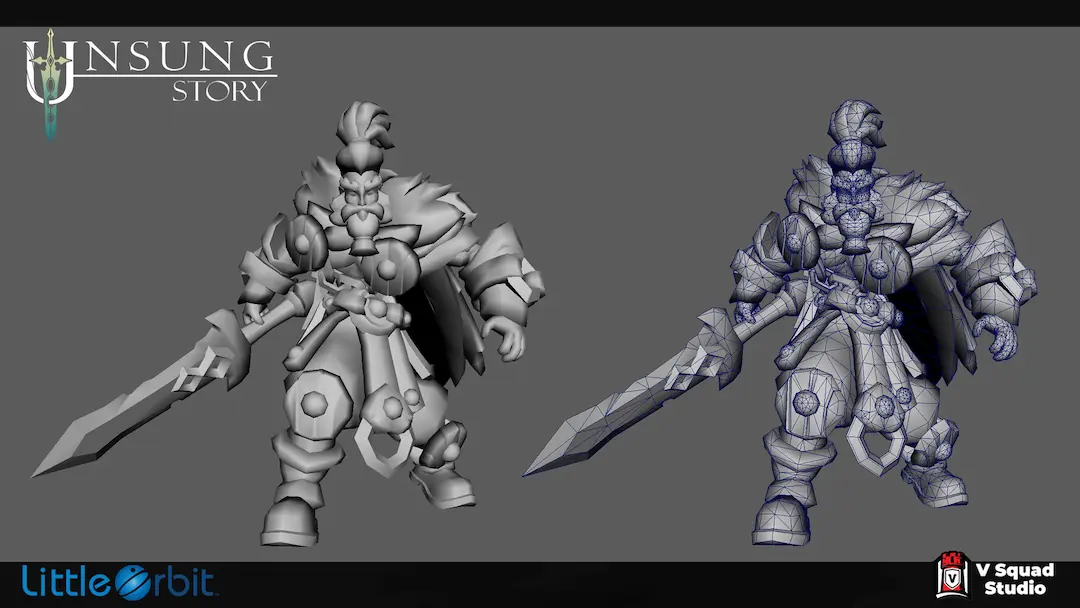
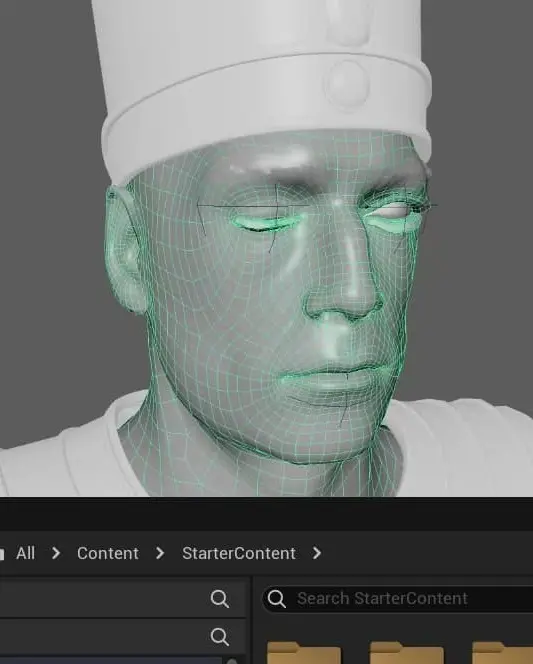
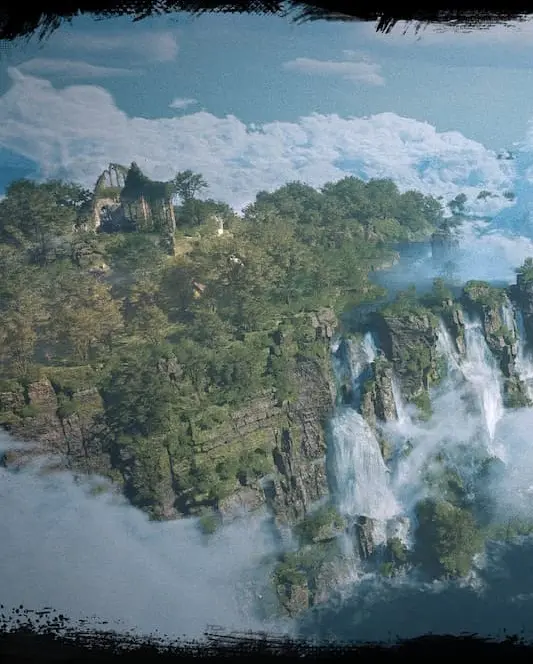
On the Wayfinder project, our team worked with 200+ characters and game assets, where proper configuration of LODs and texture budgets was critical from the very first stage – any miscalculations in these decisions would backfire during the integration phase. That is why a Tech Artist is present in the VSQUAD team from the very start of the task, rather than being brought in “when everything has already broken down.”
For indie studios, the picture is just as acute. Our experience working with indie teams shows that the primary pain point is not a lack of talent, but a lack of platform-specific knowledge, which is not passed down through documentation in this industry. It is passed down through completed projects.

Fun Fact
According to the Unity 2024 Mobile Growth and Monetization Report, the average mobile game loses 77% of its active players within the first three days after installation. At the same time, games with a higher frame rate (stable 60 FPS versus unstable 30) show 15–20% better retention. Technical metrics directly affect business outcomes – this is not an abstraction for developers, but a hard number for the producer.
What Exactly Can Be Delegated to an Outsource Partner
A clear understanding of the scope eliminates half of the fears of outsourcing. When providing Android game development services, here is what is actually transferred to an external team without losing control:
– Unity development (mobile optimization) – configuring the render pipeline, profiling, working with URP for Android/iOS
– Unreal Engine development for mobile – adaptation for mobile GPUs, disabling or replacing Lumen/Nanite with mobile-friendly rendering alternatives for low-end devices
– Technical integration of game mechanics – implementing monetization systems, push notifications, and analytics (Firebase, GameAnalytics)
– Asset optimization – texture compression (ETC2/ASTC/BC7), setting up LODs, working with asset bundles and addressables
– Device testing – QA on real Android/iOS devices, crash reports, performance benchmarks
– Porting – transferring an existing PC/Console game to mobile platforms with UI/UX adaptation for touch, executed by an expert iPhone game developer
– Store publication – preparing App Store Connect / Google Play Console, passing the Review process, basic ASO setup
– Support and updates – patching for new versions of iOS/Android, handling crash reports from Crashlytics/Firebase
What is better left in-house: strategic product decisions, monetization logic, communication with the publisher, and control over the final QA decision for the release.
Bring your game to market with a bulletproof production pipeline.
From initial technical specifications to seamless store submission, we handle the heavy lifting while you maintain full creative control.
How the Process of Working with an Outsource Studio Looks: 6 Steps
A professional contractor offering iOS game development services alongside Android solutions is not just a matter of “hand over the brief and wait.” It is a structured process with fixed control points, where you see progress at every stage instead of just receiving a final build three months later.
1. Define: Determining the Scope and Technical Constraints
Before work begins, everything is fixed: target platforms (Android API level, minimum iOS version), target devices (mid-range or flagship), polygon and texture budgets, milestone deadlines, and the technical stack (Unity / Unreal / Godot). Without this document, any timeline estimate is just guesswork. In practice, this stage takes 2–4 business days and concludes with an agreed Tech Spec document.
The problem without this step: the team begins development based on assumptions rather than the actual constraints of the platform. The consequence is iterations of rework in the final stages that no longer fit into the deadline.
2. Research: Validating the Partner’s Domain Expertise
When you look to hire iOS game developer talent or choose an Android studio, the selection criteria should go beyond just a portfolio. Look at specific case studies on the target platform: did they have projects published in the App Store and Google Play? Is there a Technical Artist with mobile experience on the team? Have they worked with Firebase, Unity IAP, Adjust, or other SDKs required for your project? A good sign is when a studio asks questions about the target device tier during the briefing stage rather than after work starts.
3. Review: Evaluating the Portfolio Against Technical Requirements
Beautiful screenshots are not an indicator. Request wireframes, the polycount of final assets, and examples of optimized builds. For iPhone game development companies, it is critical: do they have builds that passed App Store Review without a rejection? For Android – tests on mid-range devices (Snapdragon 680, Dimensity 700)? A good studio will show not only the final art but also technical metrics: FPS on the target device, draw call count, and build size.

4. Align: Agreeing on Deliverables and Milestone Structure
At this stage, the contractor and the client fix the submission format for each milestone: what exactly will be delivered (APK / IPA / source code / documentation), in what format, and with what acceptance criteria.
At VSQUAD, every contract contains a milestone plan with specific dates and acceptance criteria – not “we will get it done by the end of the month,” but “by the 15th – a reproducible build on two devices of different tiers with measured FPS.” This protects both sides from vague expectations.
We integrate into the client’s Perforce/Jira/Slack within 48 hours – we do not just deliver a “finished product for you to figure out,” but work within your process from day one.
5. Monitor: Controlling Progress via Milestone Points
Weekly check-ins are not a formality; they are points for early risk detection. If at step 3 of 6 it turns out that the texture budget is too low and this jeopardizes the iOS release, this should become known in week 4, not week 12. In our process, this is tracked on a shared board (Trello/Jira), where the client sees the status of every task in real time. The performance profile (FPS, memory footprint) is captured at every milestone, not just at the end.
6. Evaluate: Final Review and Iterative Cycle
After delivering the final build, verification is conducted against the original Tech Spec: compliance with the FPS budget, APK/IPA size, and passing the Review guidelines of both platforms. If the parameters do not align, an iteration loop is initiated, rather than a simple “here is what we got.” At this same step, the post-production plan is established: who supports the project after launch, how quickly critical bugs are resolved, and how the roadmap for updates under new OS versions is structured.
Novices vs VSQUAD: Where the Process Actually Breaks Down
| Situation | Typical Error Without Experience | How It Is Solved at VSQUAD |
|---|---|---|
| First Android build | Testing only on flagships; crashes on mid-range come as a surprise | QA on devices of various tiers starting from the first milestone |
| App Store submission | Privacy Manifest filled incorrectly, resulting in a 3-day rejection | The App Store Review checklist is integrated into the process, not checked "at the last moment" |
| Texture optimization | ETC2 vs ASTC vs PVRTC - taken "as is", leading to a 400MB build bloat | Compression for the platform is defined at the Define step, not at the end |
| SDK integration | Firebase + Adjust + IAP conflict, causing the build to freeze | A proven integration stack with documented configurations |
| Draw calls | 300+ draw calls on mid-range = 20 FPS, discovered a week before release | The performance profile is captured at every milestone, not at the end |
| Deadline | Just a little more" - and the launch window is missed | A milestone structure with fixed dates secured in the contract |
Get a free 30-minute technical review of your mobile pipeline with the Art Director of VSQUAD.
We will break down the scope, point out technical risks, and tell you what can realistically be outsourced – with no obligations.
About VSQUAD Studio
VSQUAD is a full-cycle outsource studio founded in 2015. 10 years, 50+ projects, and clients from the US, Norway, Germany, Mexico, and over 15 other countries. We provide professional iOS game development services on Unity, Unreal Engine, and Godot – with a full cycle from game mechanics to store publication.
The team on a project is not just one developer doing “everything.” It consists of an Art Director + Technical Artist + platform-specific developers working synchronously within your pipeline. On Wayfinder, we delivered 200+ assets with a properly structured LOD layout and texture budgets from the very first milestone. On indie projects, we helped teams pass the App Store Review without a single rejection.
Within 48 hours, we integrate into the client’s Jira/Slack/Perforce. The milestone structure, timelines, and deliverables are fixed in the contract – no “we will figure it out as we go.”
We received the “Consumer Choice 2024” award from an independent international industry analytical group.

FAQ
A basic hyper-casual title with a single mechanic starts from $15,000–$25,000. A mid-core game with monetization, multiple modes, and a full SDK stack costs $60,000–$150,000+. The cost depends on the scope, platform (Android, iOS, or cross-platform), and the complexity of the mechanics and graphics.
Broad benchmarks by project type:
– Hyper-casual (1 mechanic, minimal art): $15,000–$30,000
– Casual/mid-core (Unity, 2–3 modes, F2P monetization): $40,000–$90,000
– Narrative/RPG mobile game (full cycle, voice acting, content): $100,000+
An exact estimate comes after the Tech Spec. Without it, any number is just guesswork.
We work with Unity (mobile and cross-platform optimization), Unreal Engine (high-performance mobile projects), and Godot (2D/3D indie projects). The choice of engine is discussed at the Define stage based on the scope, budget, and target platforms.
Additionally, if you already have a codebase on one engine and want to port it to mobile, we take on porting without a full rewrite, provided the architecture allows it.
All rights to the work results are transferred to the client in full upon final payment for each milestone. This is explicitly stated in the agreement – no hidden licenses, no “rights to use,” but an absolute transfer of rights. Source code, assets, documentation – everything is yours.
The milestone structure is fixed in the contract with specific dates and acceptance criteria. If a milestone is not completed on time due to the studio’s fault, the next period of work is provided with task prioritization. In practice, 90%+ of our projects are delivered within the agreed schedule because risks are discovered at step 2–3, not at the end.
Within 48 hours of signing the contract, we access your Jira/Trello/ClickUp, connect to Slack/Discord, and set up access to the repository (GitHub/GitLab/Perforce). We do not send files via email; we work within your toolset. The frequency of sync calls is agreed upon: at least weekly, and more often during active sprints.
Yes. A significant part of our portfolio consists of indie projects. For smaller teams, we offer a modular engagement: you can start with a specific scope (for example, only optimization and preparation for store submission) without a full-cycle contract. Several games from our indie portfolio received funding through Epic MegaGrants and were featured at the Steam Festival.
Mobile Production Without Sacrifices: How It Works
Outsourcing Android and iOS game development is not a matter of “handing everything over and forgetting it.” It is a structured reduction of risks: technical debt, missed deadlines, and App Store Review failures. When a team lacks a specialist with experience in 20+ mobile releases, it is better to lease this experience than to acquire it at the expense of your own project.
VSQUAD eliminates these hazards through a well-tuned milestone pipeline: a Tech Spec at the start, a Performance Review at every milestone, device farm QA before the final build, and a team comprising an Art Director + Tech Artist + developers – not just a single executor for “everything.”
Outsourcing = predictable mobile production without hidden risks at the final stage. VSQUAD = a contractor that integrates a Technical Review into every milestone and has not missed a single launch window for technical reasons in 10 years.
Contact us → 📩 head@vsquad.art or schedule a call.
Our Game Services
Get in touch
Got a project in mind? We usually reply within a day.