


Most games do not fail because of a bad idea. They fail because of a poorly built production workflow.
A missed milestone, an art team out of sync with the engine, budget overruns in the final quarter – these are not exceptions, but standard pain points for any studio, whether it is a mobile game development company with a team of 10 people or a PC studio with a multi-million budget. The only difference lies in the scale of the catastrophe.
Look at the statistics: according to the Game Developers Conference State of the Game Industry, more than 60% of independent studios name “lack of resources and expertise” as the main reason for postponing releases. Not bugs. Not marketing. Resources and expertise.
This means that the problem is systemic – and it needs to be solved at the pipeline level, rather than through hiring a single “universal” developer. This is why many mobile game development companies struggle to maintain delivery schedules without external help.
In this article, you will find an honest breakdown of how mobile and PC studios work from the inside, where exactly production breaks down, and why development outsourcing is not a last resort, but a deliberate risk reduction tool.

Why Studios Outsource Their Development
Narrow Expertise Not Available Internally
Mobile game developers and PC teams work in completely different technical paradigms. Mobile development involves draw calls within 100–150, aggressive work with LODs, texture atlases, and adaptation for hundreds of different screens.
PC development, on the other hand, means PBR textures, high-polygon assets, and systems like Lumen and Nanite in Unreal Engine 5. Keeping a dedicated specialist for every single stack internally is incredibly expensive.
An outsourcing studio that simultaneously works with both mobile projects and PC has already solved this task and knows exactly where the boundary between these two worlds lies.
Economics: Let’s Calculate Honestly
A Senior Unity developer with mobile optimization experience costs from $80,000 to $120,000 per year in the Western market. Plus onboarding, sick leave, and downtime between projects.
An outsourced team at peak load (for example, a pre-release sprint) costs 50% to 75% less with comparable quality – provided that the contractor has a well-established pipeline, rather than a “work as we go” approach. Partnering with a specialized mobile game development agency can streamline these costs significantly.
Speed and Scaling for Peaks
The pre-release quarter is almost always in emergency mode. The internal team is not elastic: you cannot quickly hire three developers a month before the release.
An outsource studio scales the team for your project within 48–72 hours. This is not a promise – it is an operational model that works exactly this way.
A Fresh Perspective from the Outside
An internal team gets “blurred vision.” This is not a reproach – it is physiology. When you look at the same code or art direction for six months, you stop seeing obvious problems.
An external tech review at an early stage is not criticism, but insurance against expensive mistakes in production. Every professional mobile game development studio values this kind of external feedback loop to stay on track.
Reducing Technical Debt
The most expensive thing in game dev is redoing what has already been done. An incorrect architecture of a mobile project on Unity is detected either at the start (if there is an experienced eye from the outside) or at the QA stage – when fixes cost 5–10 times more.
An outsource partner with real experience in mobile game development outsourcing services notices such things far in advance.
How the Pipeline Breaks: An Honest Breakdown
Let’s take a typical scenario. A studio launches custom mobile game development services from scratch. There is an idea, there are investments, and there are three developers. Three months later – the first milestone failed. Why?
Art and tech desynchronization. Artists draw assets “by reference” without considering the draw calls restrictions for target devices. The result: the art is beautiful, but everything lags heavily in the engine. Redoing it means minus three weeks and plus 15–20% to the budget. This is a standard story. This is precisely why a Technical Review is built into Stage 2 of our pipeline – before asset finalization, not after.
No milestone structure. The team works in a “we’ll figure it out as we go” mode. Without fixed deliverables at each stage, it is impossible to control the speed. The project begins to “blur and expand” – each new feature adds another week. By the end of the quarter, a missed deadline is inevitable. As an experienced mobile games developer, we know how crucial structured timelines are.
Freelance without context. Hiring a single freelance developer for a mobile project is cheaper than it seems only on paper. They do not know your context, do not work in your Jira, and do not synchronize with the art team. It is good if they do exactly what is written in the technical specifications (TS). It is bad if the TS turns out to be incomplete – and it is almost always incomplete. This can disrupt the entire flow of mobile gaming development.
The PC trap for mobile teams. Studios that transition from mobile to desktop game development services often underestimate the difference in rendering requirements. On PC, there are no draw call limitations of 150 units, but there are strict requirements for LOD chains, shader complexity, and correct work with Lumen. The team starts doing it “the way they know how,” gets a visual artifact in the final build, and spends an extra month on optimization.
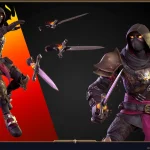
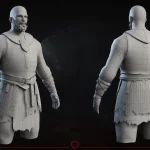
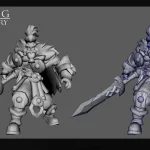
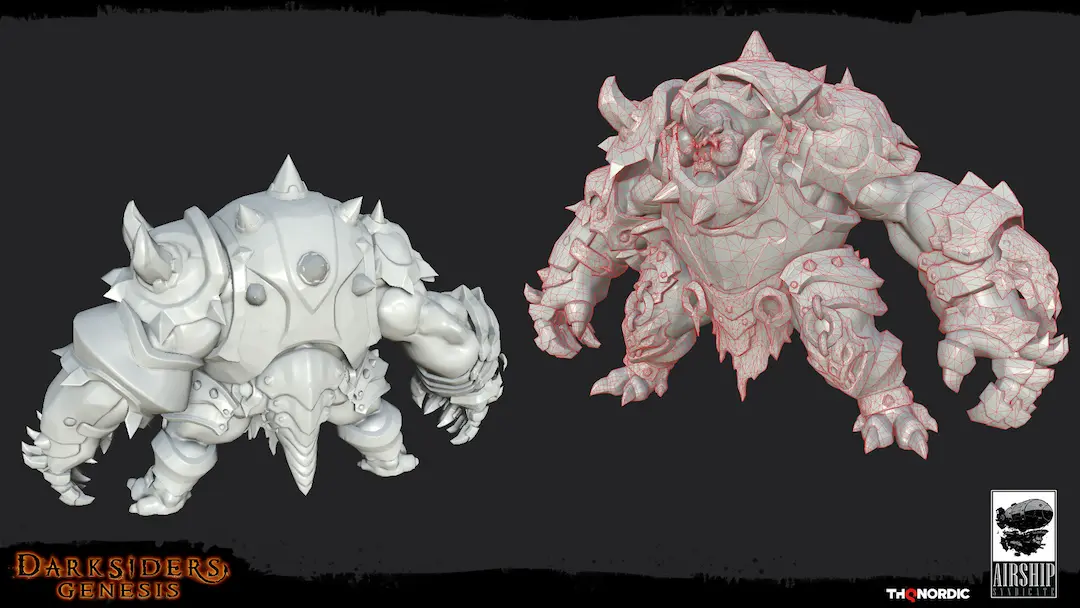
On Ruined King (a turn-based RPG from Airship Syndicate), we resolved exactly this scenario: we delivered over 100 assets – characters, creatures, weapons – in full compliance with the technical requirements of Unreal Engine, with no optimization iterations needed after delivery. This is only possible when technical control is built into the process from day one, rather than checked at the very end.
According to the 2026 Unity Game Development Report, studios investing in multiplatform development have increased their number of multiplatform projects by 71% over the past two years – and it is precisely the lack of specialized resources that remains the main bottleneck for this growth.

Fun Fact
The first commercially successful mobile game – Space Invaders for the Atari 800 – was released in 1980. Optimization for “weak hardware” was a problem even back then: developers manually counted CPU cycles to keep the game from lagging. Today, the tools are different, but the essence remains the same.
What Can Be Delegated: A Specific List
Many studios fear outsourcing precisely because they do not understand where the boundary lies – what is fine to hand over and what is better kept internally. Here is a practical guide:
Logical to outsource:
– Full-cycle development on Unity – mobile & cross-platform (optimization, build, publication)
– Development on Unreal Engine – PC & Console production-ready builds
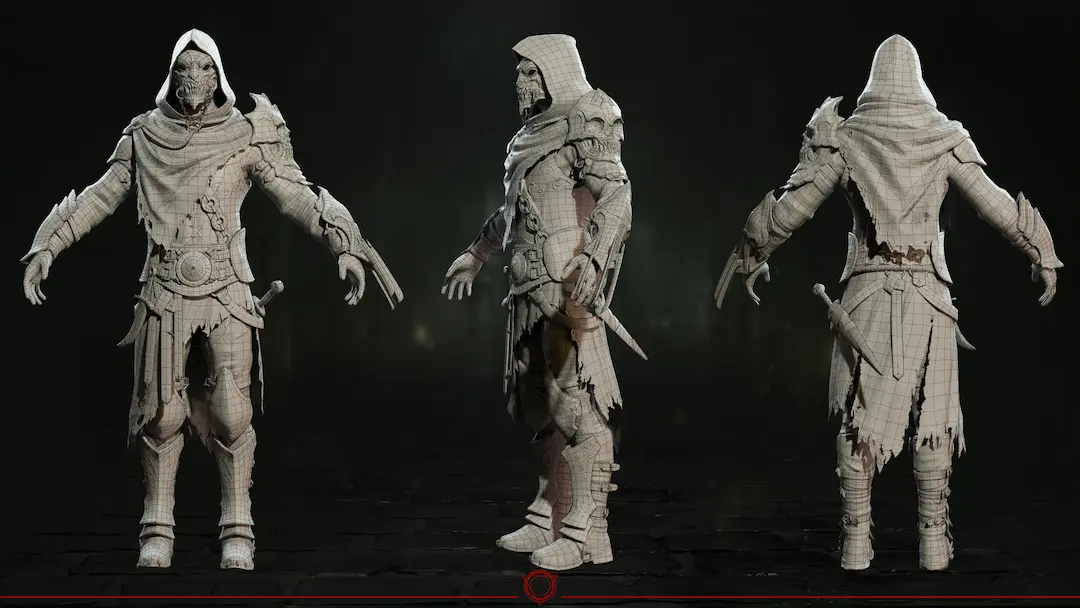
– 3D characters, environments, props, and weapons tailored to the technical requirements of the platform
– 2D art: characters, environments, UI/UX, and HUDs
– 3D animation and VFX
– Hard surface modeling: machinery, vehicles, military assets
– Hair & fur grooming (a technically complex, rare in-house skill)
– Pre-production documentation: art bible, style guide, technical constraints for the platform
– QA of assets before integration into the engine
Better to keep internally:
– Game design and core mechanics – this is the DNA of the project
– Narrative direction and story bible
– Final decision-making on visual style (the Art Director must be internal)
– Publisher communication and business strategy
The boundary is simple: hand over everything that requires narrow technical expertise and scales easily. Keep everything that requires internal knowledge of the product and directly affects its core identity.
How the Process of Working with an Outsource Studio Looks: 6 Steps
A good outsource partner does not work on the principle of “received the brief – did it – handed it over.” It is a structured process with control points, deliverables at each stage, and clear rules of the game on both sides.
1. Define the Scope and Goals
Before starting any work, a full lock-in of parameters is required: target platform (iOS/Android/PC/Console), technical stack (Unity/Unreal/Godot), budget, deadlines for milestones, and acceptable iterations. The duration of this stage is 2–3 working days. If a contractor skips this step or says “we’ll figure it out in the process,” it is a major red flag. Without a fixed scope, any rework becomes a subject of dispute.
2. Verify the Portfolio and Domain Expertise
Filtering by real experience on a similar platform is vital: a mobile studio and a PC studio have completely different expertise. Look not at beautiful renders, but at specific cases: which engine, which target device, and whether problems with draw calls and LODs were successfully resolved. A good contractor for custom PC game development services will show not just art, but the comprehensive technical documentation behind it.
3. Conduct a Technical Review of an Asset Sample
Ask a potential partner to complete a small test task or review one of your assets for compliance with technical requirements. This takes 1–2 days and costs significantly less than redoing three months of work later.
The problem: many studios skip this step, relying blindly on the portfolio. The consequence: non-compliance of assets with technical conditions is discovered at the integration stage – 2 weeks before the milestone. The solution: VSQUAD conducts a free technical audit of one client asset even before signing a contract.
4. Agree on Deliverables and Milestone Structure
Specifics on paper: what, in what format, and by what date. For a mobile project, this could be “15 characters in FBX, 1024×1024 textures, PBR workflow, in 4 weeks.” For PC, there will be different formats and timelines.
It is at this step that VSQUAD integrates into the client’s Jira/Trello and fixes the milestone structure directly in the project management system – not in a separate Google Sheet, but right where the whole team works. This eliminates 80% of communication issues during the process.
5. Control Progress by Milestones
Check-ins every 5–7 days, intermediate delivery by milestones, and iterations – a maximum of 2 rounds of revisions per stage (fixed in the contract). If there are more iterations, it is a signal that the scope was defined incorrectly in steps 1 or 4.
VSQUAD works within the client’s Perforce/Slack/Jira – we do not create a parallel communication chain that later needs to be synchronized manually.
6. Evaluate the Result and Close the Iteration Cycle
Final validation requires compliance of deliverables with the technical specifications, testing in the engine (not just a visual check), and acceptance sign-off. If the scope changes during the work, a change request is recorded with new deadlines and budgets. No surprises.
Based on the results of our work on SMITE for Hi-Rez Studios, we delivered 50+ characters in exactly this mode – every asset passed technical acceptance in the engine, not just an artistic review.
Ready to eliminate production risks and secure your delivery schedules?
Explore our full suite of production-ready engineering and art assets workflows tailored for both mobile and PC platforms.
Beginners vs. VSQUAD: Where the Difference Lies in Real Scenarios
| Situation | Typical Contractor | VSQUAD |
|---|---|---|
| Assets do not match the draw call budget | Discovered at the final assembly stage | Technical review is built into Stage 2, before finalization |
| Scope changed in the middle of the project | Work stops, dispute over costs | A change request is fixed on the same day |
| Need to scale the team within 72 hours | 2–3 weeks of searching and onboarding | The team connects within 48 hours |
| Client works in Unreal Engine | Contractor brings assets "the best they can" | We integrate into the client's Perforce/Jira from day one |
| Deadline moved 2 weeks earlier | Panic, overtime, reduced quality | Milestone structure with a buffer - built into the contract |
The difference is not that “we draw better.” The difference is that predictability of the result is an architectural decision, not luck.
Want to check how your current pipeline is performing?
Sign up for a free 30-minute breakdown with the VSQUAD Art Director – we will analyze the bottlenecks of your production and show you where time and budget are being lost.
About Us
VSQUAD Studio has been operating since 2015. During this time, we have completed 50+ projects, from indie teams to AAA, from mobile Unity to Unreal Engine 5. We don’t just create art: we integrate into the client’s technical stack (Perforce, Jira, Slack), work according to a milestone structure with fixed deliverables, and provide a result that goes straight into the engine without reworks.
Our comprehensive solutions include specialized PC game development services that cover the full cycle: from concept to a production-ready build on Unity and Unreal Engine. Our clients include Hi-Rez Studios (SMITE), Airship Syndicate (Ruined King), and Battlechasers. Our projects have received funding through Epic MegaGrants and have been featured at the Steam Awards.
Over 10 years, we have come to know exactly where the pipeline breaks – and how to prevent it at Stage 2, rather than fixing it at Stage 6.
FAQ
The cost depends on the scope: a small mobile hyper-casual game on Unity starts from $15,000, while a full-cycle mid-core project with custom art ranges from $50,000 and up. We do not provide a price tag without a brief, but we do give a preliminary estimate within 24 hours.
Benchmarks for planning:
– Prototype with core mechanics (2–4 weeks): $5,000–$12,000
– MVP for mobile (2–3 months): $15,000–$40,000
– Full-cycle with art, UI, and publication (4–8 months): $50,000+
An accurate assessment is only possible after a brief. Submit a request and receive it within 24 hours.
We work using the client’s tools: Jira, Trello, Perforce, Slack, Notion – everything that is already used in your studio. We do not create a parallel reporting system and do not ask you to switch to “our” tools.
Within 48 hours after the start, we:
– Connect to your workspaces
– Fix the milestone structure in your project management system
– Assign a single point of contact from our side (Art Director or Project Manager)
Two rounds of revisions are included in the cost of each milestone – this is secured in the contract. If the volume of revisions goes beyond the original TS, we issue a change request with a transparent calculation of costs and deadlines.
Revisions after the final acceptance sign-off are paid separately – but this rarely happens because we lock down a detailed Scope Confirmation Sheet at the start.
Deadlines are fixed in the milestone structure of the contract. If we violate a milestone, it is our responsibility, as specified in the agreement. A buffer for each stage is laid out in advance (usually 10–15% of the stage duration), rather than “looked for” at the first delay.
Over 10 years of work, there has not been a single failed milestone without a warning at least 5 days in advance.
Yes. Indie teams represent a significant part of our portfolio. We adapt the milestone structure to small budgets and flexible deadlines. The minimum engagement starts from a single specialist on a project.
If you have an indie team of up to 5 people:
– We can connect as an extension of your team for a specific stage
– We will help with technical documentation (style guide, art bible, TS for the engine)
– Experience: indie game projects with releases on Steam and Kickstarter campaigns with Epic MegaGrants
All rights to the final assets, code, and materials are transferred to the client in full upon final settlement. This is a standard condition of our contract that does not require separate negotiation.
What is fixed in the agreement:
– Transfer of all source files, not just the final export.
– Full commercial use rights without restrictions
– NDA for the entire duration of the project and after its completion
Ready to Optimize Your Production Pipeline?
Whether it is a mobile or a PC studio does not matter that much. What matters is how predictable your production is. A missed milestone on mobile costs less than on PC, but it hits your reputation just the same. The technical debt accumulated over a quarter of poor decisions does not disappear – it simply grows.
Outsourcing equals reducing production risks and accelerating the pipeline through structured expertise, rather than through hiring an “extra person.”
VSQUAD is a contractor that integrates into your stack from day one, fixes deliverables before the start, and performs technical control at Stage 2 – not after the final delivery.
Ready to discuss your project? Contact us → 📩 head@vsquad.art or schedule a call.
Our Game Services
Get in touch
Got a project in mind? We usually reply within a day.