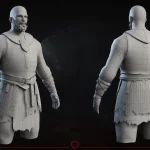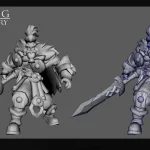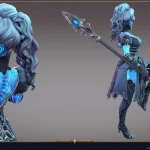



A beautiful model in a portfolio and a working asset in a game engine are two entirely different things. Most studios find out about this not at the beginning of a project, but when a deadline is already burning, and a technical art director on the other end of the line is explaining why the model cannot be placed into the scene.
Incorrect topology, overloaded draw calls, textures without proper texel density – all of this could have been caught at the concept stage if there had been someone with the right experience nearby.
This article is not about “how to learn 3D.” It is about where exactly the production of 3D video game art breaks down, how much it costs, and why internal resources or freelancing often fail to mitigate these risks.
Why Studios Outsource 3D Game Art
Access to Niche Expertise Not Available Internally
The production of complete 3D video game models requires not just one specialist, but a combination: a modeler, a technical artist, a rigging specialist, and a UV specialist. Few indie studios keep all four on staff. With outsourcing, this expertise is available immediately, without hiring and onboarding.
Real Economics: $40–80/Hour vs $6,000–12,000/Month for a Full-Time Senior
Maintaining an experienced 3D artist on staff (including taxes, equipment, software licenses) costs from $6,000 to $12,000 per month depending on the region. An outsourcing studio working under a milestone contract allows you to pay only for the result – a specific package of assets delivered on time.
Scaling for Peak Workloads
3D assets for games are needed unevenly: the peak occurs before going gold or before an exhibition showcase. Hiring a team for 3 months and then disbanding it is expensive and painful. Outsourcing covers the peak workload without bloating the staff.
A Fresh Perspective on Art Direction
An internal team often stops seeing problems: they get used to the style and fail to notice deviations. An external studio with experience across 100+ projects spots inconsistencies between the concept and technical requirements immediately – because they have seen them many times before.
Mitigating Technical Debt
The most expensive scenario in production is assets being reworked at the final stage. Incorrect LODs, poor texel density, messy topology – all of this is either caught early by an outsourcing process or turns into technical debt that will delay the release by 2–4 weeks.
Where Exactly 3D Game Art Breaks Down
A typical situation: a studio hires a freelance modeler based on their portfolio. The works are beautiful, the renderings are impressive. The problems begin when the asset is imported into the engine.
Topology without considering animation. If 3D model game assets are made by a person without rigging experience, the mesh will look fine in a T-pose and fall apart in any other position. Shoulders, groin, fingers – this is exactly where topology breaks deformation. Fixing this takes anywhere from 8 to 20 hours of additional work per asset. On a character-driven project with 15–20 heroes, this already shifts the deadline by 2–3 weeks.
Draw calls and performance. A 3D artist who does not understand rendering architecture can easily create an asset with 12 separate materials where two would suffice. Every extra draw call places a load on the CPU. On console platforms, where the frame budget is strictly limited, such assets are either completely reworked or cut the frame rate.
In the Wayfinder project, we worked under clearly defined constraints for draw calls for each type of asset – and this was specified in the technical assignment back at the scoping stage, not at the end.
PBR textures without proper UV unwrapping. Poor texel density means a character’s face is blurry while the sole of their boot looks 4 times sharper. Fixing this after final texturing means redoing the UV layout and baking textures all over again. That takes at least 6–12 hours. On 3D game art for console games, where texture resolution is high, this is immediately visible in screenshots.
Absence of LODs. A game engine cannot work with a single polygonal mesh across all distances. Without configured levels of detail (LODs), the scene starts to lag at medium and long distances. If LODs are not factored into the technical specifications in advance, they have to be made separately – and that adds another +15–25% of time per asset.
In our experience, these four problems combined account for 30–40% of rework on projects where 3D digital game art was ordered from freelancers without technical supervision.

Fun Fact
Do you know how many polygons a character has in a modern AAA game? The main character in a console title of God of War’s caliber contains about 150,000–200,000 triangles in LOD0.
Meanwhile, characters in the first Tomb Raider (1996) had about 540 polygons for the entire model package. In 30 years, game dev has grown in detail literally 150–200 times – and the pipeline has become correspondingly more complex.
What Exactly Can Be Delegated to an Outsource Studio
A clear understanding of the scope removes the main fear: “can this even be handed over?” The answer is yes, and here is specifically what:
| Task | Outsource | Keep Internally |
|---|---|---|
| High-poly character sculpting | ✅ | - |
| Retopology and game-ready mesh preparation | ✅ | - |
| UV unwrapping and texel density configuration | ✅ | - |
| PBR texturing in Substance Painter | ✅ | - |
| LOD creation and draw call optimization | ✅ | - |
| Rigging and animation-ready preparation | ✅ | - |
| Environment modeling and modular kits | ✅ | - |
| Weapons, props, vehicles | ✅ | - |
| 3D game concept art and conceptual tests | ✅ (with approval) | - |
| Art direction and visual style definition | Upon request | Better internally or co-art direction |
| Narrative design and gameplay mechanics | - | ✅ |
| Communication with publisher | - | ✅ |
The Process of Working with an Outsource Studio: 6 Steps
A professional contractor does not work on the principle of “receive the brief – send the money – wait.” A proper process is structured, and each stage has specific control points. Here is how it looks in practice.
1. Define: Determine Scope, Platform, and Technical Constraints
Before starting modeling, it is essential to establish: the target platform (PC, console, mobile), the polygon budget per asset, the engine (Unreal/Unity/Godot), the handoff format (FBX, OBJ, .uasset), LOD requirements, and draw call limits.
This takes 2–3 days at the beginning and saves 2–3 weeks at the end. A typical mistake is to skip this step and discover that a “console” character contains 120k polygons instead of the allowed 40k.
2. Research: Select a Contractor Based on Domain Expertise
A portfolio is not the only criterion. Look at: experience working with your engine, the presence of real production projects (not student work), the team’s ability to read technical requirements, and their understanding of the difference between stylized and realistic pipelines.
The Polycount wiki on topology is a good benchmark for checking a candidate’s basic technical level. If an artist does not know the basic principles of edge flow for animation, it is a red flag.
3. Review: Evaluate Portfolio and Validate Technical Quality
Look not only at the visual appearance but also at wireframe renders: is the topology clean, are there triangles in deformation zones, is the texel density correct? Ask to see assets inside the engine, not just in Marmoset. These are two completely different visuals.
During our work on Battle Chasers, we provided Airship Syndicate not only with final renders but also with engine shots so they could verify compliance with the art style directly within the context of the game.
4. Align: Agree on Requirements, Milestone Structure, and Handoff Format
This stage defines: how many iterations are included in the price, who gives the final approval for assets, what format the package is delivered in, and who holds the source files.
VSQUAD works synchronously – Art Director + modeler + tech artist on a single project, rather than “one freelancer for everything.” This means that technical issues are caught within the team before the asset goes to the client for review.
The milestone structure is locked into the contract in advance: for example, for a character pack of 10 heroes – 3 milestones with intermediate delivery and review.
5. Monitor: Track Progress by Milestones Rather Than Waiting for the Final Result
The most common mistake when working with contractors is the lack of intermediate control. The client sees the result after 6 weeks and realizes that the style drifted as early as week two.
VSQUAD integrates into the client’s pipeline: we work in Perforce/Jira/Slack depending on what the studio uses, rather than “we brought the finished product – figure it out yourself.” A check-in by milestone happens at least once every 1–2 weeks with an intermediate render and an iteration brief.
6. Evaluate: Final Review and Iteration for Production Goals
Final delivery is not just “sent the files.” It is a check for compliance with the initial technical specifications: the polygon budget is maintained, LODs are configured, textures are of the correct size and format, and the asset works in the engine without errors.
If something fails, the iteration is covered by the agreement. Predictability of the outcome is the key difference between outsourcing with an established process and freelancing, where “making corrections” turns into endless ping-pong.
Want to eliminate these technical risks and get assets that work from day one?
Explore our full suite of production-ready 3D art services tailored to your engine’s constraints.
Novices vs VSQUAD: Where the Difference is Really Felt
| Criterion | Freelance / Junior Team | VSQUAD |
|---|---|---|
| Topology for animation | Often errors in shoulders, groin, fingers | Checked at the low-poly stage before texturing |
| Draw calls | Not controlled at the model stage | Fixed in the tech brief, checked before delivery |
| LODs | Rarely included in the scope of work | Included in the standard delivery package |
| Iterations | Unlimited "revisions" without tracking | Specified in the contract, each iteration has a deadline |
| Style consistency | One artist = one vision | Art Director maintains the visual direction across the entire project |
| Deadlines | We will try our best | Milestones secured in the contract |
| Engine integration | That is already your task | Assets are verified in Unreal/Unity before handoff |
Want to analyze where your current 3D production pipeline breaks down?
Get a 30-minute review with a VSQUAD art director – free, with no obligations.
About Us
VSQUAD Studio is a full-cycle outsourcing studio operating since 2015. We specialize in the production of game assets 3D: characters, environments, weapons, vehicles, hard surface, hair, and fur. Over 10 years – 100+ completed projects in 15+ countries.
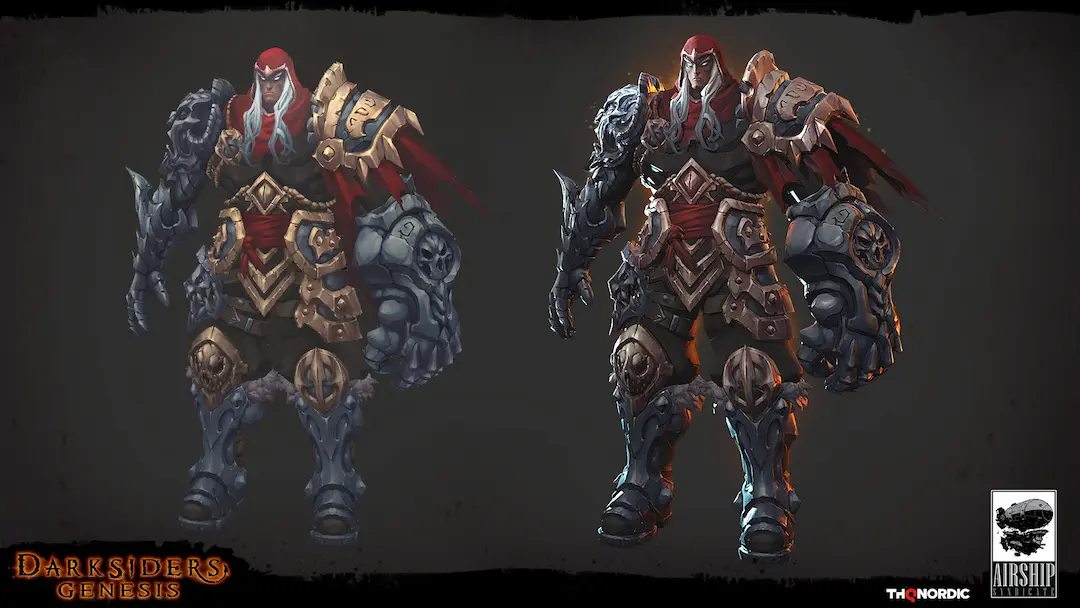
We have worked on AAA projects: Wayfinder (200+ characters and assets for Airship Syndicate), Darksiders Genesis, and Battle Chasers: Nightwar – providing a full cycle from concept interpretation to engine-ready delivery.
On Wayfinder, we didn’t just make “beautiful models” – each asset underwent a senior art direction review and a compliance check with the Unreal Engine pipeline before going to the client.
Our services for outsourcing 3D game art production include both dedicated teams tailored to the client’s pipeline and managed outsourcing with our own art direction. Onboarding takes place within 48 hours.
FAQ
Prices start from $150–300 for a hero prop and from $800–2,500 for a full game character (LOD0 + LOD1 + textures). A complete package for an AA project (10–15 characters, basic environment) ranges from $15,000 to $50,000 depending on complexity and platform. The exact figure is always calculated based on the scope, so the first step is the brief.
Factors affecting the cost:
– Stylized vs realistic pipeline (up to 40% difference in labor costs)
– Number of iterations and level of art direction
– Whether rigging and animation-ready preparation are needed
– Target platform (console = stricter optimization requirements)
Under the contract, the rights to the final assets are transferred to the client in full upon final payment. Source files (ZBrush, Maya, Substance source) are also transferred if specified in the agreement. VSQUAD retains the right to display the work in its portfolio – this is an industry standard, but we negotiate separately under an NDA.
Delivery format:
– FBX/OBJ + textures in PNG/TGA
– Source files by agreement (.ztl, .ma, .spp)
– Archive with the engine-ready version (prefab/uasset if necessary)
The number of iteration rounds is fixed in the contract (typically 2–3 rounds per asset). After final delivery, revisions are processed as a separate change request with an agreed cost.
This protects both sides: you know that a modification will cost you $X, and we know that the volume of work is predictable.
Important: most expensive revisions arise due to an unclear technical brief at the beginning. Therefore, we always insist on a tech brief before starting.
The milestone structure is fixed in the contract with specific dates. If a stage is not delivered on time without an objective reason, penalty conditions apply (negotiated individually).
In practice, across 100+ projects, we know that most delays occur not on our side, but due to delayed feedback from the client. Therefore, the contract also fixes the expected response time for reviews.
Typical timelines:
– 1 hero character (LOD0–LOD2 + textures): 10–16 working days
– Prop/weapon: 5–8 working days
– Modular Environment Pack (10–15 assets): 4–6 weeks
We work using the client’s tools: Perforce, Jira, Slack, Notion, Trello – depending on what is already used in the studio. No “send the brief and wait for the final result.” The first 2–3 days are for synchronization on the process and tools, then the work proceeds within the existing infrastructure.
Additionally:
– We assign a single point of contact from our side (project manager)
– Weekly check-ins or by milestone – whichever is more convenient for the client
– Intermediate renders at each stage of the iteration loop
Yes, and this is a significant part of our experience. We have participated in projects featured at Steam Festivals and Gamescom Latam, and supported teams with Epic MegaGrants and Kickstarter funding. Predictability is vital for indie teams: a clear scope, a fixed price per stage, and no surprises on the invoice.
What we adapt for indie teams:
– More flexible breakdown of the scope into smaller stages
– Opportunity to start with a single test asset
– Assistance with drafting technical specifications if the team lacks an experienced art director
The Bottom Line on 3D Game Art Production
The difference between a “beautiful portfolio” and a production-ready 3D game art portfolio is not the talent level of the artist. It is the presence of an established process where technical requirements stand alongside art direction right from the start.
Production of 3D models for games requires not just a single executor, but a system: controlling the polygon budget, proper topology under rigging, configured LODs, PBR textures with correct texel density, and a final engine test before delivery. Every skipped step is a technical debt that returns at the most inconvenient moment.
Outsourcing = risk reduction and pipeline acceleration through systematic quality control at every stage.
VSQUAD = a contractor that integrates into your process, catches technical errors before finalization, and delivers assets that work in the engine the first time.
Contact us → 📩 head@vsquad.art or schedule a call.
Our Game Art Services
Get in touch
Got a project in mind? We usually reply within a day.