


It seems as though there is a gulf of several universes between a mobile puzzle game costing $0 and Baldur’s Gate 3. In reality, the difference lies not only in the budget.
These represent entirely different solution architectures, different pipelines, different teams, and different points of failure. However, where they are remarkably similar is exactly where everything breaks down.
Missed deadlines, bloated technical debt, and assets that do not fit into the draw-call budget – it is equally painful whether it happens in a three-person indie studio or a team of 200.
This is not a purely theoretical exercise. I am writing this after 10 years in game development and more than 50 projects – ranging from casual titles for iOS to large-scale action-RPGs of the Wayfinder level.
And everywhere, the pattern is the same: a studio takes on more than it can qualitatively deliver, losing money, time, and peace of mind in the process.

Why Studios Outsource Game Development
Needing Expertise That Is Missing Internally
Full-cycle development requires deep competence in Unity, Unreal Engine, server architecture, optimization for multiple platforms, UI/UX, and narrative design all at the same time. Keeping this entire stack in-house is both expensive and irrational.
A project on Unity requiring multiplayer game development services and a cross-platform release demands a minimum of 5–6 specialists with diverse skill sets. If three of them are not part of your core team, you either have to hire or outsource. Hiring quickly is practically impossible.
The Economics Aren’t What They Seem
A full-time middle developer in the US market costs $90,000–$130,000 per year, factoring in taxes and benefits.
An outsourcing studio with comparable expertise for the same volume of work costs, on average, 40–60% of that amount, completely eliminating onboarding risks and management overhead.
This is not just “cheaper” as a marketing slogan – it is a concrete delta in the budget that can be directly channeled into marketing or the next milestone.
Scaling for Peak Loads, Not for the Average
Game development is not a uniform, steady flow of tasks. There are intense sprints before alpha, crunch periods right before a demo at Gamescom, and emergency patches immediately following release.
Hiring people permanently for peak workloads means paying them full wages during periods of calm as well.
An outsourcing partner scales to your exact task: if you need to ramp up a team from 4 to 12 people in 3 weeks, it is entirely feasible without restructuring your internal HR processes.
Fresh Perspective Reduces Pipeline Tunnel Vision
An internal team that has been looking at the same project for 8 consecutive months simply stops seeing obvious problems – whether in UX, architecture, or visuals.
An external team comes in with a completely fresh eye and, as a rule, finds during the very first week what internal staff have ignored for months. This becomes especially noticeable during the stage of optimization for mobile platforms.
Technical Debt Does Not Accumulate with Outsourcing
This is counterintuitive but true: outsourcing studios with well-established pipelines initially write code and create assets with an eye toward future support. This is not because they are inherently “better” – but because they will later have to maintain or hand over this exact work.
An internal developer working under a heavy crunch writes code “as long as it works right now” – and half a year later, this turns into technical debt that will completely eat up the budget of the next cycle.
Where and How Production Breaks: A Breakdown by Genre
Game dev is not a single industry, but several parallel ones. Casual, mid-core, AAA, MMO, indie – each segment lives by its own rules, and every casual game development company faces its own unique risk map.
Casual games and puzzle game development services sound simple, but in reality, they are a trap. The main problem is that teams routinely underestimate the volume of UX iterations. A casual game must be completely clear within 10 seconds without any tutorial.
This means dozens of rounds of playtesting, completely reworking the onboarding flow, and constant UI adjustments. Studios that take on project development without a dedicated UX specialist spend twice as much time on iterations as they originally planned.
Kids game development services add age rating requirements, simplified controls, and a particular visual safety of content on top of that. A single mistake at the concept phase means redoing the entire project from scratch after a review from Apple or Google.
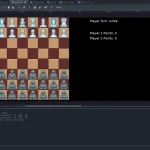
Indie projects with card game development or board game development services are a separate story. The mechanics there are far more complex than they seem: balance, rules, and edge cases in logic.
We have worked with several indie teams through our Indie Games case study, and it is the same scenario every single time: the developer thinks “it’s just cards,” and then spends 3 months fixing collisions in the game state.
With action game development services and RPG game development services, the budget disappears into animation, combat feel, and balancing. A mistake in character rigging at an early stage costs an additional 15–20% of an animator’s time for rework.
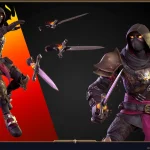
On Wayfinder, we delivered over 200 characters and assets – and a Technical Review was integrated into every single milestone precisely because the cost of an error in the character pipeline is too high.
MMORPG game development services and online game development services represent an entirely separate class of complexity. Server architecture, state synchronization, latency, and background services game development are no longer art tasks; they are pure systems engineering.
Studios that underestimate this layer and hire “ordinary” backend developers without game dev experience end up with unstable matchmaking and lag complaints from the very first day of release.
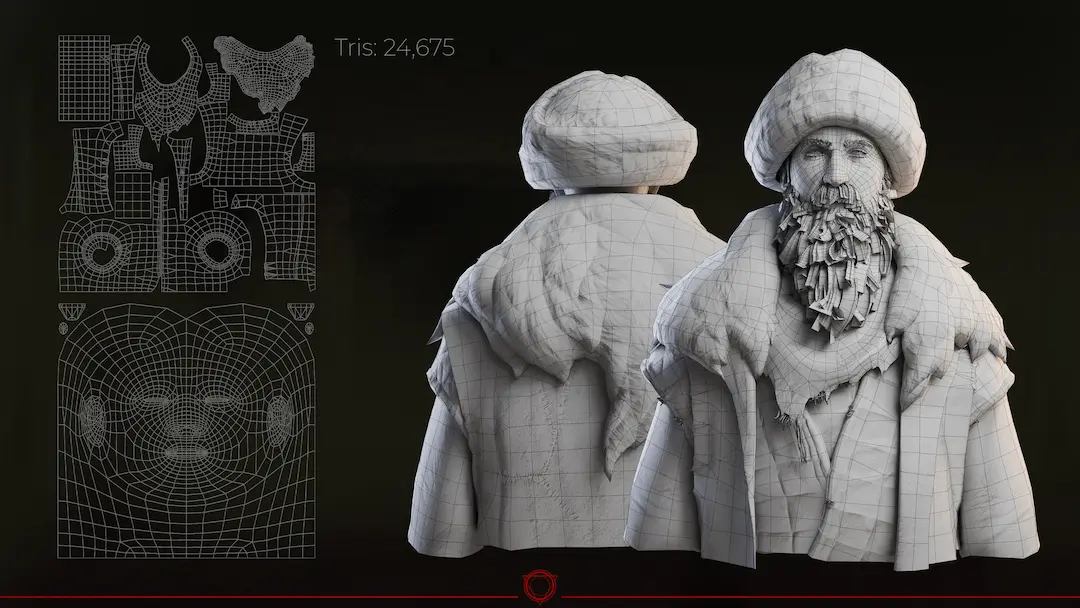
AAA game development services feature the highest barrier to entry. It is not just about polygons and PBR textures. It is about the fact that every single asset must pass a Technical Review checking LODs, texel density, draw calls, and strict compliance with the style guide.
Without this, an asset that looks perfect in Blender will cause a 20–25% drop in FPS inside the engine – and that already means a missed milestone.
Cross-platform game development services add to this the necessity of testing every single change on multiple target platforms simultaneously. The exact same shader behaves differently on PC and mobile.
Teams that test “on one platform, then port it later” almost always run into nasty surprises a week before release.

Fun Fact
Do you know why casual games are so difficult to make “simple”? Angry Birds is one of the most technically refined products in mobile history: the Rovio team conducted over 300 iterations of the throw physics before the very first level became completely “obvious” to the player. Simplicity in game dev is not the absence of complexity, but rather its ultimate concealment.
What Exactly Can Be Delegated to an Outsourcing Partner
Studios often fear: “Can we really delegate this?” Yes, you can – and here is a specific list of what you can hand over:
– Full-cycle development under Unity or Unreal – from architecture to deployment
– Mobile development – cross platform game development services for iOS/Android with performance optimization
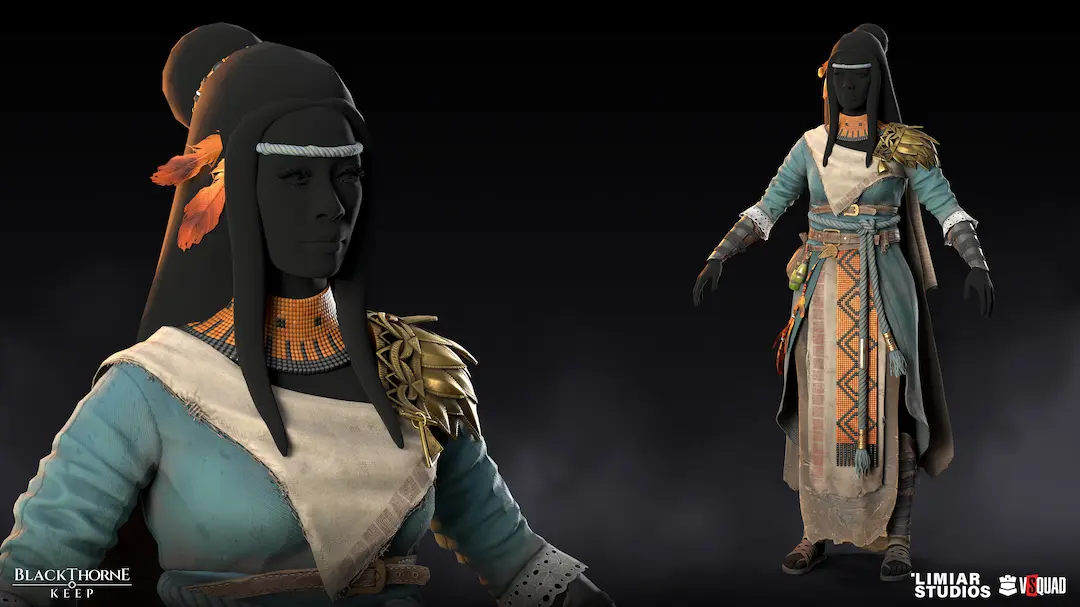
– 3D art and characters – including rigging, skinning, LODs, and PBR textures for any engine
– 2D art, UI/UX, and HUD – from concept to production-ready assets
– Mechanics prototyping – card game development, board game development, puzzle game development – testing gameplay hypotheses within 2–4 weeks
– Platform optimization – auditing draw calls, texel density, batching, and profiling
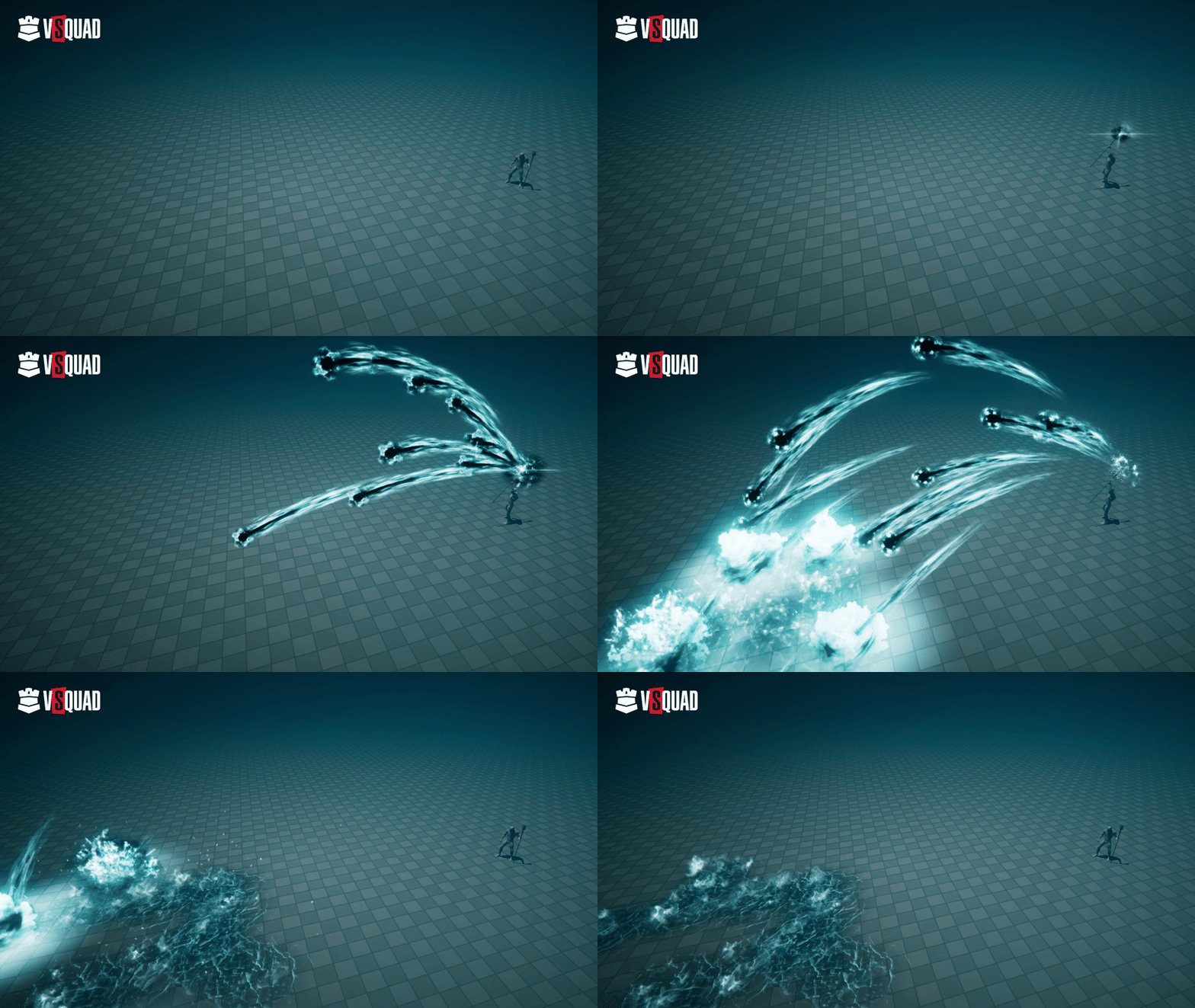
– Marketing creatives and mobile advertising – UA assets, playable ads, and videos
– Post-release technical support – patches, balance updates, and hotfix pipelines
What is better kept in-house: narrative design and game direction – this is the core of the game that must remain with the author. Public communications and community management should stay in-house as well.
How the Working Process with an Outsourcing Studio Looks: 6 Steps
A professional contractor doesn’t operate on a “fire-and-forget” brief system. This is an iterative, structured process with fixed checkpoints. Here is how it looks in practice.
1. Define the Scope and Technical Constraints
Before starting any work, we fix the target platform, budget, deadlines, and technical constraints. This is not a formality: if you do not establish at this stage that the project is for mobile with a limit of 150 draw calls per scene, then 6 weeks later you will have to redo half of the assets.
A scope document solves this problem completely. It takes 1–3 business days but saves 3–4 weeks of reworks.
Problem: A studio begins production without fixing the technical constraints.
Consequence: Assets fail the technical review at the final stage, causing a missed milestone.
Solution through outsourcing: At the very start, VSQUAD conducts a Technical Kickoff – a 2-hour synchronization meeting with the client’s art director and tech artist, where all parameters are fixed before any work begins.
2. Research Potential Partners
Criteria for choosing a contractor: domain expertise in your specific genre (providing AAA services is not the same as working on a mobile puzzle), proven case studies of a comparable scale, and team structure.
One good 3D artist is not a studio. A studio represents the synchronous work of an art director, specialists, and a technical artist. Look at the portfolio not from a “beautiful/ugly” perspective, but rather at which platforms and engines the works were created for.
3. Review Portfolios and Validate Quality
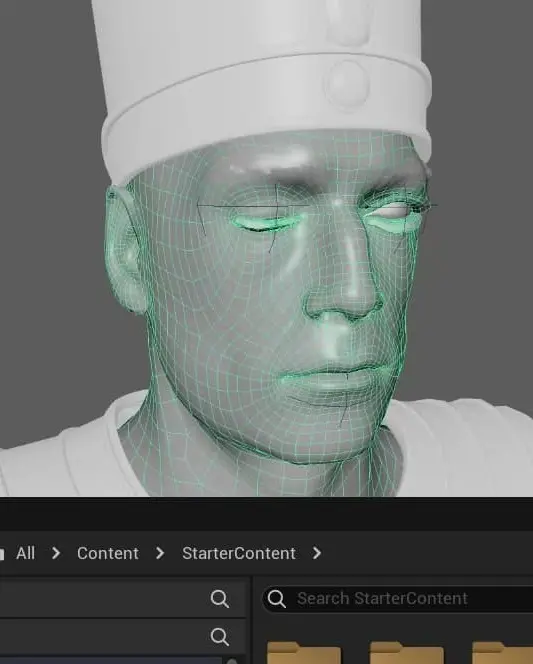
A portfolio review is about more than just looking at pictures. Request a wireframe or a technical breakdown for at least one asset: how many polygons it uses, how the LODs are structured, and what the texel density is. If a studio cannot provide this, it is a warning sign.
It is also vital to remember that compliance with your game’s style is more important than just “generally good work.” A studio with brilliant hyper-realism will not necessarily cope well with low-poly assets for mobile.
4. Align on the Specs, Deliverables, and Milestone Structure
This is a critical step that is most often done carelessly. The technical specification (Specs) must include: the handoff format (FBX, PNG, PSD, source files), the exact number of revision rounds, and acceptance criteria for every single milestone.
Problem: A client says “make a character,” the contractor delivers it, and the client says “that’s not it.”
Consequence: 2–3 weeks of reworks, conflict, and additional budget expenses.
Solution through outsourcing: VSQUAD integrates into the client’s Jira/Trello, where every deliverable is logged as a ticket with its own status and acceptance criteria. Iterations are written into the contract – typically 3 revision rounds per milestone.
5. Monitor Progress by Milestones
Regular check-ins are not bureaucracy; they are a time-saving tool. A weekly 30-minute sync in Slack or Zoom allows you to catch deviations from the specs during week 2 rather than week 6.
We work directly inside the client’s pipeline – integrating into Perforce, Jira, and Slack – and we never just send a “it’s done, please accept” message at the end of the month.
Every milestone is closed with an acceptance certificate detailing concrete deliverables: not just “made some characters,” but “5 characters in FBX, LOD0–LOD3, skin weights validated, ready for rigging.”
6. Evaluate Results and Iterate
The final review is not simply a matter of “like/dislike.” It is a validation against the initial technical requirements: did the asset pass the Technical Review, do the LODs match the original scope, and is there any exceeding of draw calls?
If something is amiss, the iteration loop launches immediately, rather than after a month of correspondence.
Following project completion, a good partner provides a brief post-mortem: what went well, where delays occurred, and how to improve the pipeline for the next project.
Explore Our Full-Cycle Game Development Services
Ready to scale your production and eliminate technical debt? Discover how our specialized teams can integrate into your pipeline within 48 hours.
Newbies vs VSQUAD: Where the Pipeline Breaks
| Situation | Typical New Studio / Freelancer | VSQUAD |
|---|---|---|
| Project start | Brief in a messenger, they start immediately | Technical Kickoff: scope, platform, limits - before the first asset |
| Character fails Technical Review | Rework takes 2–3 weeks, milestone is missed | Tech Artist checks rigging and LODs at Stage 3, prior to finalization |
| Client requests edits | This wasn't in the specs" / additional invoice | 3 revision rounds are built into the contract from the beginning |
| Integration into client's pipeline | Here is a ZIP file with the files, figure it out | We work inside the client's Jira/Perforce/Slack, handoff by acceptance criteria |
| Cross-platform optimization | They test on a single platform only | Testing draw calls, texel density, and batching for each target platform |
| Team scaling | Hiring additional people takes 4–8 weeks | The team scales within 48 hours |
Let’s Analyze Your Pipeline for Free
Get a 30-minute audit with VSQUAD’s Art Director: we will find the bottlenecks in your production before they become a problem.
About VSQUAD Studio
VSQUAD Studio is a full-cycle outsourcing team for game development founded in 2015. Over the course of 10 years, we have successfully completed 50+ projects for clients from the USA, Norway, Germany, Mexico, and Finland.
We are not just a “studio that draws assets.” We integrate seamlessly into the client’s pipeline within 48 hours and complete tasks that the internal team lacks the time or the technical level to handle. Art production, animation, VFX, Unity/Unreal development, and UI/UX are all bundled into a single contract with fixed milestones.
On Wayfinder, we delivered over 200 characters and assets for Airship Syndicate with a Technical Review at every single stage. On indie projects, through our indie case study, we help small teams launch on Steam not just with a “first project,” but with highly competitive visuals.
Our art is present in more than 15 countries. Games we have worked on have won Steam Awards and Gamescom Awards, and have been funded via Epic MegaGrants and Kickstarter.
Explore our game development services.
FAQ
A prototype of a mobile casual game costs from $8,000–$15,000. A fully-fledged indie game with 3D art starts from $40,000. A AAA-level project starts from $1,000,000+. The price depends entirely on the platform, genre, asset volume, and deadlines. During our first sync, we provide an approximate estimate based on the scope – for free, before any contract is signed.
The cost is heavily influenced by:
– Target platform (mobile vs. PC/Console)
– Genre (puzzle game development vs. MMORPG game development services)
– Volume of art production (2D flat vs. full 3D with rigging)
– Tight deadlines (rush rate +20–30%)
Full rights to all deliverables transfer to the client upon the final payment for each milestone. We do not retain any usage licenses – this is a standard, non-negotiable condition of our contract.
Additionally, the following are fixed:
– Source files (PSD, FBX, .blend files) – transferred completely
– Code – complete with comments and technical documentation
– Rights to the client’s name/logo in our case studies – only with explicit written consent
Three revision rounds are fully included in the cost of each milestone. Edits requested after the final acceptance are handled under a separate support contract or as part of the subsequent development stage.
We clearly distinguish between:
– In-scope revisions – included in the milestone, free of charge
– Scope change – a new technical specification, requiring a separate budget
– Bug fixes – handled within the warranty period (30 days after delivery)
Deadlines are strictly locked into the contract with a clear milestone structure. If a delay occurs due to our fault, the subsequent milestone costs less. We do not operate under a vague “we will deliver when it’s ready” scheme.
The standard structure includes:
– Kick-off + Technical Scope – 3–5 business days
– Milestone 1 (first deliverables) – 2–4 weeks
– Each subsequent milestone – according to the roadmap tracked in Jira
Within 48 hours of starting: you grant access to Jira/Trello, Slack/Discord, and your repository (Git/Perforce) – and we operate just like an internal team. We do not send archives filled with files; instead, we work directly within your tools, adhering to your naming conventions and style guide.
Integration formats include:
– Full immersion into the client’s pipeline (Jira + Perforce + Slack)
– Parallel tracking in our system with a detailed weekly report
– A dedicated project manager on the VSQUAD side
Yes. A substantial portion of our portfolio consists of indie projects, including those where the team size is just 2–5 people. For small teams, we offer a dedicated format: a fixed scope for 4–8 weeks without a long-term contract, delivering a clear, explicit deliverable at the end.
Examples of tasks for indie developers:
– A mechanics prototype within 3–4 weeks
– A complete art package for a demo or a Steam store page
– Optimization of an existing build for release
Choosing Predictability and Efficiency in Game Production
Game dev is not a monolith. From mobile puzzles to AAA multiplayer projects, every single genre demands its own expertise, its own tech stack, and its own understanding of exactly where things can go wrong. Attempts to cover this entire spectrum using only a single internal team end the same way every time: technical debt, missed deadlines, and redoing assets right in the middle of production.
Outsourcing = Risk reduction through specialization and pipeline predictability
VSQUAD = A contractor that integrates into your tools within 48 hours, fixes milestones in the contract, and completes the Technical Review before an error ever reaches production
Ready to discuss which part of the development should be moved outward?
Contact us → 📩 head@vsquad.art or schedule a call.
Our Game Services
Get in touch
Got a project in mind? We usually reply within a day.