


A lot of horror games rely on monsters, jump scares, or scripted moments. Black Pine: Incident Response approached fear differently.
Originally developed by SourBoys Interactive, Black Pine was designed as a four-player survival horror multiplayer game set deep in the Appalachian mountains, positioning the project as a unique Appalachian horror game where players slowly uncover that their employer is tied to something far more dangerous than simple infrastructure maintenance.
In this interview, the team discusses psychological horror, multiplayer vulnerability, environmental tension, world scale challenges, and the realities of building an ambitious indie co-op horror game with a very small team.

Main topics:
– Co-op horror design
– Multiplayer tension systems
– Indie horror production
– Environmental storytelling
– Psychological horror
– Lighting and atmosphere
– Procedural level design
– Small-team game development
Building Black Pine
Like many indie atmospheric horror games, Black Pine started with a relatively simple premise before evolving into something much larger and stranger.
At its core, the game combined cooperative survival gameplay with slow psychological tension and environmental storytelling inspired by isolated rural locations and conspiracy-driven horror.
Q: Could you tell us more about Black Pine: Incident Response and what kind of experience players could expect?
A: Black Pine was meant to be a four-player co-op survival horror game where players are hired as contractors by a utility maintenance company to repair and maintain infrastructure in the Appalachian mountains.
Throughout the game, players gradually discover that their employer is actually a front for a secret government agency and that they were hired under false pretenses.
Q: Could you tell us a bit more about SourBoys Interactive and what kind of games you wanted to create as a studio?
A: SourBoys has technically shut down due to lack of funding, but Black Pine is still in development under a new studio.
Creating Fear Through Uncertainty
One of the most interesting parts of Black Pine’s design philosophy was how heavily it relied on restraint.
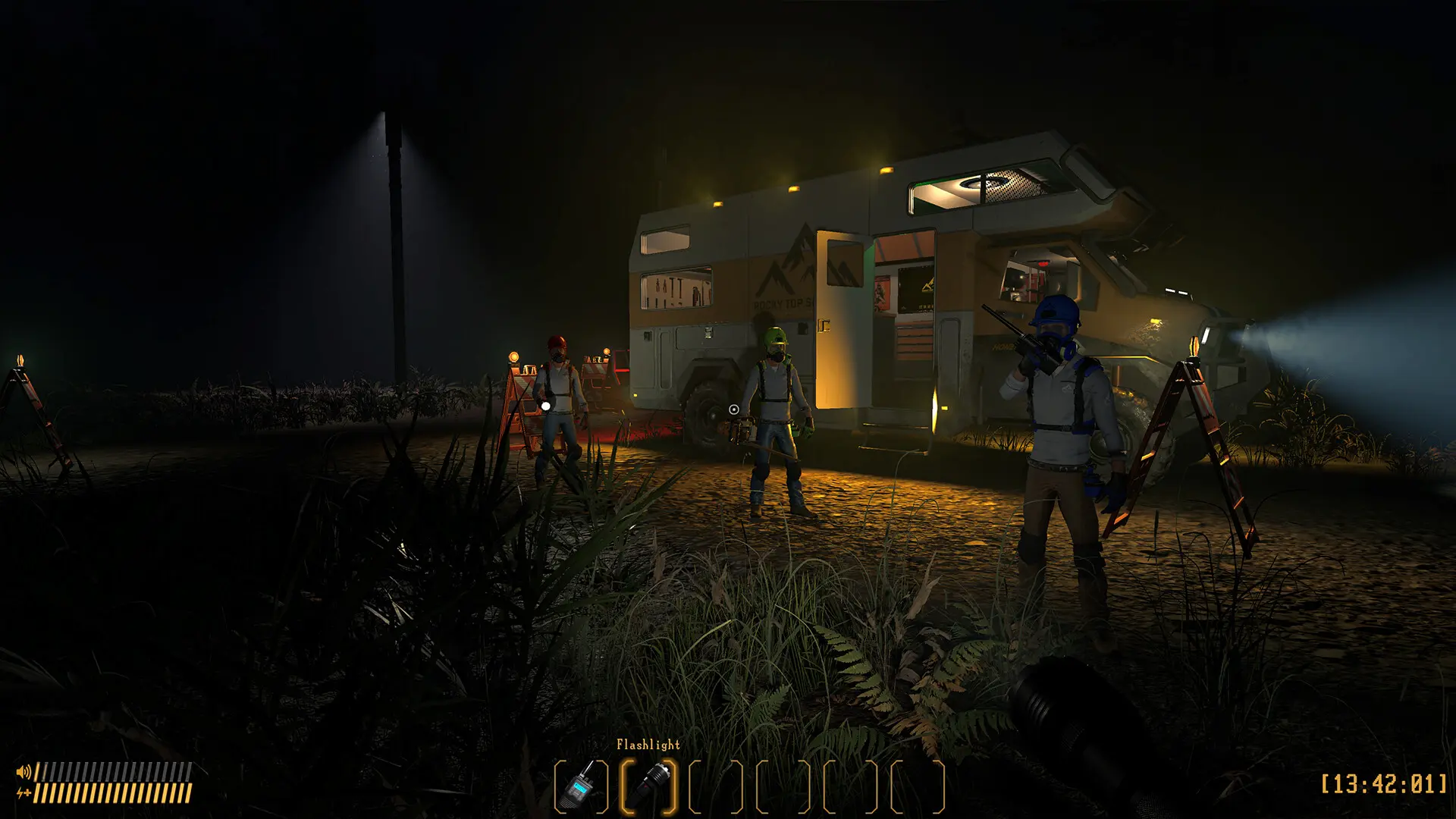
Instead of constantly exposing players to monsters or direct danger, the game focused on uncertainty, distance, and the fear of not fully understanding what was watching you.
Q: Black Pine seems to lean into the feeling of being sent into something unknown. How did you approach making the world feel dangerous without showing too much too early?
A: This is a horror craft question that is easy to answer but much harder to realize. Showing too much is exactly what reduces the level of horror. Once you have seen and named your fear, it’s always going to be much less scary.
The longer you can keep it a mystery, the more a player can imagine, and their imagination is much scarier and much cheaper than anything you can make.
We had one NPC creature that would stand in the woods watching you. If you moved toward it or shined a flashlight on it, it would quickly disappear into the forest.
Unless it was with friends. If they outnumbered you, they would just stand and stare until you got too close, then they would all run at one player to attack.
Q: As an Art Director, how did you decide what should stay grounded and believable, and what could become more strange or stylized?
A: For Black Pine, the player characters and creatures were a bit more stylized than the environment, but that was intentional. We wanted them to feel like they didn’t belong in that environment. But on indie projects, budget, time, and skill level also play a big role in those decisions.
Making Multiplayer Horror Feel Unsafe
One of the biggest design challenges in co-op horror is that players naturally feel safer in groups. Black Pine tried to counter this by building mechanics that forced players into moments of vulnerability and imperfect coordination.

Q: In a co-op horror game, players are not alone, which can make things feel safer. How did you try to keep tension alive in a multiplayer setup?
A: By creating situations where players need to separate to complete tasks, or cooperate in ways that make them vulnerable at the same time.
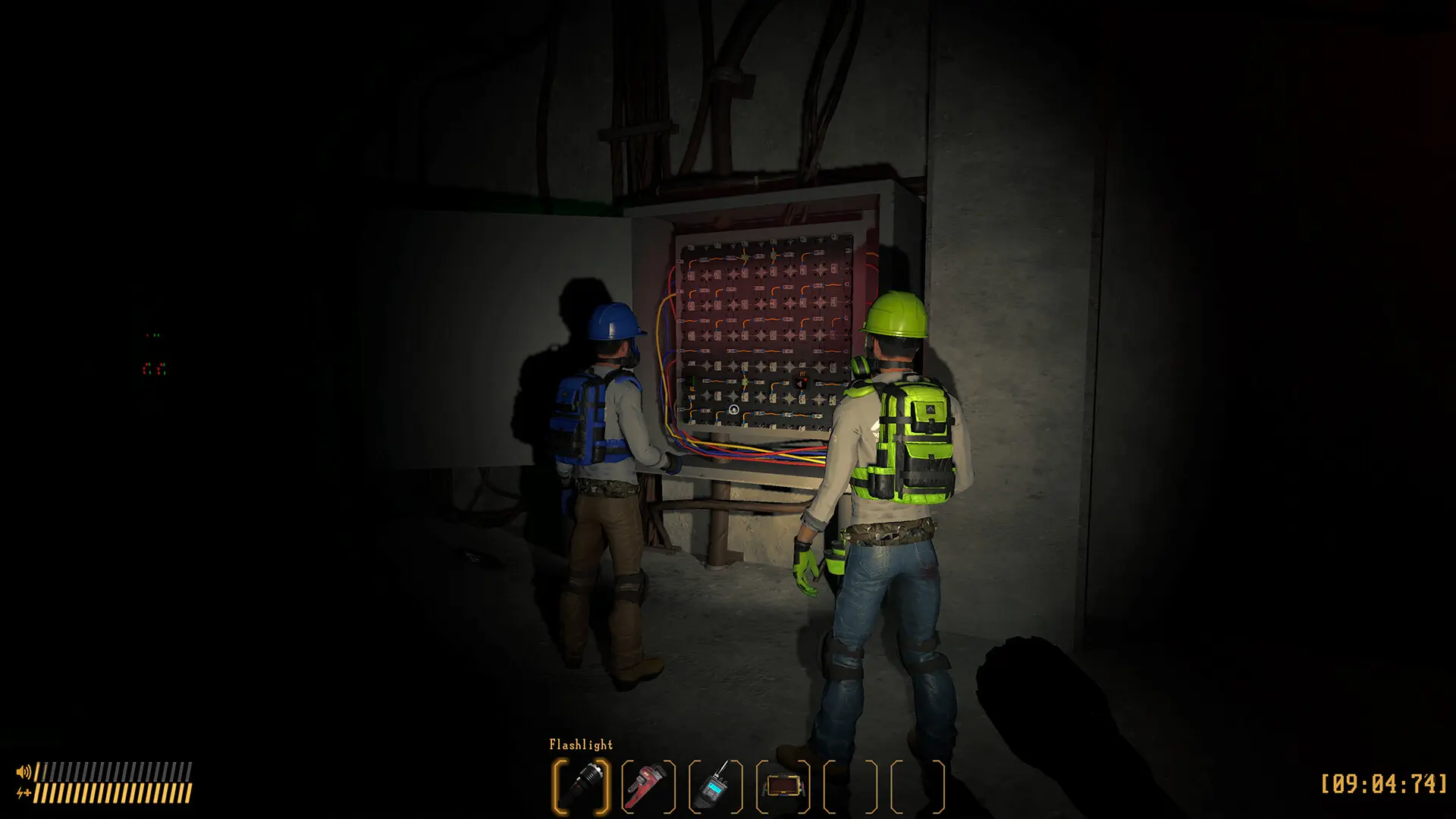
For example, one player might need to complete a task that requires a flashlight, but they can’t hold the flashlight and perform the task simultaneously.
So another player has to hold the flashlight and act as a lookout. But the second player can only point the flashlight where they are looking, meaning they also can’t fully watch everything around them at once.
You’re always trying to create vulnerability.
Q: Were there any environmental details or mood choices that players reacted to more strongly than you expected?
A: The accidental deaths ended up being pretty funny. Somebody throwing the wrong electrical switch could get another player killed, and eventually players started doing that intentionally to each other. It was also very possible to get lost by yourself. We had a border around the world designed to gently turn players back toward the center of the map.
It was very effective at making the world feel larger while also confusing players about the direction they were going. It created a real feeling of being lost and disoriented in a dark forest.
Small-Team Production Challenges
Like many indie horror games, Black Pine faced constant production trade-offs around scope, level design, and asset creation.
The team faced the classic hurdles of small team game development, often having to balance ambition against the realities of building large atmospheric environments with only a handful of developers.
Q: What part of Black Pine’s visual identity took the most iteration before it finally felt right, especially when mastering lighting in horror games?
A: Lighting. Figuring out how much was too much.
Q: Was there any visual idea or environment feature that looked great in concept, but became harder to make work in the actual game?
A: Iteration on a world scale was the biggest issue. We had to decide whether to focus on smaller unique levels or larger reusable levels, and when to combine those approaches or rely on procedural generation for layouts.
Q: Did you build the art and environments fully in-house, or did you use freelancers or external help for some parts of production?
A: All primary and secondary assets were built in-house by a team of two to three people. We did purchase tertiary assets or more generic things like trees, bushes, and rocks.
The Anatomy of Cooperative Fear
Black Pine: Incident Response is an interesting example of how indie titles build a tense horror game atmosphere, relying more on uncertainty and player vulnerability than expensive cinematic horror systems. What stands out most is how many of the game’s strongest moments came from relatively simple ideas: getting lost in darkness, miscommunication between players, or briefly spotting something watching from the woods.
The interview also highlights a common reality of indie horror development: small teams constantly balance ambition, scope, procedural systems, atmosphere, and technical limitations while still trying to preserve the emotional core of the experience.
For developers working on multiplayer horror games, Black Pine offers an important reminder that fear often works best when players never fully understand what is happening around them.
Explore more behind-the-scenes stories in our exclusive interview series. We have many more conversations with industry visionaries coming soon, so be sure to visit us again.
Get in touch
Got a project in mind? We usually reply within a day.