


A conversation about gameplay animation, cinematic feel, mocap, 2D art fundamentals, and the production work behind character movement that actually works in-game.
Oscar Héctor Castro is a hybrid lead and senior 3D animator with experience across gameplay animation, cinematics, mocap, Maya, Unreal Engine, freelance production, and outsourcing work.
His background includes Gizmo Animation Studio, Big Time Studios, Globant, studioFREAK, OKAM Studio, and freelance work for different clients and studios. Over the years, he has worked as a lead animator, senior gameplay animator, 3D character animator, illustrator, 2D artist, and teacher.
What makes this interview interesting is Oscar’s mix of disciplines. He is not only a technical animator working with rigs, mocap, and engine workflows. His 2D art and illustration background adds another layer to how he thinks about movement: posing, silhouette, composition, rhythm, staging, and visual clarity.
This interview focuses on the real production side of game animation: how movement supports gameplay, where cinematic thinking helps, why 2D fundamentals still matter in 3D animation, what mocap solves and does not solve, and what small teams often miss when planning animation work.
Main topics
- Gameplay Animation
- Character Animation
- Motion Capture
- Animation Principles
- 3D Character Animation
- Gameplay Animator
- Game Animation Pipeline
- Game Development

Interrview
Q: You’ve worked across gameplay animation, cinematics, mocap, 3D animation, 2D art, and illustration. How did that mix shape the way you think about movement in games?
A: I’d say it’s like adding layers of flavor to a dish, or adjustment layers to an illustration. It doesn’t change the foundations of the dish/drawing itself, but it adds a new depth that enhances flavors and colors for the person you’re trying to satisfy.
Throughout my career, I’ve had to work on a lot of stuff in many different disciplines, and I tried to take from each one the elements that helped me reinforce the whole and slowly give my animation a style of its own.
From drawing, I took the anatomical dynamism of key poses. From cinema, camera framing. From illustration, the overall thematic vision. From 2D, economy of action. From games, responsiveness. From editing, rhythm. From film/cinematics, storytelling through acting. From advertising, fast iteration with clients. From mocap, to get rid of everything that isn’t essential.
I could keep adding, replacing and listing examples, and they’d all be equally valid (because in the end it’s a subjective choice). They are communication tools.
The important thing is that all those experiences nourish you, both as a professional and as a person. Everything serves a purpose.
Players/Spectators should understand what a character is doing almost instantly, and that mindset influences everything I animate.
Having said that, the fact that I studied cinema rather than game development as my foundation, makes my first approach always centered on the script, on the elements that need to be communicated within the action to animate. In other words: storytelling.
What does the Art Director want to communicate? What does the Game Designer need? Who’s this character for the Concept Lead? What impact are we looking for in the player? What we need to achieve, how and why?
Once I have those answers as my compass, only then do I begin animating. And any change in those answers will radically reshape how I approach the animation for the game.

Q: What separates animation that looks good in a reel from animation that actually feels good inside a game?
A: The short answer would be “its implementation”, which depends on many factors and professionals involved (not just the animator).
This may sound obvious to any gameplay animator reading this, but I’ll try to put it into words as best I can: “it’s the ability to bring EVERYTHING that makes your animation look good in the video into the engine”.
Camera shakes, blends, transitions, timing, all of it.
In gameplay you can’t cheat perspective, shapes or silhouettes to make them look appealing from a specific camera angle, because you don’t know where the player will be looking from.
So you have to find other ways to preserve that readability inside the game itself.
The principles remain the same (well, actually 3 are added), but the focus on where to apply them is in another context.
Animation in a reel is judged as a clip. Animation in a game is judged as part of an experience.
Players rarely remember a perfect frame, but they immediately notice if controls feel sluggish, attacks are unreadable or transitions feel awkward.
“Feeling good” is often more important than “looking good”. A great gameplay animation is one the player stops noticing because it simply feels natural.
Readability is king.
Another very important point is that you’re not animating for yourself, you’re animating for your team!
In games, collaboration exists on a completely different level (badum-tss).
What you personally like may not necessarily serve to the vfx team, the combat designer or the engineers responsible for the gameplay systems.
You have to stay in constant communication to achieve the best result possible within the established constraints, because you’re animating for an interactive system.
If you keep that in mind, then just animate the way you usually do and have fun! That’s the point of it.
Q: Why do 2D art fundamentals still matter for strong 3D character animation?
A: Because they lay the foundations for visual appeal.
Even though we animate in 3D, our vision is in 2D. Therefore we need to understand and master the tools that allow us to trick the eye, not only to create something believable, but something compelling.
Anyone can animate in 3D. But only an artist knows where to place the camera to maximize visual impact.
The answer itself is well known among animators: fundamentals are the Bible. Apply to dance, sports, art, and of course animation.
“What is essential is invisible to the eye”, Antoine de Saint-Exupéry would say.
When the fundamentals are missing, the audience immediately feels that something is wrong, even if they can’t explain why.
Most feedback you’ll ever receive will involve someone LITERALLY drawing over your animation. Even I do it. And how do we know what’s missing?
Fortunately, Disney’s golden-age animators compiled many of those answers into the Twelve Principles of Animation.
Only those who consciously practice and refine those fundamentals will continue to grow as artists.
There is no shortcut. Art, like any craft, demands time, study and practice.
But it’s not all pain and suffering! If you’re reading this, you’re looking for answers, and fortunately these principles can be practiced more often and more easily than people realize. I do it every day, sometimes without even noticing. Here are some examples:
- If you watch anime or any animated films/series, you’re training your eye to recognize what works visually and what doesn’t. Eventually, you’ll instantly notice when something feels off, and more importantly, why. Once you can diagnose the “why,” you’re on the right path.
- If you dance, sing or play an instrument, chances are you have a stronger sense of rhythm than many professional animators. Timing is everything. A hit, a bounce, an expression, even a joke delivered at the wrong moment can destroy all the momentum you’ve been building.
- If you’re passionate about cinema, pay CLOSE attention to directing in general: camera, color, lighting, costume, sound. Some of the best animations being made today are the result of animators who immerse themselves in cinematic language, and it shows. Look for ambitious shots, shots you couldn’t film without breaking something. That’s cinema.
- If you draw, and especially if you draw well, marvelous! A large number of 3D animators can’t, and it shows particularly in their line of action and foreshortened poses. Study anatomy, look at illustrated books, play with proportions and shapes. Your concept artist friends will thank you.
And those are just a couple, otherwise I’d never finish. Any 3D animator who understands how to create rhythm, build interesting silhouettes, compose in frame, and recognize a strong line of action, will have a tremendous advantage over one who doesn’t. That’s why animators who understand 2D principles often create stronger poses, better silhouettes, and more appealing performances, even when working entirely in 3D. Because in 2D there is no rig or change of perspective to hide behind. You’re exposed. It’s just you, a pencil, and sometimes a muse for 10 minutes.
Q: What does gameplay animation need to do that cinematic animation does not?
A: Respond. The hard part is making it responsive. Everything else is accessory.
Unlike cinematics (where you’re primarily focused on character development), player input is everything.
That’s why you must create all the animations with the player as pivot.
Animations need to be interruptible, cancelable, loopable, enemy attacks readable, player attacks fast enough not to interfere with their gameplay experience, etc.
Everything revolves around responsiveness. Players don’t follow a script, they constantly break it. QA knows this best.
They will forgive lame shaders, but never unresponsive controls.
Animation in games serves feel before beauty. It serves input before output.
I don’t create an animation to generate something in the player.
It’s the player who generates something in me, and my job is to provide the mechanic that experience requires.
Q: Many small teams think mocap will automatically solve character animation. What does mocap actually help with, and where does the real work still begin?
It’s also worth mentioning that doing mocap properly is expensive. Very expensive.
You need to hire actors, technicians, equipment, location, shooting days; it’s basically running a film production.
And after all that, you still need to pay animators to process and beautify the captured material into something presentable.
That’s why it’s often reserved for key scenes or particularly demanding sequences.
There are cheaper and smaller-scale versions of this pipeline (in fact, I have 2 videos on my Vimeo showing it) where you can wear a motion capture suit or simply record yourself and process the data through software to generate the animation files to work with.
This approach saved us MONTHS of work, where we already had the base for cosmetic emotes and just had to clean them to achieve the desired keyframe polish: exaggerating timing, pushing poses, animating fingers and facial expressions, cleaning arcs.
The process becomes handy if you have a reliable technical artist. I can tell you more in detail another day.
But the most important thing I’d like you to remember is this: Nothing looks good straight out of raw mocap data, no matter how sophisticated the capture method is.
There are plenty of clear examples online of VR or Mixamo captures being applied to virtually any character. They’re so bad they’re genuinely funny.
Whether it’s due to differences in skeleton proportions or noisy capture data, the result is messy.
As I mentioned earlier, it’s the artist’s job to apply the principles of animation and transform those raw inputs into something meaningful.
Growing a flower from a seed, so to speak.
Q: When developers plan a character or creature, what animation needs should be considered much earlier than they usually are?
A: Usually, rig limitations and opportunities.
Animation requirements affect much more than animation, they influence the project’s scope.
A good concept artist often takes the constraints and possibilities of the other departments into account when designing a creature.
But if that isn’t the case, it’s ideal to gather all the Art Leads involved and discuss how everyone plans to approach the character in order to anticipate technical complications, from modeling to VFX.
The goal is to avoid having to go back to previous departments and ask for costly changes later in production.
Remember: decisions made early are cheap; decisions made late are expensive.
It’s generally acceptable to make requests to the rigger (the earlier, the better) so that animating according to your vision becomes possible.
If it needs detachable limbs, or it has tentacles, maybe it requires extra controls to animate armor pieces or miscellaneous props.
Those requests are usually manageable.
Now, if anyone needs to go back to the modeling stage… forget about it.
That’s what the art meetings and Friday weeklies are for.
As for animation itself, it’s ideal if the designer on duty can provide you with a clear list of animations to be developed and their specific gameplay requirements.
They usually have a Confluence page and a spreadsheet for everything, and they’ll actually love you for asking!
Focus on the genre and the combat archetype the character is supposed to fulfill.
If all that pre-planning work is done, animating will be like a pleasant walk in the countryside.
If not, the production hell that awaits every department is almost impossible to describe.
And if nobody from production or leadership is taking ownership of that process, don’t be afraid to raise your hand and step into the producer role.
SOMEONE HAS TO!
Q: How do you think AI tools may affect animation work, especially for artists who already understand movement, posing, and timing?
A: I believe it will make mocap work easier for the better.
Here’s what I mean: AI tends to excel at repetitive tasks when given the right input.
For mocap cleanup (where the work is repetitive and tedious, the principles to apply are the same, the AI has an extensive library of “correct” movements, and the acting direction is already applied in the base FBX), I think a lot of the tedious aspects of processing it will be solved, which is something artists have always wanted to automate anyway.
We’ll get cleaner files and animators will be able to focus on the part that really matters to them, where their creative input IS actually important and decisive.
Ironically, the fundamentals become more valuable, not less.
Of course, that’s just me speculating about the future.
There are already tools like Cascadeur, where a couple of poses and the press of a button allow the software to reinterpret interpolation and generate secondary motion and overshoots.
And if you think about it, we currently run scripts that do the same thing for secondary movements in fabric simulation or physics.
It’s incredibly useful for getting unstuck.
But when it comes to animation (regardless of the industry), where creative judgment and directorial feedback are highly specific, these tools fall painfully short.
AI can accelerate execution, but struggles with intent.
And animation, at its core, is about intent.
You can use them to remix and rehash existing things.
Never to replace good taste and craftsmanship.
That remains firmly human territory, for the simple reason that AI can imitate the soul, but it cannot create one.
I’d warmly encourage everyone to watch Brandon Sanderson’s video “We Are the Art” on the subject.
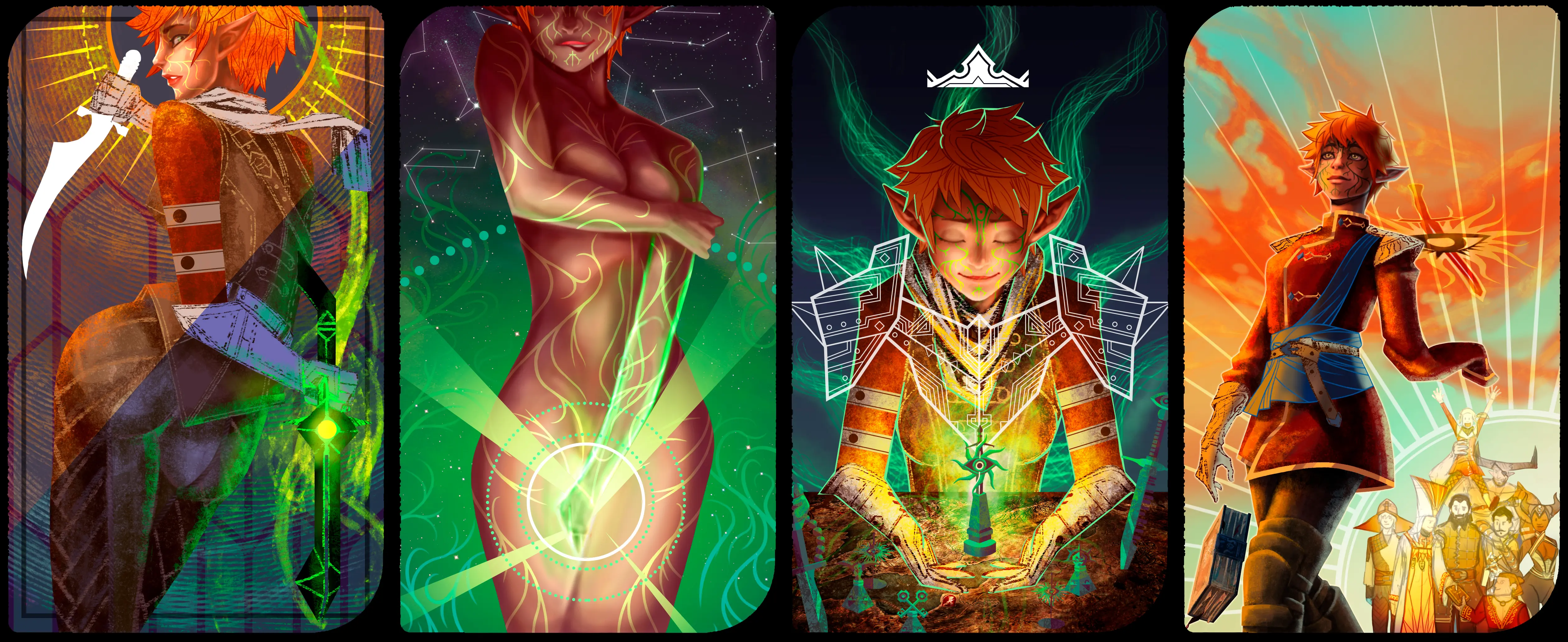
Q: What should small or indie teams prioritize if they want their character movement to feel more expensive than their actual animation budget?
A: I don’t feel experienced enough to give an answer here, but I’ll do my best.
Once again: storytelling applied to gameplay.
Indie games thrive because they break conventions. They can take risks, experiment, and pursue ideas that AAA productions would often bury under layers of approvals and red tape.
That freedom must be used in every department, and animation is no exception.
I don’t know what it is, but there’s something unique about your game (and that’s why you’re creating it and not someone else).
Think about Fez, Hollow Knight, Undertale, Cuphead, Super Meat Boy.
Whatever makes your game vision unique (and usually it’s just one thing) should permeate everything else.
Learn to identify it so you can quickly and effectively experiment with how to apply it to anything.
And not just games, think of Spiderverse.
Use it as a compass.
Spend more time thinking than producing.
Once you have the answer, the rest of the animations will feel unique by definition.
Everything else is the practical advice everyone can give you: reuse animations, limit its quantity, limit the amount of characters and rigs, avoid extremely complicated features that you know will take a lot of time (unless you’re willing and able to pay for them).
And accept that you’ll probably have to wear many hats: animator, rigger, tech artist, engineer, to cover the many roles that will have to be filled with just a few people.
Q: For artists who want to grow into strong game animators, what skills or mindset matter more than people usually realize?
A: Before anything else: be a good person.
There’s a saying you’ll hear all over the industry, and it is “Don’t be a jerk”.
Because despite appearances, this industry is surprisingly small. Everybody knows everybody.
And I can assure you that working with a kind junior is a thousand times better than working with an arrogant senior.
Skills can be refined. Character cannot.
I remind you that this is a collaborative effort. Even more so in games!
Everyone helps each other. Entire communities are built on that spirit.
You spend every day working and interacting with these people, and fortunately, they happen to be some of the kindest and most humble individuals I’ve ever met.
So I’ll repeat it: be a good person before anything else.
If someone asks for help, help them.
If you receive feedback, take it gracefully, they’re trying to help you improve, not to satisfy their ego.
And if the time comes to leave a job, leave things organized, thank people for the opportunity and leave with dignity.
Most of the work I got this past year wasn’t the result of applying to openings (AI filters rejected me immediately), they came from producers who remembered what it was like to work with me and reached out with a project in hand.
It’s thanks to those people, and the way we conduct ourselves professionally, that we build our network over time.
Give it time.
If you left a good impression, people will notice, trust me.
And be careful, because the opposite is true as well!

Consolution
Great gameplay animation is about much more than making a character move well—it is about creating movement that feels responsive, readable, and satisfying for the player.
Oscar Héctor Castro shares practical insights from years of production experience, explaining why strong fundamentals, teamwork, and thoughtful planning matter more than expensive tools or perfect motion capture.
From gameplay responsiveness to AI-assisted workflows, this conversation offers valuable lessons for animators, technical artists, and game developers who want to build characters that not only look convincing but also feel great to play.
Explore more behind-the-scenes stories in our exclusive interview series. We have many more conversations with industry visionaries coming soon, so be sure to visit us again.
Get in touch
Got a project in mind? We usually reply within a day.