


Context
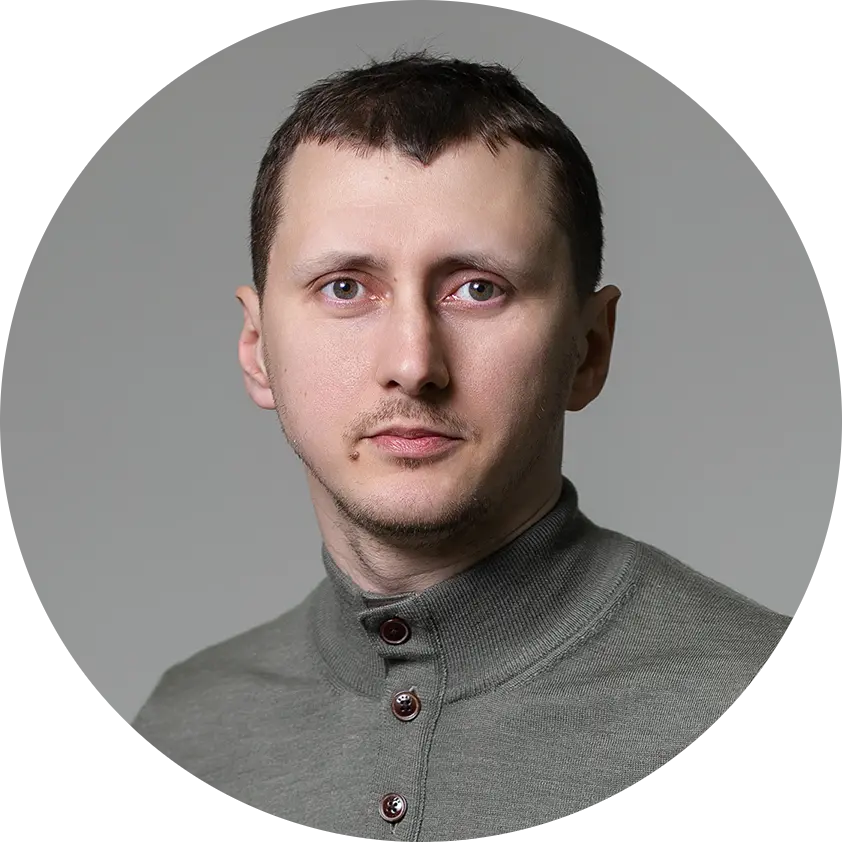
Artem Babych is a real-time VFX artist with experience in mobile, casual, and game production projects. He has worked with Playrix, Room 8 Studio, Colossi Games, Panoramik Games, and on freelance and contract projects.
His background covers both the visual and technical sides of VFX, including Houdini, EmberGen, Unity particle systems, Unreal Engine Niagara, shaders, Blueprints, C#, and C++.
This interview explores how real-time VFX works in actual game production—not only as visual polish, but also as part of gameplay readability, player feedback, optimization, and the development pipeline.
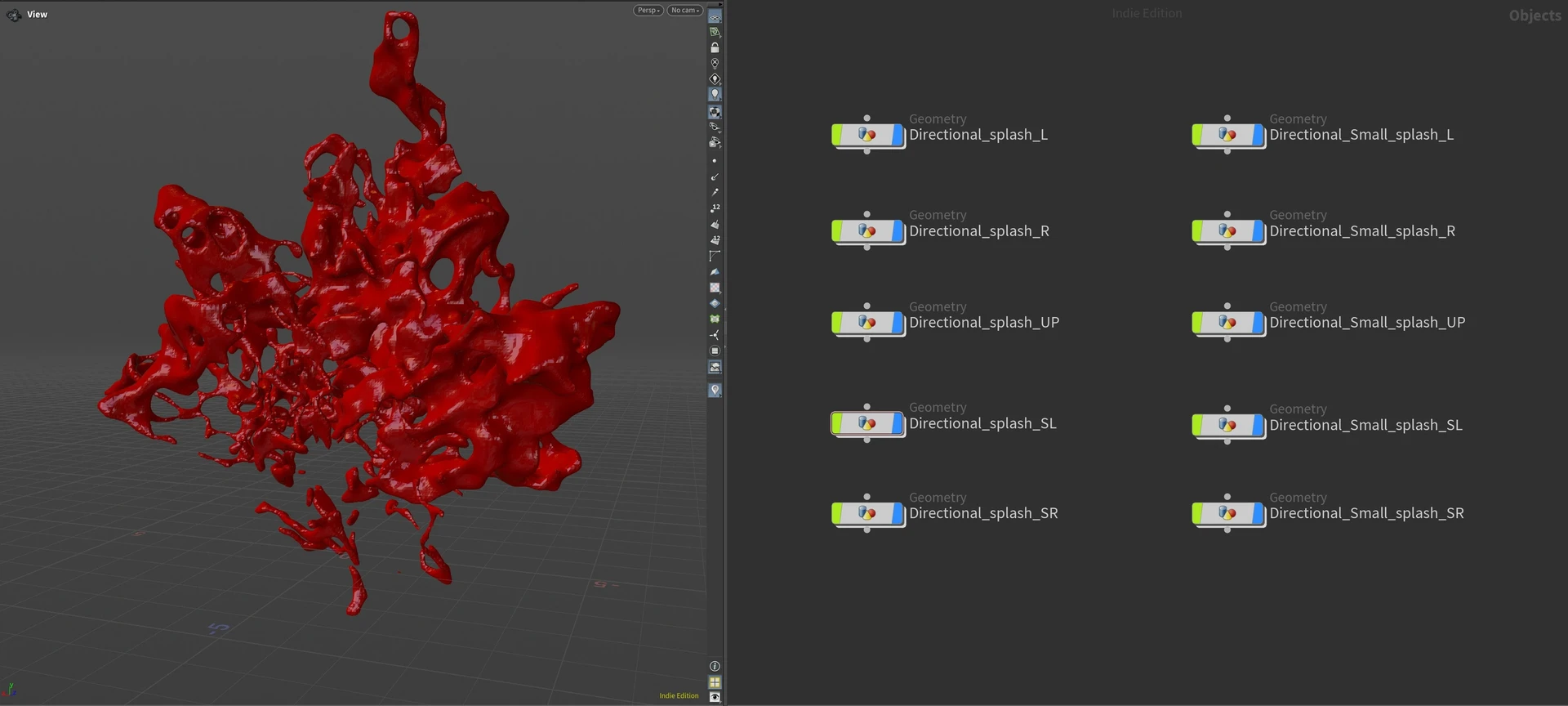
↓ Houdini splash VFX by Artem Babych
Main Topics
- Real-Time VFX
- Gameplay Readability
- Player Feedback
- Unity and Unreal Engine
- VFX Optimization
- Production Pipelines
- Reusable VFX Assets
- Indie VFX Production
- VFX Outsourcing
- Common VFX Mistakes
Interrview

Q: You have worked with real-time VFX across different teams and projects. How would you describe what a game VFX artist actually does in production?
Artem: The job of a VFX artist is to create a clear visual event that gives players feedback for their actions—and ideally delivers a small dopamine hit. This could be throwing a grenade, casting a spell, pressing a button, or opening a chest.
↓ VFX work by Artem Babych
Environmental VFX works a little differently. Its main purpose is to support the atmosphere of a scene. Feedback is still present, but it is more subtle: water splashing under the player’s feet, droplets rising when a rock falls into lava, or visible air currents.
From a production perspective, VFX is always a team effort. Few roles in the industry have to do the splits between disciplines quite like a VFX artist. The work combines creativity, technology, and limitations. We implement the art director’s vision, follow the game designer’s intent, work within the technical artist’s requirements, and collaborate closely with the development team.
Q: What is the biggest difference between VFX that looks good in a portfolio and VFX that actually works well inside a game?
Artem: Effects posted online without being integrated into a game are often created to showcase an artist’s abilities. Because of that, they may use solutions that are not properly optimized.
↓ VFX work by Artem Babych
I always try to follow optimization standards in my portfolio and create effects that are ready for a game. However, this sometimes makes them look simpler or less visually packed.
Production VFX must always serve a clear purpose: inform the player about an event without preventing other objects and systems on the screen from doing their jobs.
Q: In real game production, when should a team start thinking about VFX: early in prototyping, or later when the gameplay is already clear?
Artem: Draft effects should be created from the beginning. As soon as the player can interact with the game world, the team should establish how VFX will support those interactions—even if the effects are still made from basic primitives.
Some teams leave VFX until the very end and treat it as the cherry on top. This often leads to an inconsistent project, missed deadlines, or a release filled with unfinished draft effects instead of a polished result.
↓ VFX development process by Artem Babych
Q: What do game developers often underestimate when they ask for VFX?
Artem: They often underestimate that VFX is a complex component that cannot exist outside its context.
There is a mechanical part: the initial draft that works inside the game and shows where the effect belongs in the event. There is also the visual part: everything that makes the effect look good and match the art direction.
On top of that, the effect still needs integration, optimization, and testing.
↓ Real-time gameplay VFX by Artem Babych
Q: How do you approach readability in VFX, especially when many effects happen on screen at the same time?
Artem: Shape and color are the first things players see and react to, so these elements must always be controlled carefully.
The next level is the internal structure of the effect—the harmony between its shapes and movement. This is important for how visually satisfying the effect feels.
↓ VFX work by Artem Babych
Some games become visual meat grinders, with ten or more effects appearing at the same time. In those situations, proper visual hierarchy is essential, but optimization becomes just as critical.
Q: What are the most common performance problems with real-time VFX in Unity or Unreal?
Artem: The first problem appears when every effect is designed to be large and impressive, spending the device’s processing power on unnecessary elements that may also tire the player visually.
After that, you need to identify the main bottlenecks. These are usually shader complexity, texture size, particle count, transparency, and overlapping transparent elements.
↓ VFX work by Artem Babych
In Unreal Engine Niagara and Unity VFX Graph, another problem can be logic that is calculated every frame for every particle.
Optimization is always about balancing visual richness with performance. Ideally, you should not have to search for that balance later. You should avoid overloading the effect from the beginning.
↓ VFX work by Artem Babych
Q: You mention Houdini, EmberGen, Unity particles, Unreal Niagara, Blueprints, C#, and C++. How technical does a good VFX artist need to be today?
Artem: I believe the technical side must always be present. It helps solve optimization problems, handle more complex technical implementations, and allows the artist to think within the system they are working in.
At the same time, the strength of a VFX artist is not in being extremely creative or extremely technical. It comes from balancing both sides and knowing how to apply them to the task.
Q: When working with an art director or game designer, what information do you need before starting a VFX task?
Artem: Personally, a short description and access to a playable build are usually enough for me to begin.
However, a properly prepared brief saves the client’s time and helps the artist. It should explain the purpose of the effect, where it appears, how long it lasts, and how the art direction imagines the final visual.
↓ VFX work by Artem Babych
This can include art references, reference projects, and storyboards showing the key stages of the effect. It is also important to know whether the animation for the affected object is ready and whether the functionality needed to trigger the effect has already been implemented.
I have never had to create an effect after the sound was already finished, but there are situations where VFX must be synchronized with existing audio.
Q: What makes VFX production difficult in mobile or cross-platform games?
Artem: You should usually target an average device—the type used by most of your audience, or by the users who generate the most revenue, depending on the product.
Starting from this middle point makes it easier to optimize the effect for weaker devices and add more detail for more powerful hardware.
The main problems on weaker devices are texture size, shader complexity, and draw calls.
↓ VFX work by Artem Babych
q: Have you seen situations where VFX changed the feeling of gameplay, not just the visual quality?
Artem: A well-designed and purposeful effect will always strengthen the event happening on the screen.
Even a simple visual added by an animator—such as an improvised trail behind a sword or a ring-shaped shockwave—can make an attack feel stronger.
If that simple ring is replaced with a professional effect featuring intentional colors, internal animation, artistic shapes, and particles that fade naturally at the end, the impact becomes much stronger.
q: What is a good VFX pipeline for a small indie team that does not have a full VFX department?
↓ VFX work by Artem Babych
Artem: Create your own reusable asset library containing textures, image sequences, shaders, and animations. Then focus on combining those resources in different ways.
Do not spend too much time on long and expensive polishing. Work according to the “good enough” principle.
Q: If a small team wants to hire or outsource VFX work, what should they prepare before contacting a VFX artist?
Artem: The first step is to define the pool of effects that needs to be created. Do not try to cover everything immediately. Identify the effects that are most important.
Once the main effects are finished, their resources can often be reused to create secondary effects.
↓ VFX work by Artem Babych
The team should then define the visual direction. Any useful references will work. They can be created specifically for each effect or collected from existing projects. For example, you may like the hit dynamics from one game, the shapes from another, and the color choices from a third.
A test scene is also very helpful. If the effects are mainly related to combat, the best option is to provide a scene with placeholder characters that can reproduce the mechanics requiring VFX.
↓ VFX work by Artem Babych
The project should ideally be set up through Git so the team can quickly share mechanical updates and receive integrated resources from the artist.
If sharing the scene is impossible, provide a gameplay video with an explanation of the mechanics and specify the engine version.
The important thing to understand is that better preparation leads to a better result and gives the artist more time to produce a larger number of effects.
Q: What VFX mistakes do you see most often in games or prototypes?
Artem: A good effect does not attract negative attention. You are asking how to make a bad effect? Thank you—here is the recipe:
- Stack several elements with additive materials on top of each other.
- Push every material parameter to its maximum value.
- Add as many particles as possible.
- Forget about hierarchy: use huge explosions for small objects and tiny effects for large ones.
- Add more effects to the UI.
- Trigger everything at the same time.
It sounds funny, but these decisions damage the player’s attention and completely break immersion in the game world.
↓ VFX work by Artem Babych
Q: Looking at your own experience, what part of VFX work do you personally find most interesting: simulation, technical setup, gameplay feedback, visual polish, or something else?
Artem: Well, I like watching things burn, seeing people run around, fire trucks arriving, and everyone standing there in shock. I find that entertaining.
More seriously, I enjoy animation and simple technical solutions where several objects work together. I like it when one effect quickly gives birth to another based on previous experience.
I enjoy drawing frame-by-frame animation. I also enjoy simulations, although I do not always get the opportunity to use that knowledge.
↓ VFX work by Artem Babych
Q: What advice would you give to game teams that want their VFX to feel more professional, but do not have a big budget?
Artem: Define the main pool of effects first. When creating their resources, plan how those resources can be reused for secondary effects.
Do not overinvest in polishing. Optimization is important, but it should not become a major problem if the effect is appropriate and not overloaded from the beginning.

Conclusion
The most useful takeaway from Artem’s experience is that good VFX is not measured by how much is happening on screen.
A strong effect tells the player what happened, makes the action feel better, and disappears before it becomes visual noise. To achieve that, a VFX artist has to think about art, gameplay, timing, performance, and integration at the same time.
Explore more behind-the-scenes stories in our exclusive interview series. We have many more conversations with industry visionaries coming soon, so be sure to visit us again.
Get in touch
Got a project in mind? We usually reply within a day.