


Have you ever noticed a beautiful 3D character asset turning the game’s frame rate into a complete slideshow immediately after being imported into the engine?
Or have you seen animators wasting entire weeks on routine, repetitive tasks that could easily be automated with just a couple of clicks?
In game development, a wide gap often arises between pure creative vision and harsh technical code.
Artists naturally want to see maximum polygon counts and photorealistic shaders on screen, while programmers constantly fight for every single byte of RAM and the structural optimization of draw calls.
Who can reconcile these two opposing sides on a daily basis?
This is exactly where a unique specialist comes onto the production stage, acting as a functional bridge between technology and visuals.
Let’s start with a basic question: what is a technical artist?
They are essentially a translator from the language of pixels to the language of compiled shaders, a person who makes art work within the strict constraints of a game engine without losing any of its creative magic.
A Bridge between Code and Canvas: What Is Tech Art?
To understand what is tech art in its true essence, imagine it as the structural glue connecting various separate development elements.
The field of technical art is a discipline that optimizes the production of visual content, sets up tools for artists, and ensures that the project runs stably on target platforms.
Simply put, while a regular artist creates a beautiful model, a technical art specialist sets up its rigging, writes custom shaders, or simulates realistic physics.
A good tech artist is worth their weight in gold because they save the entire team from technical dead ends.
If you are interested in exploring the official career trajectories of this profession, we highly recommend checking out the detailed guide on CG Spectrum, which outlines current industry requirements.
Tasks and Responsibilities: Technical Artist Job Description
If you open a current technical artist job description in any gaming company today, you will not see a list of monotonous tasks.
This role is incredibly dynamic.
To understand in detail what this employee is responsible for and what does a technical artist do on a real production floor, let’s break down their responsibilities into key blocks:
- Pipeline support. They automate the export and import of assets from 3D software packages (Maya, Blender) into game engines (Unreal Engine, Unity) using Python or C#.
- Shader creation. They write code (HLSL/GLSL) or set up nodes for complex visual effects like water, ice, or glowing elements.
- Performance optimization. They set up levels of detail (LODs), manage texture memory, and eliminate FPS drops or excessive draw calls.
- Rigging. They prepare character models for animation by creating complex skeletal structures.
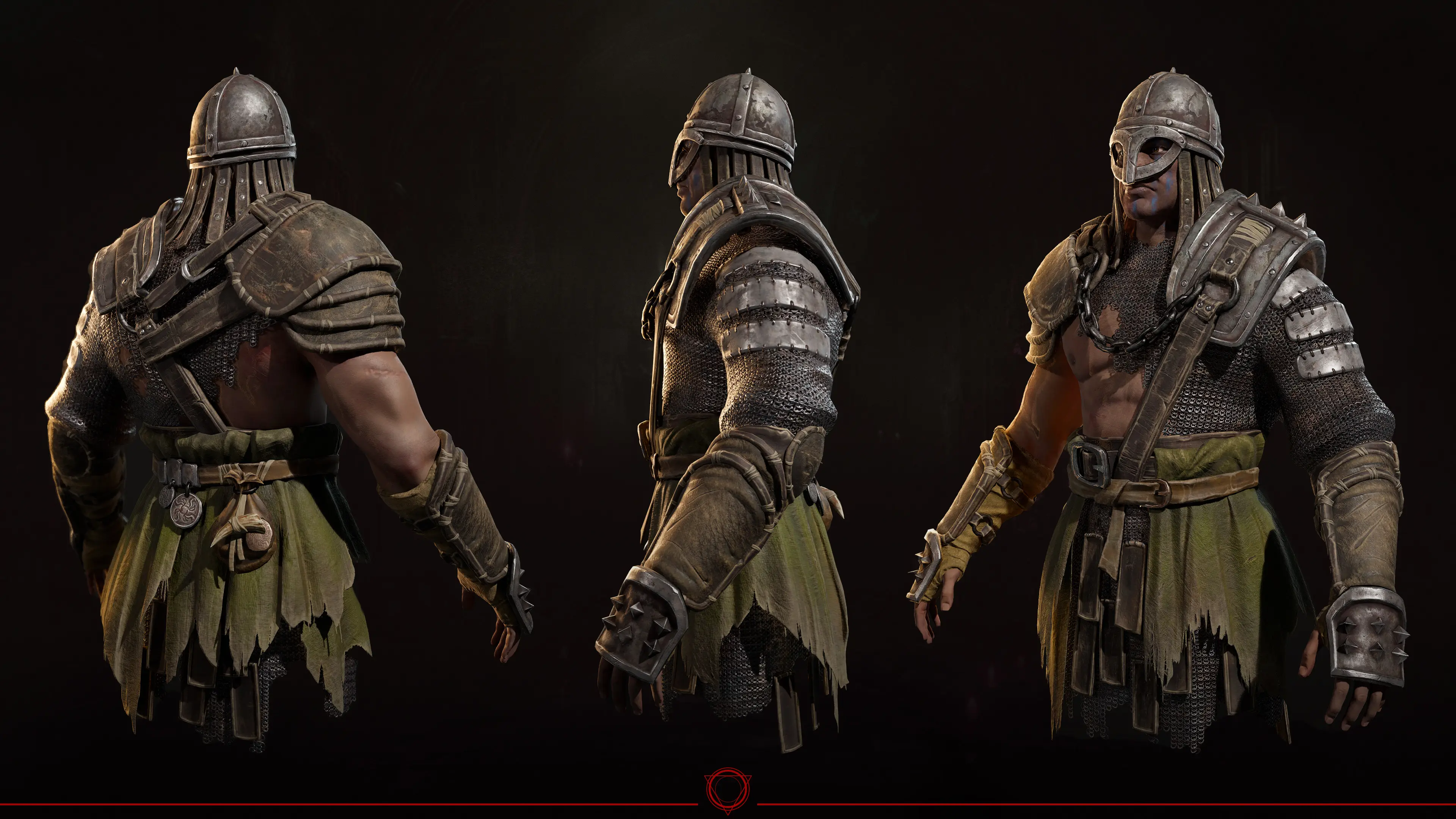
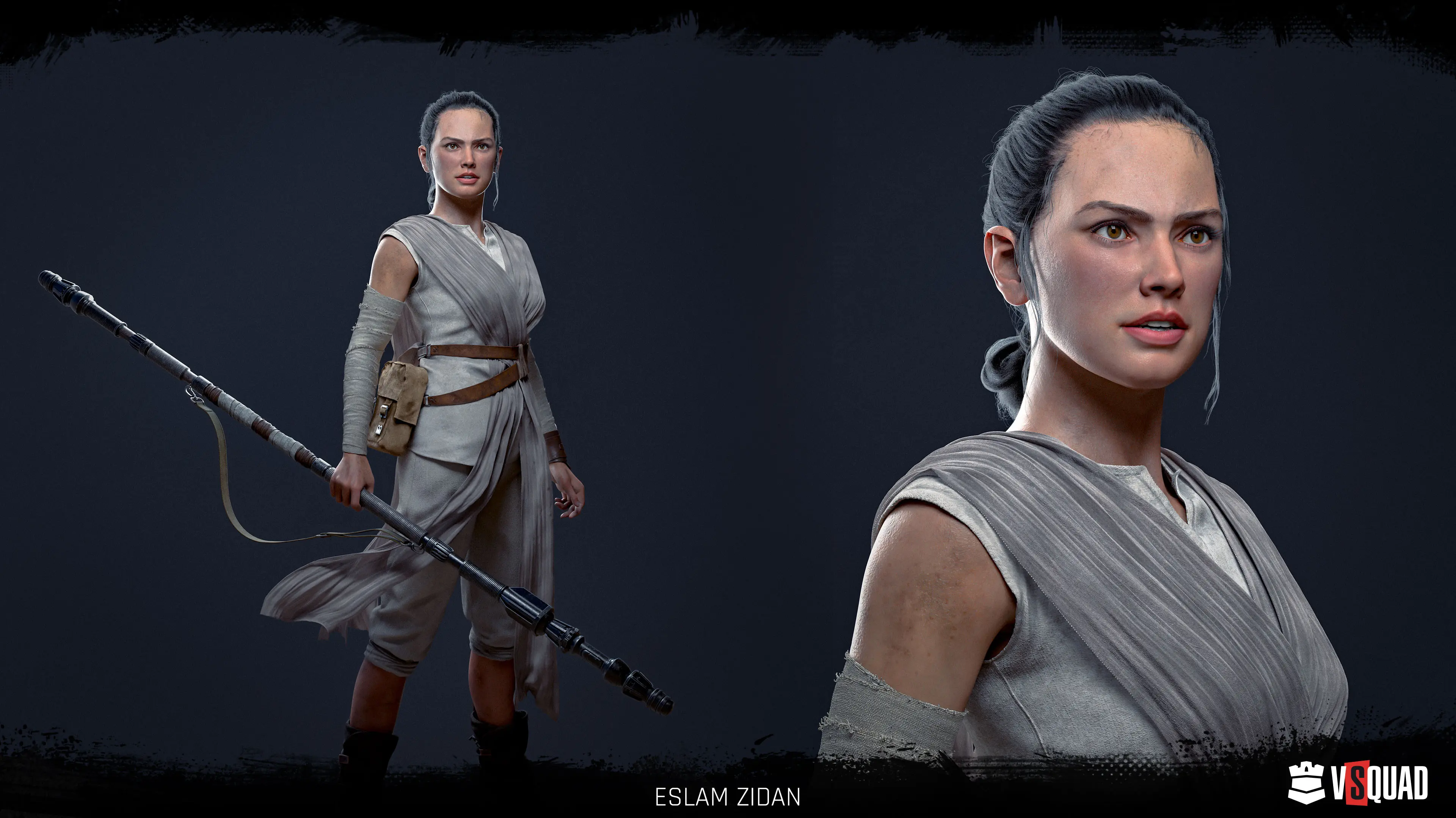
A 3D technical artist is especially in demand in modern game development, taking on the integration of complex geometry.
They ensure that high-poly sculpts are correctly transferred to low-poly versions, and that the baking of normal maps occurs without seams or artifacts.
Their task is to make sure that the most complex visual asset becomes “manageable” for the game engine.
| Specialization Track | Primary Technical Focus | Key Software & API Ecosystem | Core Performance Metric Optimized | Primary Production Deliverable |
|---|---|---|---|---|
| Pipeline & Tooling (Pipeline TA) | Automation of asset ingestion, inter-software data validation, and custom GUI creation for creative teams. | Python, PySide6 / PyQt, C++, ShotGrid API, DCC Command APIs (Maya, Blender). | Studio production turnaround time; asset export/import error rates. | Custom batch-exporters, asset validation tools, automated naming-convention enforcers. |
| Shaders & Rendering (VFX / Shader TA) | Real-time material logic development, customized lighting models, and GPU-driven runtime visual effects. | HLSL / GLSL, Unreal Material Editor, Unity Shader Graph, Substance Designer. | Vertex/pixel shader instruction counts, draw calls, overdraw mitigation, GPU frametime (ms). | Master materials with structural optimization switches, dynamic weather/destruction shaders. |
| Character & Dynamics (Character TA) | Advanced anatomical skeletal structures, procedural deformation fixes, and runtime cloth/hair physics simulation. | Maya (MEL), Unreal Control Rig, Python, Marvelous Designer pipeline integrations. | Skinning matrix evaluation memory, animation budget allocation limits, CPU/GPU simulation overhead. | Modular character rigging frameworks, production-ready runtime physics collision assets. |
| Procedural & World-Building (Environment TA) | Large-scale world automation, algorithmic asset scattering, and memory-efficient runtime streaming setups. | Houdini (HDA), Unreal PCG (Procedural Content Generation), Substance Automation Toolkit. | Disk storage footprint, VRAM utilization, Hierarchical Level of Detail (HLOD) streaming efficiency. | Procedural biome generators, automated collision & LOD generation graphs. |
Essential Skills: Technical Skills in Art
Basic technical skills in art include a solid knowledge of mathematics (vector algebra is essential for working with transformations) combined with a highly developed artistic taste.
The tech artist must instantly see if the light falls incorrectly or if the proportions of a model are distorted during animation.
The specialist is required to master the scripting language Python for software automation, engine logic (Blueprints in Unreal Engine, Shader Graph in Unity), and procedural generation tools such as Houdini.
It is useful to read a breakdown of real-world experience in professional blogs, for instance, an article on ArtStation Blogs, where industry specialists share their working insights.
How to Become a Technical Artist from Scratch
There is no single educational standard here.
Many people wonder how to become a technical artist from scratch.
In practice, people come into this field from two different sides: artists who went into technology (3D modelers who grew tired of routine and started learning Python), or programmers who moved into art (graphics developers with a strong artistic flair).
If you want to master this profession, start by learning one engine (for example, Unreal Engine 5), understand materials, brush up on Python, and learn how to set up model skeletons.
A technical artist’s portfolio does not consist of static pictures, but rather of process demonstrations: videos showing complex shaders, custom scripts for Maya, or examples of heavy scene optimization.
The Financial Side: Technical Artist Salary
Because this specialist possesses a rare set of competencies, their compensation traditionally remains at a very high level.
The expected technical artist salary significantly exceeds the income of regular generalist modelers.
In the United States and Western Europe, a beginner specialist (Junior) can expect an amount ranging from $50,000 to $70,000 per year.
Middle-level specialists receive an average of $85,000 – $110,000, while experienced Senior and Lead Technical Artists earn from $130,000 to $160,000+ per year, depending on the scale of the studio.
In Eastern Europe, the rates also remain highly attractive: the shortage of talent forces employers to actively fight for strong tech artists, offering them excellent conditions and high rates.

Fun Fact
One of the most famous technical tricks in game development belongs to the game Journey.
To create a realistic, shimmering sand that would not overload the PlayStation 3 processor, the technical artists spent several months writing a unique shader using mathematical models of light reflection.
Ultimately, the sand became a fully fledged “character” of the game.
A Comprehensive Approach: About VSQUAD Studio
Creating the right technical foundation for art requires massive experience.
Our company, VSQUAD, has specialized in comprehensive outsourcing solutions for game development since 2015.
We handle all stages: from the production of 2D/3D characters and environments to animation, VFX, and expert technical implementation in Unity, Unreal Engine, and Godot.
Over 10 years of operation, we have successfully delivered more than 50 projects, including contributing to acclaimed titles like Wayfinder, Darksiders Genesis, and Ruined King.
We set up highly efficient pipelines, helping game studios accelerate their production without sacrificing visual quality.
FAQ
A 3D modeler focuses on aesthetics, anatomy, and texturing of an object. A technical artist takes this model and transforms it into a functional game asset: they set up the skeleton for animation, create shaders, and optimize the mesh geometry.
No, classical drawing skills are not mandatory. It is far more important to have developed spatial thinking, an understanding of composition, color theory, and lighting to spot visual imperfections and fix them using technical methods.
Python is the absolute industry standard. It is used for writing scripts and automating routines across all major software packages (Blender, Maya, Unreal Engine). For working with shaders, it is also beneficial to know HLSL or GLSL.
In the early stages, these tasks are often split between programmers and artists. However, as the project grows, a lack of control over the pipeline and optimization leads to critical bugs. Having a tech artist saves indie teams hundreds of hours of development time.
Yes, the demand for it is only growing. Neural networks generate images, but they cannot build working pipelines, optimize draw calls, set up complex character rigging, or fix technical bugs inside game engines.
The optimal stack for a starter is a combination of Maya or Blender (to study modeling, rigging, and script logic) along with Unreal Engine 5 or Unity (to master game engine logic and visual shader editors).
Ready to Optimize Your Production?
A technical artist is a unique architect of gaming worlds, turning the bold fantasies of art directors into stable, working code.
Without them, games would lose their smooth frame rates.
If you want the visual component of your project to be flawless and run without hitches on any device, the expert team at VSQUAD Studio is ready to build an efficient, ready-to-go production pipeline.
Let’s turn your vision into production-ready visuals together! Contact us → 📩 head@vsquad.art or schedule a call.
Our Game Art Services
Get in touch
Got a project in mind? We usually reply within a day.