


Every producer who has shipped more than one title knows the moment: the internal roadmap says “concept art done by Friday,” and Friday comes with a half-finished folder and a freelancer who’s gone quiet.
That’s usually the point where “maybe we build everything in-house” turns into “we need to find game developer companies who already have this solved.”
The market is full of video game development companies claiming full-cycle capability. Few actually run a pipeline that survives contact with a real production schedule.
This guide breaks down what separates a working game production company from a portfolio site with a contact form – and where VSQUAD fits into that picture.
Why Studios Outsource Development
When studios look for external video game development services, they usually seek to address several critical bottlenecks.
Access to Niche Expertise
Hiring a full in-house team for hard-surface modeling, rigging, or Unreal-specific technical art is expensive and slow. Most studios need that expertise for a defined production window, not permanently – which is exactly why hire game development services exist as a category.
Real Economics, Not a Slogan
A senior 3D artist in-house costs months of onboarding plus benefits, equipment, and downtime between projects. A scoped engagement with an outsourcing partner is billed against deliverables, not headcount – the cost difference shows up directly in burn rate during pre-production.
Speed for Peak Workloads
Pre-launch crunch always needs more asset throughput than the steady-state team. Game production companies that already run parallel pipelines can absorb that spike in days, not the months it takes to hire and ramp new staff internally.
Technical Debt Reduction
Rushed internal asset production tends to skip retopology cleanup, proper UV layouts, or LOD generation “for now.” Those shortcuts compound. A studio specializing in production-ready delivery treats that discipline as non-negotiable from asset one.
Struggling to scale your game asset production without bottlenecking your internal pipeline?
Don’t let talent onboarding delays or broken review loops put your upcoming milestone builds at risk. Get an embedded unit of senior artists, animators, and technical specialists who integrate directly into your Jira, Slack, and Perforce workflows within 48 hours.
How Production Breaks Without a Process - and How It Should Be
The most common failure isn’t bad art. It’s a missing review stage. A 3D artist models a hero character without checking the draw call budget for the target platform. Nobody catches it until the model hits Unreal Engine, where the engine’s profiling tools flag a frame-rate drop two weeks before a milestone build.
That’s the formula in practice: problem → consequence → outsourced solution → VSQUAD reinforcement.
The problem is a concept that ignores technical constraints. The consequence is 20–25% extra time spent fixing it in production, plus a missed milestone. The fix through outsourcing is having a Tech Artist embedded in the team from concept stage. At VSQUAD, Technical Review is built into Stage 3 of our pipeline, something we run on every project including Wayfinder.
The second common break point is communication drift. A freelancer delivers “finished” work that doesn’t match the brief, and three rounds of email back-and-forth eat a week. Outsourcing partners that integrate directly into the client’s existing tools – Perforce, Jira, Slack – instead of working in isolation cut that loop down to same-day clarification.
A third pattern is inconsistent quality across a large asset batch. This happens when there’s no single Art Director reviewing every asset against the same reference sheet. Unity’s own asset workflow guidance stresses consistent import settings and naming conventions for exactly this reason: structure prevents drift more reliably than individual skill does.
What Exactly Can Be Delegated
Not everything belongs outside the studio. Partnering with an experienced game development services company ensures that specialized tasks are handled correctly while your core team remains focused.
Here’s a practical split:
| Delegate Externally | Keep In-House |
|---|---|
| 3D character & creature modeling | Core gameplay programming |
| Environment art & modular asset kits | Game design decisions |
| Props, weapons, vehicles | Narrative direction |
| Rigging & animation-ready topology | Live-ops & monetization logic |
| VFX, UI/UX & HUD design | Core engine architecture |
| Marketing creatives & mobile ad assets | Community management |
The dividing line is simple: anything that defines why the game is unique stays internal. Anything that’s production volume – assets that follow an established style guide – is safe to delegate.
What the Process of Working with an Outsource Partner Looks Like: 6 Steps
A studio that’s done this dozens of times doesn’t start with “send us your brief and we’ll get back to you.”
1. Define Scope and Objectives
Before any contract, the target platform, budget ceiling, and milestone dates need to be locked. Vague scope is the single biggest cause of mid-project cost overruns. At this stage, utilizing professional game development consulting services can help set realistic KPIs and technical benchmarks.
2. Research Potential Partners
When evaluating game development company services, filter by domain expertise. A studio with strong mobile work isn’t automatically equipped for AAA hard-surface modeling. Check for case studies in your specific genre and engine before sending a brief.
3. Review Portfolios and Validate Quality
Look past the hero shots. Ask for in-engine screenshots – a model that looks perfect in Marmoset can still break under your engine’s lighting setup. Skipping validation results in assets that need full retexturing once they hit production.
4. Align Expectations and Define Deliverables
At VSQUAD, an engagement isn’t one generalist – it’s an Art Director, a concept artist, and a Tech Artist working from the same brief simultaneously, with deliverables defined in the contract before production starts. This tight alignment establishes reliable game development partnership services.
5. Monitor Progress and Track Milestones
Weekly check-ins against a visible milestone board, not a surprise delivery at the end. We work directly inside the client’s existing pipeline – Perforce, Jira, Slack – instead of handing over a final folder and leaving the client to sort it out.
6. Evaluate Results and Iterate
Final review against the original brief, with a defined iteration loop for revisions. Contracts should specify how many revision rounds are included – open-ended terms are how scope creep eats a budget.
Amateurs vs. VSQUAD
| New/Inexperienced Contractor | VSQUAD | |
|---|---|---|
| Team Structure | One generalist performer | AD + concept artist + Tech Artist |
| Pipeline Integration | Files are sent via email | Work inside client's Perforce/Jira/Slack |
| Technical Control | By eye" check after submission | Technical Review built into Stage 3 |
| Deadlines | Often floating | Milestone structure fixed in contract |
| Large Project Experience | Mostly absent | Wayfinder, Darksiders Genesis, SMITE |
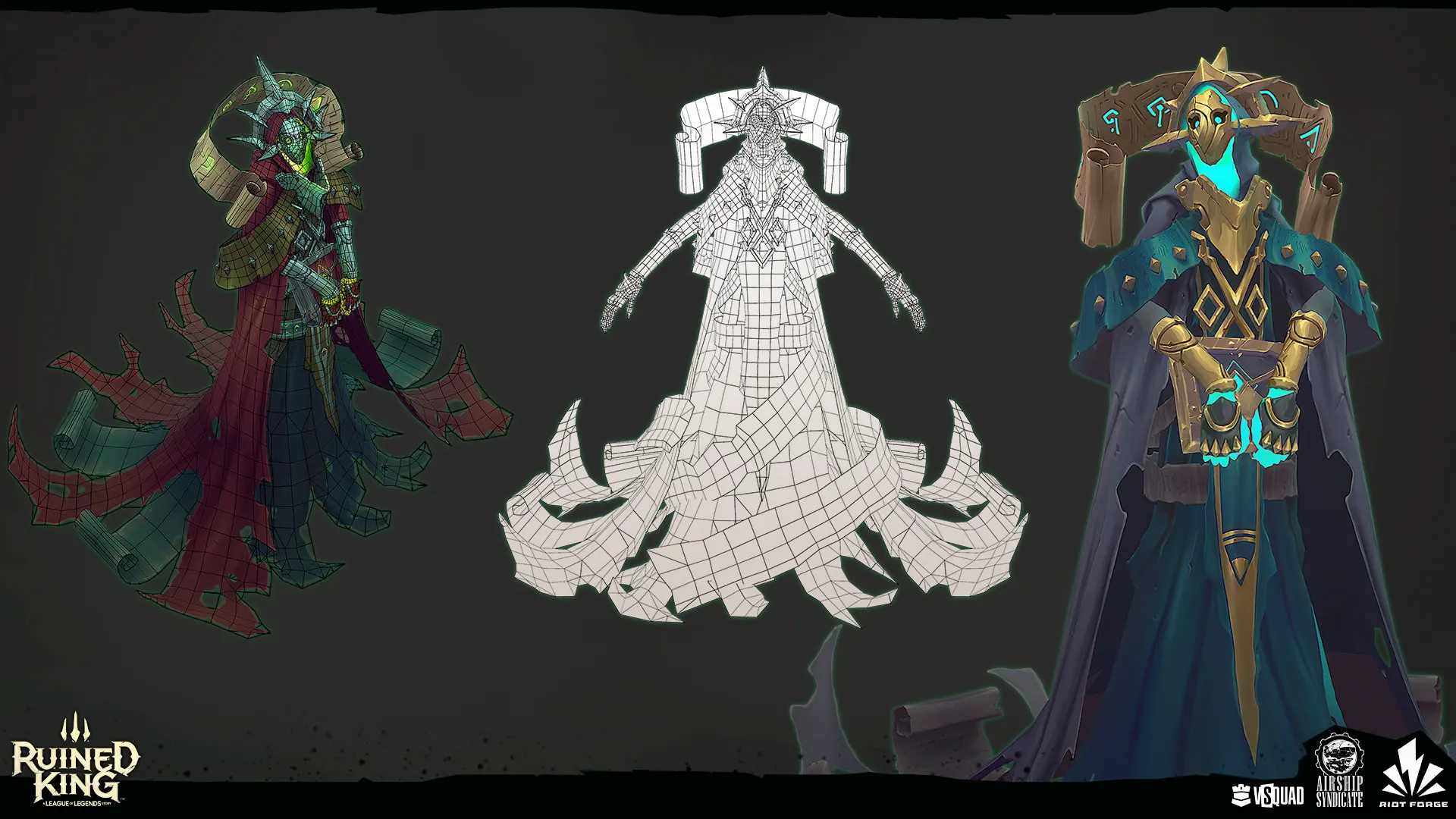
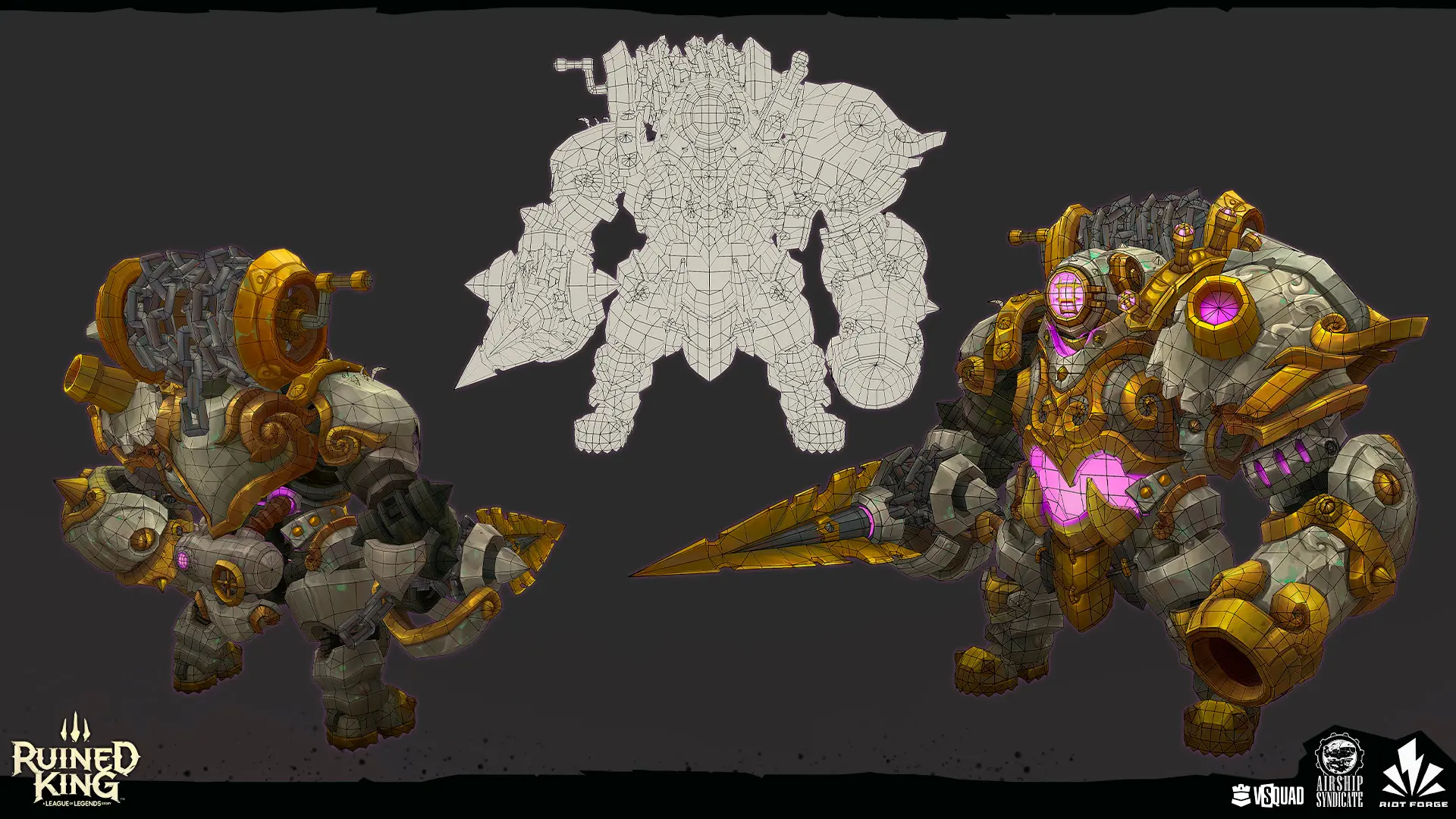
The gap isn’t talent – it’s process. A 200+ asset delivery like our work on Wayfinder for Airship Syndicate only stays consistent because every character, weapon, and vehicle passes through the same senior review loop before it ships.
Ready to secure your production timeline and get a transparent cost estimate?
Let’s look at your specific project scope, engine constraints, and target delivery dates. Fill out our quick project brief form to receive a fixed-price quote and a technical pipeline strategy tailored to your studio’s workflow.
About Us
VSQUAD has been producing game art since 2015, working across full cycle game development services in Unity, Unreal Engine, and Godot. Our team scales into a client’s production environment within 48 hours – not a generalist freelancer, but an embedded unit of artists, animators, and technical specialists who follow your existing pipeline.
That structure is what let us deliver 200+ characters and assets for Wayfinder under Airship Syndicate’s stylized RPG pipeline, and support Darksiders Genesis within an established AAA review process. The same approach applies whether the client is an indie team or a publisher running a multi-platform launch.
FAQ
A single stylized character typically runs $300–800; a full asset pack for a mobile title starts around $3,000–5,000. Larger AAA engagements are quoted per milestone. Pricing depends on complexity, polycount, and texture resolution. Most studios, including VSQUAD, provide a fixed quote after reviewing your brief.
Full IP rights transfer to the client upon final payment, as standard in outsourcing contracts. This should be stated explicitly in the agreement before work begins. Confirm transfer terms cover source files (PSD, FBX), not just final renders, and check if intermediate iterations are included.
Most contracts include 2–3 revision rounds per asset as standard; anything beyond that is typically billed separately. Define what counts as a “revision” vs. a scope change upfront. Minor adjustments differ from full redesigns in cost. VSQUAD scopes revision rounds per asset in the initial agreement.
Reliable partners commit to milestone dates in the contract, with weekly progress check-ins to catch slippage early. Milestone-based contracts give visibility into progress, unlike lump-sum delivery. Studios working inside your existing tools (Jira, Slack) flag delays faster than ones working in isolation.
A capable studio works directly inside your tools – Perforce, Jira, Slack, or whatever your team already uses – instead of requiring you to adapt to theirs. This typically takes 24–48 hours to set up. Confirm engine version compatibility (Unity, Unreal, Godot) before kickoff.
Yes – most outsourcing studios, including VSQUAD, scale engagements for indie budgets as well as AAA scope. Indie engagements often start with a small unit rather than a full team. Budget-aware scoping matters more for indie teams – ask for a tiered quote from studios with both indie and AAA portfolio experience.
Making the Right Choice
Choosing among game developer companies isn’t about finding the biggest portfolio – it’s about finding a partner whose process survives your actual production schedule, not just the pitch deck.
Outsourcing = technical debt risk reduction and predictable timelines in production.
VSQUAD = a contractor that systematically ensures this through Technical Review at Stage 3, an AD + Tech Artist + concept artist team, and a milestone structure fixed in the contract before work begins.
Contact us → 📩 head@vsquad.art or schedule a call.
Our Game Services
Get in touch
Got a project in mind? We usually reply within a day.