


There are games you recognize from the very first frame. Borderlands is one of them. Even before you see the user interface or read the title, you know exactly what it is.
A dark, grotesque world that looks as if it were drawn by hand. Thick black outlines contouring every single object. Colors that scream rather than whisper. All of this combined is not just a visual style. It represents one of the most influential artistic decisions in the history of the gaming industry.
But what exactly lies behind this imagery? Why do the developers themselves reject the term “cel shading,” even though it is the phrase most frequently used by fans? And how did it happen that the team at Gearbox Software completely overhauled the game’s entire visual concept just a few months before release – and hit the bullseye? Let’s dive into the details.
Why It Is Not Cel Shading - and What It is Instead
Here is a paradox: if you type “Borderlands cel shading” into a search engine, you will find thousands of articles and tutorials. However, the creators of the game do not accept this definition. From the very beginning, Gearbox CEO Randy Pitchford and his team called the style something else entirely – “graphic novel style” or “concept art style.” This is a fundamental distinction, not just a marketing whim.
The classic Borderlands cel shading, as understood within the industry, is a rendering technique where the engine itself generates flat shadows and outlines to simulate hand-drawn animation. This is how games like The Legend of Zelda: The Wind Waker or Jet Set Radio operate. The engine handles the bulk of the work.
In Borderlands, everything is different. Here, outlines and shadows are not generated automatically – they are drawn by hand directly onto the textures. Artists created every surface element manually, then scanned and refined them digitally.
The Unreal Engine merely added the final outlines on top and amplified the contrast. This is precisely what Gearbox confirmed in an interview with Destructoid: the style is described not as a shader technique, but as “hand-painting with integrated inks.”
The result is what the industry often refers to as “faux-cel”: it looks visually similar to cel shading, but it is produced in a completely different way and delivers an entirely different level of detail.
Where the Borderlands Aesthetic Originated
The history of this visual style’s transformation is one of the most famous stories in game development. Initially, the first Borderlands was being developed as a typical sci-fi shooter with a realistic, dark look. It featured a brown-and-gray color palette, harsh lighting, and a minimum of distinct character.
A few months before the scheduled release, the team showcased a build – and something felt off. The game looked like just another faceless shooter in an already overcrowded genre.
The solution turned out to be radical: a complete overhaul of the art concept. The inspiration came from the short film Codehunters (2006), created by director Ben Hibon. This nine-minute piece blended Western and anime aesthetics, utilizing cel shading over 2D textures to create the sensation of a comic book come to life. This exact visual language became the starting point for the Gearbox artists.
For the Borderlands 3 art style, art director Scott Kester went even further: additional sources of inspiration included Neill Blomkamp’s film Chappie and the anime Tekkonkinkreet – with their shared sense of a living, gritty, overpopulated world.

Fun Fact
Gearbox artists never actually used the term “cel shading” to describe their style within the team. When fans began applying it en masse, the developers specifically released an official clarification: the style is properly called the “graphic novel art style,” representing a fundamentally different technique with an entirely separate pipeline.
How It Is Made Technically: Inside Borderlands Textures
If you break down the pipeline, it becomes clear why this style is so difficult to replicate and why it looks so different from everything else.
Modeling. The base 3D models in Borderlands are deliberately simplified. This is not low-poly art; rather, it is a conscious architectural decision: simple geometry allows developers to shift all the complexity and distinct character onto the texture level.
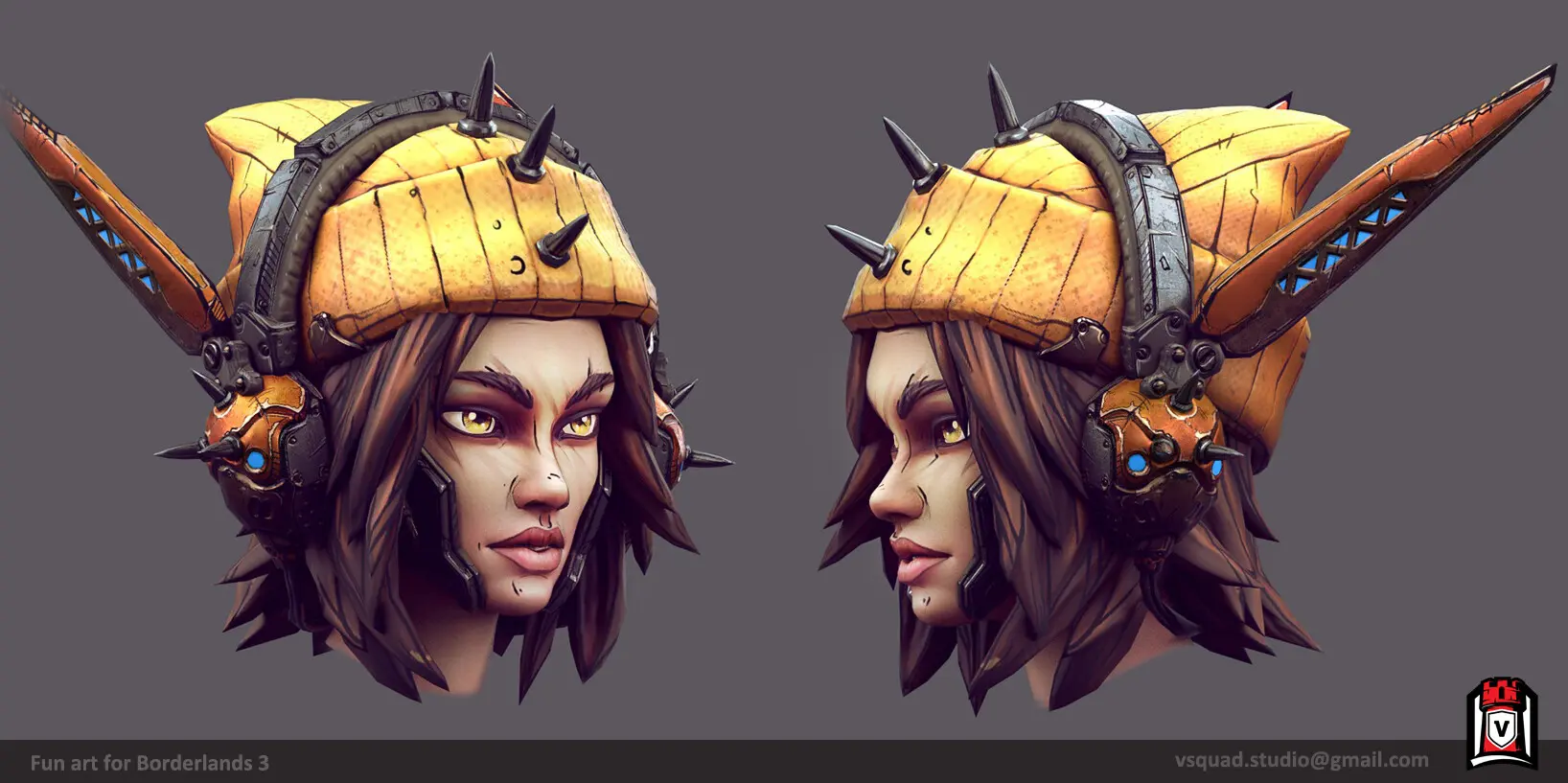
Texturing. This is where the core magic happens. Every surface is a hand-painted piece of art. Artists worked using traditional techniques and then digitized their work. There is absolutely no procedural generation here. This explains why every gun barrel, every piece of scrap metal, and every patch of desert landscape looks like a custom illustration.
Outlining. After texturing, the signature black lines are added. They are always black. They are always present. Along with a post-processing edge detection effect, the lines are also embedded directly into the texture layer and amplified via custom shaders.
Lighting. Unlike classic cel shading with its harsh, two-tone shadowing, the Borderlands graphics utilize a far more complex system: gradient transitions built inside the textures combined with additional real-time shadows. This is exactly what creates a sense of three-dimensional volume while fully preserving the comic book aesthetic.
How the Style Evolved from Game to Game
Borderlands 1. A desolate Pandora rendered in brown and gray tones. Rough textures, minimal detailing, and an overarching feeling of abandonment. It was right here that the Borderlands artwork found its unique identity – though it had not yet been fully polished.
The Borderlands 2 art style. A massive step forward. The color palette became significantly richer: snowy landscapes featuring deep blue shadows, and industrial zones marked by rusty orange accents. Texture resolution and detailing increased, and environments became much more diverse. Here, too, appeared Handsome Jack – a character who became the symbol of the series, largely due to his design.
The Borderlands 3 art style. This brought maximum variety to the Borderlands environment: multiple planets featuring fundamentally distinct biomes – ranging from snow-covered plains to dense tropical jungles. It introduced dynamic color grading, more saturated post-effects, and highly increased detail. The entire DNA of the series was fully preserved but elevated to a whole new level.
How Borderlands Character Design is Structured
The characters of Borderlands provide one of the most vivid illustrations of how art operates hand-in-hand with game design.
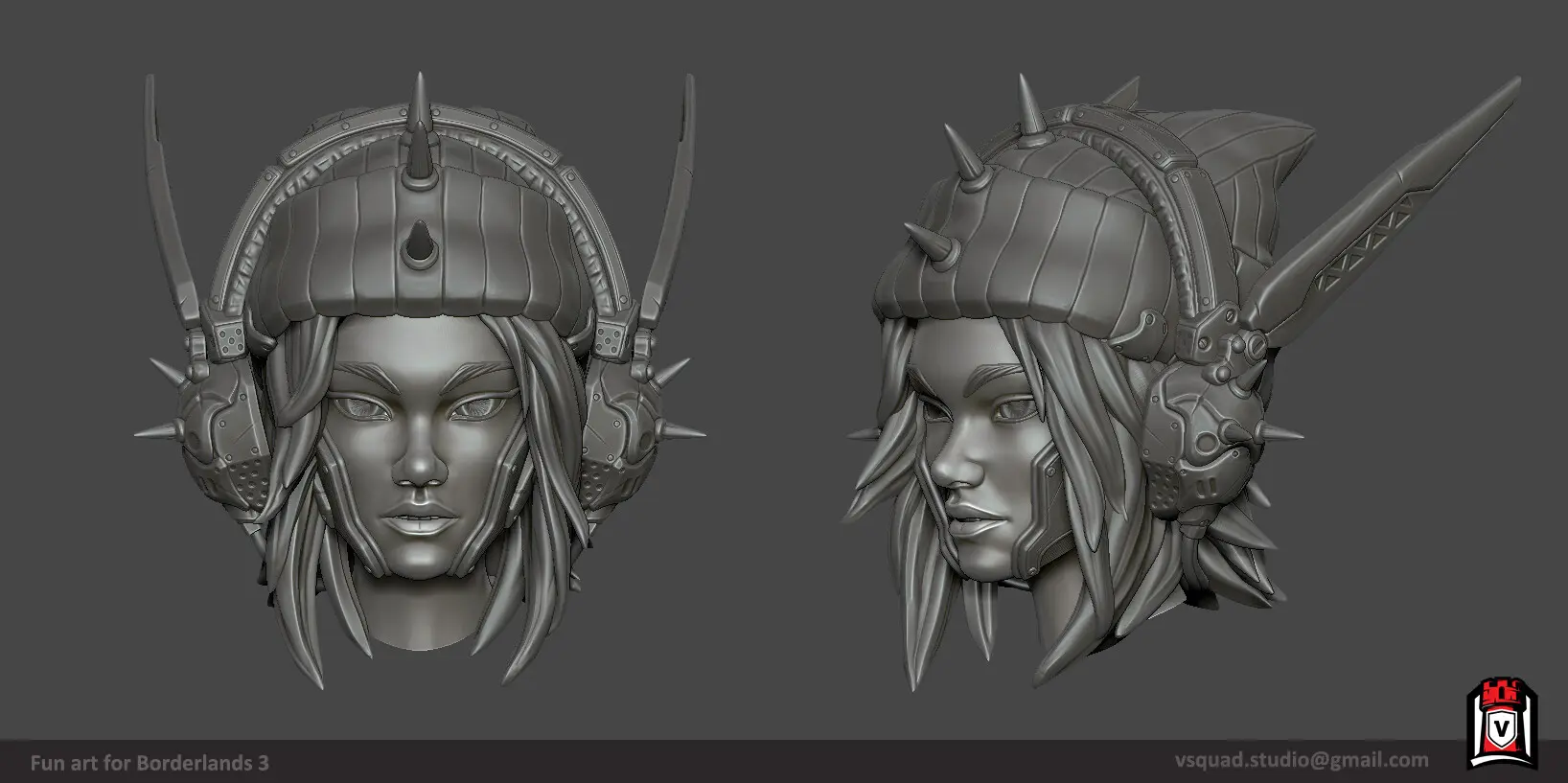
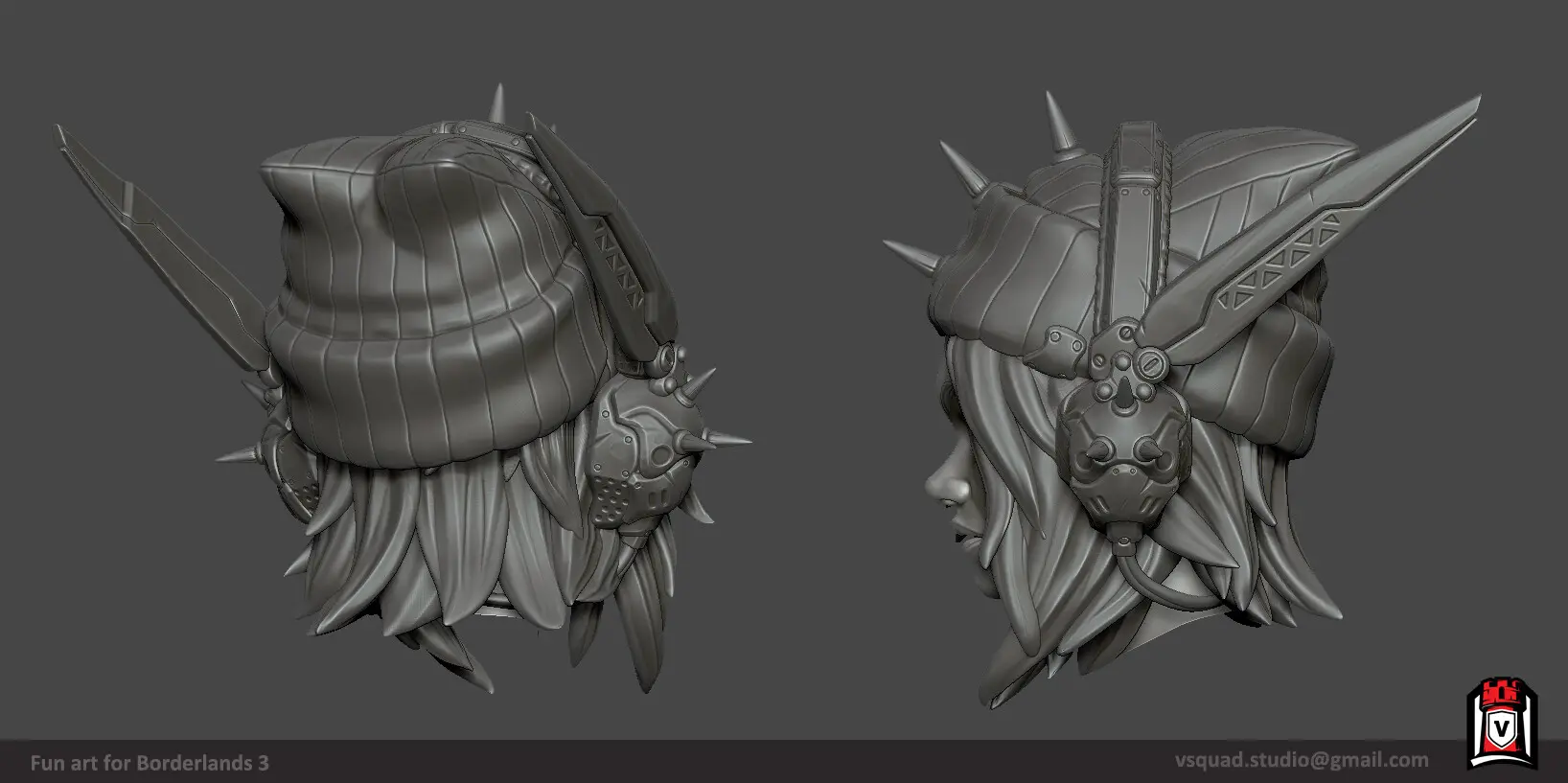
Every hero can be read instantly – purely visually. Brick is massive and angular; his physique communicates his function without a single word. Lilith is swift and sleek – her silhouette is immediately associated with high movement. Handsome Jack is charismatic and theatrical, with a design that is simultaneously grotesque and unforgettable. Claptrap stands as a perfect example of a comedic character expressed purely through form.
This is the core principle behind the Borderlands character design: appearance is not just about aesthetics; it is pure information. A player should not have to read a description of abilities just to understand who is standing in front of them.
The exact same logic applies to enemies and NPCs. Psychos, bandits, robots – each possesses a visual archetype that can be deciphered in a fraction of a second. This makes a Borderlands drawing not merely beautiful, but deeply functional.
How Borderlands Environment and Weapons Look
The environment in Borderlands is never just a background decoration. It is a full-fledged narrative tool.
The desolate Pandora of the first game was intentionally claustrophobic and monotonous – and this effectively amplified the feeling of isolation. In the second installment, sharp contrasts emerged: snow, lush greenery, and cold metal – each zone boasting its own distinct color identity. By the third game, this entire design experience was translated across multiple diverse worlds.
The weapons deserve a completely separate conversation. A Borderlands-style car or any other vehicle is never a realistic machine, but rather a caricature of one: exaggerated parts, absurd modifications, and colors that loudly scream their faction alignment.
The exact same goes for the firearms: there are thousands of procedurally generated variations, yet every single one remains recognizably “Borderland-esque” thanks to the unique artistic language of its core components.
Borderlands Logo as a Visual Manifesto
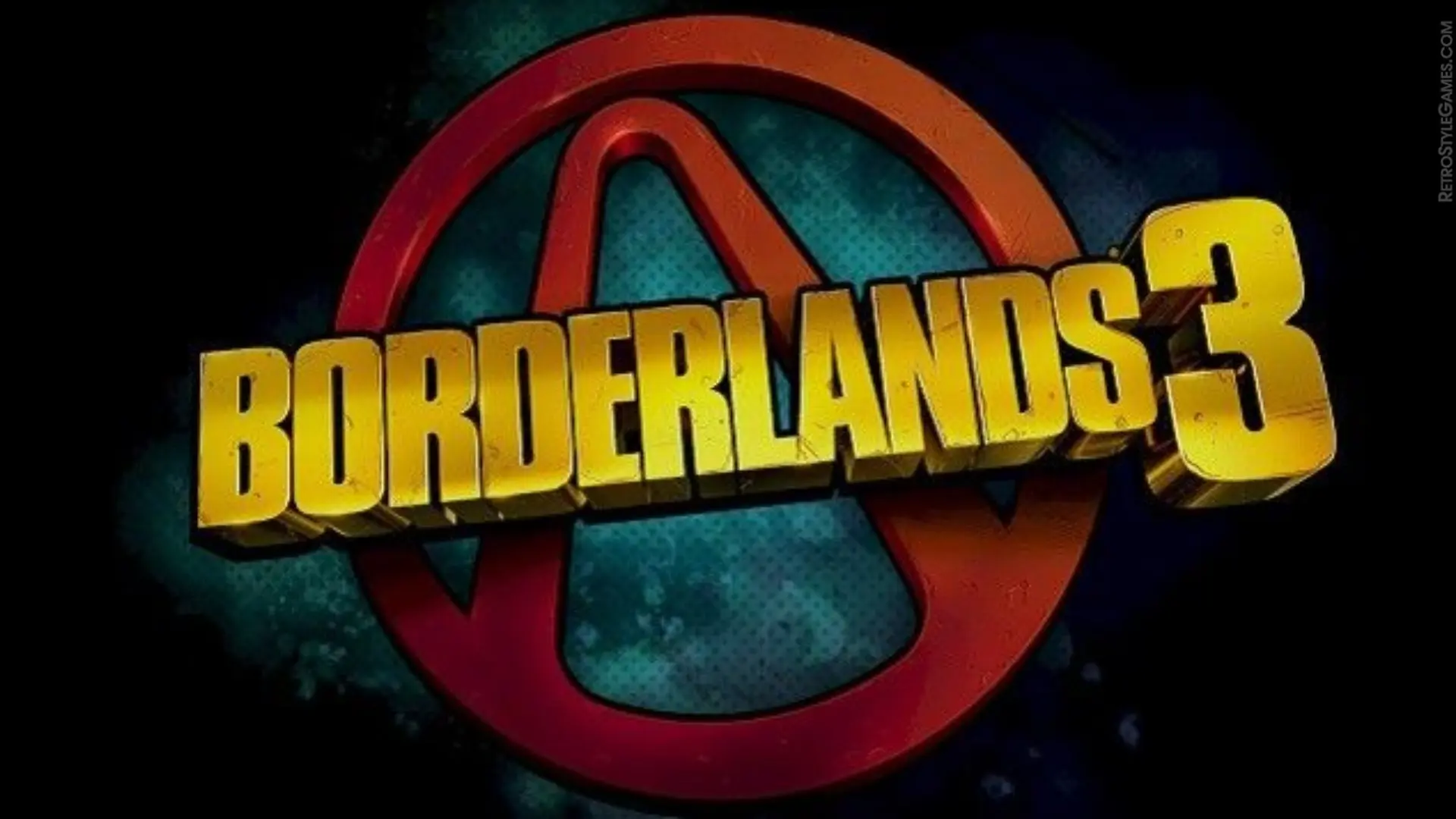
The Borderlands logo is not just a piece of typography. It acts as a pure concentrate of the game’s entire aesthetic packed into a single image.
A scuffed, weathered yellow font. A red circle with a diagonal slash – the mark of the Vault. Grunge textures, paint splatters, and a distinct feel that it was spray-painted via a stencil onto the wall of an abandoned warehouse. The logo is simultaneously aggressive and highly recognizable, serious yet ironically casual – just like the game itself.
About Us
VSQUAD Studio is an outsourcing studio operating since 2015. We collaborate with teams from the USA, Norway, Germany, Singapore, and other countries. Our diverse portfolio includes projects like Wayfinder, Darksiders Genesis, Ruined King, and SMITE.
We create high-end 2D/3D art, character design, environments, animation, and VFX. We integrate seamlessly into your production pipeline within 48 hours, assisting both indie teams and AAA studios – rapidly, flexibly, and without ever compromising on quality.
Borderlands Art Style Tutorial: Core Principles for Replication
Can you recreate this style? Yes. Is it difficult? Extremely. But here are the core pillars to guide you.
Outlining is the foundation. Without dense, solid black lines, the effect simply will not work. Furthermore, their thickness and organic variation are crucial – automated machine edge detection yields a result that is far too sterile.
Textures are painted, not generated. This is the primary constraint. If you are looking for an automated, one-click “Borderlands effect,” it will not happen. Every single surface demands the hand of a skilled artist.
Color operates through high contrast. Forget about soft, pastel transitions. You need high saturation, harsh light-to-shadow transitions, and deliberate local color accents.
Geometry is simplified, while texture is complexified. This is an inverted approach compared to a traditional realistic pipeline. Fewer polygons mean far more artistic control over the actual surface.
Lighting must be adjusted to serve the style. The engine needs to enhance, rather than destroy, the hand-painted shadows. This requires custom shaders and meticulous work with post-processing.
FAQ
No. It is the “graphic novel style”: hand-crafted textures featuring integrated inks and custom shaders. It is visually similar, but technically entirely different.
It features a much richer palette, a wide variety of biomes (such as snow, jungles, and industrial metal), higher texture detailing, and far more expressive character designs – all while preserving the core visual DNA of the series.
Completely by hand. Artists meticulously paint each surface, then digitize them and integrate the outlines. There is no procedural generation involved – only pure manual labor.
Yes, both engines fully support custom shaders for outlining and advanced post-processing. However, the core work lies in the hand-painted textures themselves, rather than engine configuration settings.
The primary inspiration was the short film Codehunters (2006) by Ben Hibon, which blended anime and Western animation with cel shading overlaid on 2D textures. For Borderlands 3, additional source inspirations included the film Chappie and the anime Tekkonkinkreet.
It is a combination of three key elements: hand-inked textures, grotesque character designs boasting highly distinct silhouettes, and a high-contrast, richly saturated color palette. Remove any single one of these elements, and the entire style completely falls apart.
The Victory of Art Direction Over Hardware
Borderlands serves as absolute proof that visual style can easily triumph over technical graphics. The game did not outperform its direct competitors in terms of pure hardware specs. It simply looked like absolutely nothing else on the market.
If you are currently brainstorming or developing a stylized project, come talk to our team. Contact us → 📩 head@vsquad.art or schedule a call.
Our Game Services
Get in touch
Got a project in mind? We usually reply within a day.