



Designing a game from scratch sounds romantic. In reality, the first few weeks are spent not on creating beautiful levels, but on endless questions. Where do you even start? What is more important – mechanics or story? Why does the prototype work technically, but nobody actually wants to play it?
These tough questions are asked by everyone – from solo indie developers to large teams with serious budgets. The good news is that working answers do exist. The bad news is that there is no universal recipe. However, there are core principles of game design that prove their effectiveness time and time again.
This article is not theory for the sake of theory. Here, we have gathered game design basics and practical fundamentals that will help structure your development process. This guide provides essential game design tips to ensure you do not drown in feature creep and avoid losing the most important thing – the experience and unique feeling you want to convey to the player.

What is Game Design - and Why it is Often Misunderstood
Many people think that designing a game is all about coming up with cool, grand ideas. In reality, it is about constant decision-making. Every single choice either works directly in favor of the player’s experience or goes heavily against it.
Your gameplay design should never boil down to a mere set of mechanics. Instead, it functions as a complex, interconnected system of interactions where individual game design elements affect each other.
In his famous book The Art of Game Design, Jesse Schell describes more than a hundred “lenses” – distinct ways of looking at a project. This is not a strict “do it this way” manual, but rather a practical tool for shifting perspectives.
A good designer constantly asks questions: What does the player feel at this exact moment? Why exactly this emotion? What will happen if we completely remove this element? This analytical approach shapes a coherent game design philosophy that guides the entire production cycle.
Your basic game design starts not with complex mechanics – it starts with the human experience. What kind of emotion do you want to evoke in your audience? Is it tension? Is it the pure joy of discovery? Or perhaps the anger of defeat that quickly transforms into an intense desire to try one more time?
The clear, uncompromising answer to this question forms the absolute foundation upon which everything else is built.
Struggling to translate your game’s core emotion into stunning visuals?
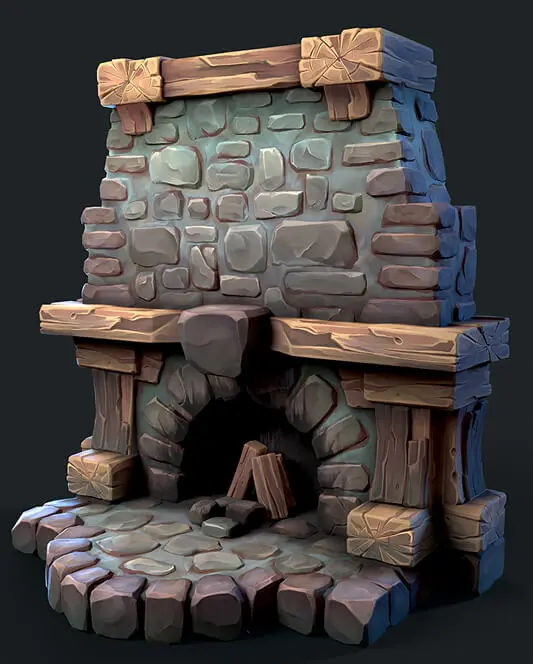
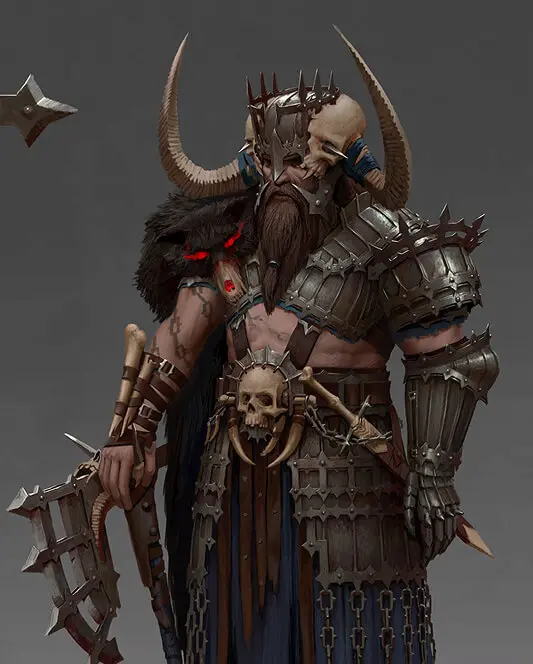
Your main characters are the ultimate bridge between your mechanics and the player’s empathy. Don’t let technical limitations dilute your vision – get premium, industry-grade 3D assets designed to amplify your gameplay.
Game Design Pillars: Why They are Needed and How to Define Them
Your chosen game design pillars are neither a marketing document nor a simple list of features. They represent three to five core principles that describe the absolute essence of the experience the game must deliver. They serve as an aggressive filter: any new idea either actively strengthens these pillars or goes straight into the trash.
Max Pears from CD Projekt Red provides an excellent, clear example: The Last of Us has two main pillars – narrative and partner relationships. On the other hand, The Legend of Zelda: Breath of the Wild relies on exploration and freedom of movement.
If you look closely at absolutely any design choice in these successful titles, you will see that it works directly to reinforce one of those core pillars.
The principles of a good pillar include:
– Specific, not abstract. “The player should have fun” is a terrible pillar. “High risk with a proportionate reward creates constant tension” is a practical, working one.
– Testable in practice. Is it possible to objectively evaluate whether a feature works for or against this specific pillar?
– Clear to the entire team. If the art director, game designer, and lead programmer interpret a pillar differently, it is simply not clear enough.
The Feature-Pillar Alignment Matrix (Feature Creep Filter)
| Evaluation Metric | Target Question for the Team | Red Flag (Drop / Rework immediately) | Green Flag (Proceed to prototyping) |
|---|---|---|---|
| Pillar Synergy | Does this specific feature directly execute or multiply at least one core pillar? | The mechanic is "just cool" on paper or belongs to a completely different genre. | It acts as a natural catalyst for an established pillar without adding isolated rules. |
| Cognitive ROI | Is the player's cognitive load justified by the emotional payoff? | High learning curve or complex input mapping for a low-impact, forgettable action. | Minimal onboarding required, but opens up multiple layers of strategic depth. |
| Loop Integration | How seamlessly does this interaction plug into the existing core loop? | Requires creating standalone UI menus or breaks the natural rhythm of play. | Uses existing controls and immediately feeds progression back into the primary gameplay loop |
| Asset Dependency | What is the production strain on the art and engineering pipeline? | Requires custom animations, unique netcode, or custom physics overrides. | Can be fully validated in greybox using existing systems and placeholders in under 48 hours. |
| Feedback Scalability | Can this mechanic clearly communicate its state to the player? | The player won't notice the outcome unless a text box explicitly explains it. | Triggers instant visual, audio, or tactile responses that fit the existing game world rules. |
One of the most revealing examples is Bungie’s seven pillars of design for Destiny. Each of them describes a specific aspect of the experience, ranging from “a world people want to spend time in” to “a rich, constantly evolving story.”
When these pillars are clearly defined before production starts, it saves immense amounts of time and money. When they are missing, every single member of the team builds their own separate version of the game in their head. When everything is finally put together, it results in an incoherent, messy product.

Fun Fact
According to scientific research on cognitive load in gaming, players make an average of more than 200 tiny decisions per minute during active gameplay – the vast majority of which are completely subconscious.
This is exactly why the “intuitiveness” of controls and overall design is not just a nice convenience, but literally a survival feature for a game to succeed in a highly competitive market.
How to Game Design: Core Game Design Principles
The Core Loop Must be Interesting on its Own
The core loop consists of the exact actions that a player repeats hundreds or thousands of times. If these loops do not bring pure pleasure at a base level, no amount of narrative and no beautiful art will ever fix it.
Super Mario started out as a project with just a single mechanic: moving and jumping. The team polished this mechanic until it felt absolutely perfect, and only then did they begin building levels around it.
My personal advice: create a prototype focused entirely around a single mechanic and honestly answer this question: is it interesting for you to play this for 20 consecutive minutes? If the answer is no, keep iterating. Do not add any new features until the base interaction feels entirely right.
Define the Audience – and Design for It
A classic mistake made by novice designers is trying to create a game “for everyone.” Arma 3 is intentionally complex because its core audience consists of people who specifically want a hardcore military simulator. Casualizing the control scheme would mean completely losing the exact players for whom the game is being developed.
A deep understanding of your target audience directly affects everything: from the difficulty curve and the tutorial style to the visual language and onboarding mechanics.
Ask yourself these crucial questions: What does the player already know before launching your game? What needs to be explicitly explained? At what exact point can you leave them to figure things out on their own?
Consistency and Coherence of the System
Crucial game design principles always include the concept of coherence – a state where all elements of the game strictly follow unified rules that the player can naturally learn.
Halo is a textbook example: every single type of enemy has a distinct visual difference and predictable behavior patterns. The player sees an Elite and immediately knows exactly what to expect. This significantly reduces the cognitive load, allowing them to focus entirely on strategy and tactics rather than struggling with basic patterns.
Inconsistency completely kills player trust. If a bright red door is firmly locked in one level but swings wide open in another without explanation, the player stops trusting their own intuition. That is exactly when they start getting frustrated and angry.

Guide the Player – but Do Not Lead Them by the Hand
There is an incredibly fine line between “educating” and “controlling” the player. Excellent design teaches organically through actual gameplay situations rather than force-feeding boring text tutorials. The level layout must construct the experience in such a way that the player naturally arrives at the correct conclusions on their own.
Provide the player with a clear ultimate goal alongside short, achievable intermediate objectives. The rewards must always be perfectly proportionate to the difficulty encountered.
Never overload the interface. Instead of cramming everything into a cluttered UI, utilize all available communication channels – visuals, audio, and active gameplay – simultaneously.
Communication in the Team is Also Design
One of the most heavily underestimated game design concepts is internal team communication. The post-mortem of the game Illtide is a highly revealing story of what happens when a development team lacks a shared vision of the project. Every single person was essentially making “their own game.” As a direct result, they ended up with an incoherent product and a failed release.
A GDD (Game Design Document) should never look like a 500-page novel. Its primary job is to clearly document the core experience, pillars, targets, and constraints. The simpler it is, the better it works. Real people under tight deadlines will be reading it, so keep it accessible and concise.
Is pipeline friction or production scaling slowing down your build?
Keeping a cross-functional team aligned while maintaining scope control is the hardest part of game dev. Seamlessly integrate expert artists and technical specialists into your workflow within 48 hours and focus on what matters – your core loop.
Aspects of Game Design That are Often Ignored
Feedback. Every single action taken by the player must trigger a clear reaction. When they press a button, they need to feel an immediate response. When they defeat an enemy, they must hear or see a clear confirmation. A total lack of feedback makes the gameplay feel completely “deaf” and unresponsive.
Depth vs. Complexity. Depth represents the total number of meaningful decisions a player can make within a set of simple, elegant rules. Complexity, however, is simply the sheer number of rules imposed.
The first attribute is fantastic, while the second is often a massive problem. Chess is incredibly deep but not overly complex. Conversely, many modern MMOs are highly complex yet completely shallow.
Emergent gameplay. When simple rules naturally give birth to completely unexpected and thrilling situations, it is a surefire sign of an excellent system. Give your players the right tools and open space, and they will personally invent things you never even planned.
Scope control. Feature creep remains one of the most frequent killers of ambitious indie projects. Your established pillars are the absolute best tool to defend against it. Every new idea must pass through that rigorous filter: does this directly strengthen the core experience, or does it just seem cool on paper?
About Us
VSQUAD Studio has been operating since 2015, specializing in comprehensive outsourcing for the gaming industry. We create high-quality 2D/3D art, animation, VFX, UI/UX, and complete gameplay solutions for Unity, Unreal Engine, and Godot.
Our extensive portfolio includes notable titles such as Wayfinder, Darksiders Genesis, Ruined King, SMITE, and Battle Chasers. We have successfully collaborated with teams that received Epic MegaGrants, won prestigious Steam Awards, and showcased their games at Gamescom.
Within just 48 hours, we can seamlessly integrate a fully functional team directly into your production pipeline – from an art director to technical specialists.

FAQ
Start small. Create a clean prototype of a single mechanic – completely without art, without music, and without any story elements. Make absolutely sure that it is genuinely engaging in its most basic form.
Only after that should you expand. The vast majority of failed projects originally started out with an overly ambitious scope but lacked a working, enjoyable core.
These are three to five core principles that explicitly describe the essence of the target gaming experience. They serve as a reliable filter for any design choices and help keep the entire team fully aligned on the same page. Without them, every team member inevitably builds an entirely different version of the game in their head.
Exactly as many as are required to fully realize the core experience – and not a single one more. It is infinitely better to have five mechanics that interact deeply with each other than twenty superficial ones. The overall depth of the system is always far more important than its sheer variety.
Hand the game over to people who are completely unfamiliar with your initial concept. Do this without giving them any prior explanations or hints.
Watch closely to see where they get confused, what they do intuitively, and where exactly they experience frustration. This observational approach is far more honest and valuable than any internal testing session.
Yes, but in a significantly condensed form. A single page detailing the core experience, the main pillars, and the project scope is entirely sufficient. The most important thing is that all team members clearly understand exactly what they are building and why they are doing it.
Constantly evaluate every single new idea through your pillars: does it actively strengthen the core experience, or does it simply sound interesting? If it is the latter, push it straight to a “wishlist” and only return to it after the absolute foundation of the game is fully ready.
Your Roadmap to Successful Game Design
Designing video games is neither magic nor mere luck. It requires rigorous systems thinking combined with a completely honest assessment of what actually works in practice.
Clearly define the specific experience you want to provide to your players. Build everything directly around it. Keep iterating. Cut away any unnecessary elements without a single shred of regret.
If at any point you find yourself needing a professional team to elevate the visual side of your project or help you produce complex assets, feel free to contact VSQUAD. We know exactly what a great production pipeline looks like from the inside.
Contact us → 📩 head@vsquad.art or schedule a call.
Our Game Art Services
Get in touch
Got a project in mind? We usually reply within a day.