


Hair is one of those elements that the client never mentions at the beginning of a project. “Just hair, nothing complicated.”
And then a character artist spends three weeks on hair cards, the technical director rewrites the shader twice, and the art director sends the grooming back on the fifth iteration because the simulation behaves incorrectly when the character moves. As a result, the milestone shifts, the budget is eaten up, and the hair asset still hasn’t passed technical review.
Realistic game hair and 3D hair in film are not just decorative details. This is one of the most technically demanding tasks in character production, where grooming, physics, shading, LOD strategy, draw calls, and UV space intersect. – and not a single one of these variables forgives mistakes at later stages.
That is exactly why studios that try to cover this task internally without the necessary expertise know: reworking a realistic hairstyle in production costs more than properly structured outsourcing right from the start.

Why Studios Outsource 3D Hair Modeling
Narrow Expertise Missing Inside the Team
Hair grooming is a distinct specialization. A good generalist artist can do a lot, but creating hair cards for an AA/AAA level game or a strand-based groom for CG film is an entirely separate discipline with its own tools (XGen, Ornatrix, Yeti, Houdini), its own physics, and a highly specific export pipeline.
An average team of 5–10 people simply doesn’t have such a specialist on staff – and hiring one for a single project is financially impractical.
Real Savings: Not a Slogan, but Numbers
In our experience, the internal development of a complex hairstyle (a realistic female styling with simulation) takes 3–5 weeks for an artist without a narrow specialization.
The VSQUAD team, with a streamlined pipeline, completes a similar task in 10–14 days – including technical review, LOD mesh, and handoff in the required format (.abc / .fbx).
The difference of 2–3 weeks at the daily rate of an internal artist results in at least $2,000–$4,000 in direct savings on just a single asset.
Scaling for Peak Workloads
Game production is non-linear. The peak of character work occurs during mid-production, and that is exactly when it suddenly turns out that game hairstyles for 12 characters are needed simultaneously.
Outsourcing allows you to bring in the required number of specialists for a specific stage – without the hassle of hiring, onboarding, and subsequent layoffs.
A Fresh Perspective Free from Tunnel Vision
The internal team sees the character every day and stops noticing issues that are obvious to a fresh eye.
We come onto the project from the outside and immediately see where the hair volume conflicts with animation bones, where the texel density is insufficient for a close-up, and where transparency maps cut performance on mobile platforms.
Reducing Technical Debt from Step One
An incorrectly built hair groom is not just a visual problem. It means extra draw calls that eat up FPS on consoles. It causes alpha sorting issues that break the rendering order. It leads to a lack of LOD1/LOD2, which makes the character look worse at a medium distance than their original concept.
Technical debt from poorly optimized hair models accumulates quickly and costs a lot in production.
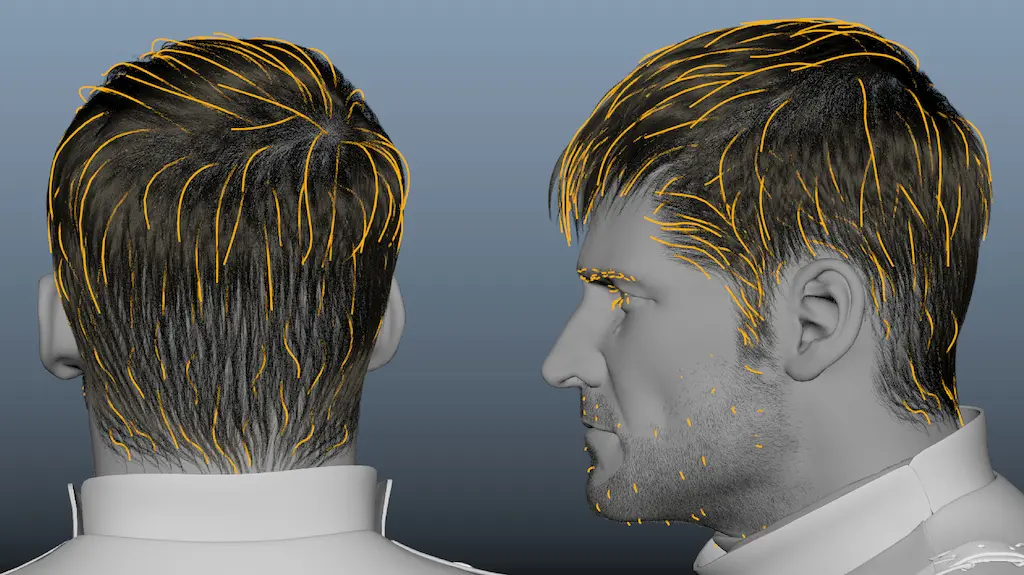
Where the Pipeline Breaks: Main Mistakes in 3D Hair Design Production
Let’s honestly break down what a typical hair task looks like without a well-established process.
Problem 1: Hair cards vs strand-based – incorrect method choice.
This is the first decision made even before production begins, and this is where inexperienced teams most frequently get bogged down. Hair cards (textured planes assembled manually into the shape of a hairstyle) are the standard real-time choice for most realistic hair games.
Strand-based hair via the Unreal Engine Groom system provides significantly higher visual quality but requires additional configuration of the Compute Skin Cache, renderer support, and an understanding of physics. The mistake occurs when a team takes on a strand-based workflow for a mobile game or uses hair cards for a close-up CG film. The consequence: reworking 100% of the asset from scratch, resulting in 2–4 weeks lost.
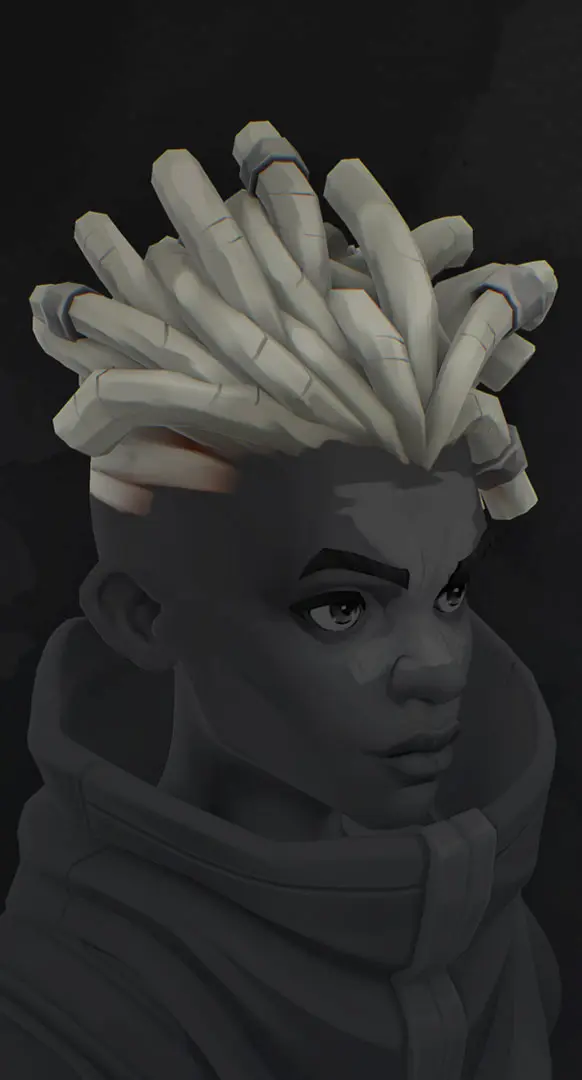
At VSQUAD, the choice of method happens during the briefing stage – before grooming starts. The art director and technical specialist jointly analyze the target platform, camera angles, and the draw call budget. On Wayfinder, we worked with strand-based 3D hair design for key characters while simultaneously running hair cards for secondary NPCs – different strategies for different requirements, all within a single pipeline.
Problem 2: Ignoring draw calls during the grooming stage.
A groomer who does not think about performance is a ticking time bomb. A typical realistic hairstyle made of hair cards contains 200–400 planes with alpha testing. Every group is a potential draw call. If the artist does not follow batching logic and fails to combine maps into the correct material groups, you can get 80–120 extra draw calls on the target platform from just a single character’s hairstyle. On a console or mobile device, this is a direct hit to FPS.
The consequence: the technical director receives the optimization task only after the asset is finalized, which means partial re-grooming and lost iterations. In our practice, this adds 15% to 25% of extra time per asset.
Problem 3: Lack of an LOD strategy from the very first step.
LOD for hair is not just about “reducing the number of cards.” It is a well-thought-out system: LOD0 (hero, maximum detail for close-ups), LOD1 (gameplay, 40–60% of cards), LOD2 (distant view, possibly a mesh with baked details). If the LOD mesh is not designed in advance, the artist builds LOD0 and then manually reassembles LOD1 and LOD2 – adding another 30–50% of time on top.
On SMITE, we built a hair pipeline for a series of characters with a pre-approved LOD matrix, which allowed us to deliver the entire batch on time without any geometry reworks.
Problem 4: Physics without testing in motion.
A realistic hairstyle with physics looks great in a T-pose – and breaks during the character’s very first sudden movement. The hair clips into the shoulders, sticks out through the collider, or, conversely, reacts too rigidly to the animation. This is not an engine bug – it is the result of incorrectly configured guide hairs and collision spheres. Testing physics in isolation from the animation rig is a guaranteed waste of time for adjustments later in production.

Fun Fact
A realistic hairstyle for a AAA character can contain up to 100,000 individual hair strands in a strand-based groom – but in the final game build, the player sees an illusion created from 150–400 hair cards with a clever alpha mask. All the magic happens within the textures and the correct rendering order, not in the actual geometry.
What Exactly Can Be Delegated to an Outsourcing Studio
A clear understanding of the scope removes the fear of “can I even hand this over at all.” Here is what can actually be moved outside without losing control:
| Task | Outsourced | Kept Internally |
|---|---|---|
| Grooming of the hairstyle concept design | ✅ | - |
| Production of hair cards / strand groom | ✅ | - |
| Texturing (diffuse, alpha, normal, specular) | ✅ | - |
| LOD mesh (LOD0 / LOD1 / LOD2) | ✅ | - |
| Physics setup (guide hairs, collision) | ✅ | - |
| Hair shader setup for the client's engine | ✅ | - |
| Technical review and draw call optimization | ✅ | - |
| Final art direction and style approval | - | ✅ |
| Coordination with the animation rig (final QA) | - | ✅ |
| Game design decisions (mechanics) | - | ✅ |
Everything above the “final approval” point consists of production tasks with a clear deliverable. These are exactly the tasks that make sense to delegate.
How the Process of Working with an Outsourcing Partner on 3D Hair Looks: 6 Steps
With a professional contractor, the process does not start with “hand over the brief and wait.” Every stage has a specific deliverable, a milestone checkpoint, and a clear timeline. Here is how this process looks in practice.
1. Define the Scope and Technical Constraints
The first step is not creative, but technical. Before grooming starts, it is essential to lock down: the target platform (PC / console / mobile), the engine (UE5, Unity, custom), the draw call budget per character, the handoff format (.abc for groom, .fbx for cards), the presence of physics, and the type of collision setup. Without this data, the artist is working completely blind.
Stage duration: 1–2 working days. The output is a completed technical brief approved by the client’s art director. If a brief arrives without a specified target platform, we request it before starting, rather than after the first iteration.
This is exactly where it pays to cross-reference the Polycount discussion on hair card techniques: the community confirms that card intersections, the number of hero pieces, and UV layouts must be discussed before grooming starts, not along the way.
2. Select a Contractor Based on Domain Expertise
Not every character artist knows how to handle hair. When choosing a partner, it is critical to verify: does their portfolio include specific hair assets for the exact platform you are developing your project for? Creating mobile hair cards and AAA strand grooms requires completely different skills.
A lack of relevant case studies is a clear signal to look for a different contractor when sourcing hairstyles for characters.
What to look for in a portfolio: wireframe hair cards, LOD breakdowns, examples of physics in motion, and shader settings. If the portfolio only contains the final render, that is a reason to clarify the technical side of things.
3. Review the Portfolio and Validate Quality
The problem: a studio selects a contractor based on a beautiful final render, but later receives an asset that fails the technical review due to an incorrect UV unwrap or a mismatch in texel density. The consequence is rewriting and fixing on the client’s side, which completely wipes out any financial savings from outsourcing.
The solution: request technical screenshots (wireframes, UV layouts, draw call counts), not just beauty renders. At VSQUAD, we provide a tech sheet with every hair asset – it is part of our standard deliverables package.
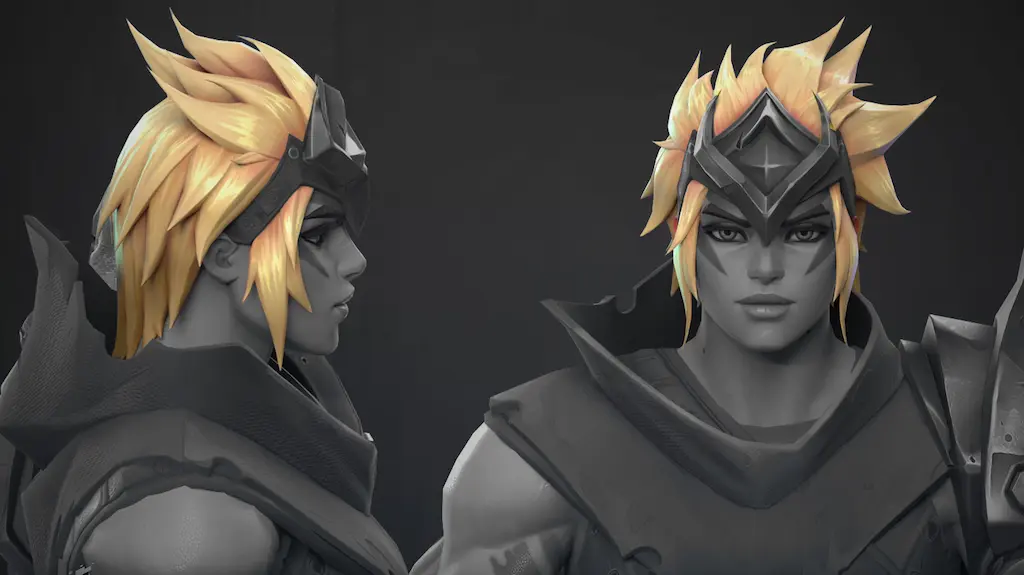
4. Agree on the Technical Specifications, Deliverables, and Milestone Structure
This step is where the most important thing happens: aligning expectations. What exactly is delivered at each milestone? In what format? How many iteration rounds are included in the contract? What is the approval process?
At VSQUAD, every hair project is built around a clear milestone structure:
– M1 – Blockout of shape and volume (3–5 days). This is where initial grooming setups and primary adjustments like 3D hair cutting to establish lengths take place.
– M2 – Final grooming and texturing (5–7 days). This is ideal for refining complex setups, including modular character creator hair assets if the project demands them.
– M3 – LOD mesh generation and technical review (2–3 days).
– M4 – Final handoff in the client’s format.
All correspondence and asset versions are tracked directly in the client’s software – whether it’s Jira, Trello, or Notion. We integrate seamlessly into the client’s pipeline rather than forcing them to adapt to ours.
5. Monitor Progress via Milestone Checkpoints
A common mistake when working with an outsourcing partner is waiting for the final result while ignoring intermediate iterations. Hair is precisely the type of asset where changes at the M1 stage take 2 hours, whereas the exact same changes at M3 take 2 days.
VSQUAD’s practice: a check-in after each milestone with screenshots taken directly from the client’s engine (not from Marmoset), an evaluation of draw calls, and a comparison with the references.
Feedback is always documented in writing – this protects both the client and the studio from any “I never said that” scenarios. For SMITE, this process allowed us to keep the entire hair pipeline running smoothly like a conveyor belt without any downtime between iterations.
6. Evaluate the Outcome and Coordinate Iterations
The final step is not a matter of “accept and forget,” but a structured review against the initial technical brief: verification of compliance with the platform budget, visual alignment with the concept art, correctness of the LODs, and the quality of physics during animations. If something doesn’t match up, a specific list of revisions is compiled, rather than a vague request to “redo everything.”
This step is also crucial for documentation purposes: the tech sheet of the final asset becomes part of the project’s production bible, allowing any new team member to easily understand how the character’s hair pipeline is designed.
Looking to eliminate character production bottlenecks entirely?
A flawless hair pipeline is just one piece of the puzzle. At VSQUAD, we deliver end-to-end, engine-ready character models optimized for your specific target platform and performance budgets.
Novices vs. VSQUAD: Where Time and Money are Lost
| Criterion | Team Without Specialized Expertise | VSQUAD |
|---|---|---|
| Method choice (cards vs strand) | Based on intuition, without platform analysis | Based on the technical brief, before starting |
| Draw calls | Discovered during final QA | Monitored at every milestone |
| LOD strategy | Created after the fact | Designed during M1 |
| Physics | Tested in a T-pose | Tested on an animated render |
| Timeline for a hair asset (medium complexity) | 3–5 weeks | 10–14 days |
| Handoff format | However it turned out | Agreed upon in advance (.abc / .fbx + tech sheet) |
The gap is not in some abstract concept of “professionalism.” The gap lies in the fact that every stage yields a predictable result. This is exactly what separates a finely tuned pipeline from an accidental process.
Want to understand where your current hair pipeline is losing time and money?
Sign up for a 30-minute breakdown session with a VSQUAD art director – we will analyze your specific situation and propose a concrete plan.
About Us
VSQUAD Studio is a game art production outsourcing studio founded in 2015. We specialize in 3D character art, including a full cycle of work with hair & fur grooming: from initial hairstyle concepts to production-ready assets complete with LOD meshes and configured physics.
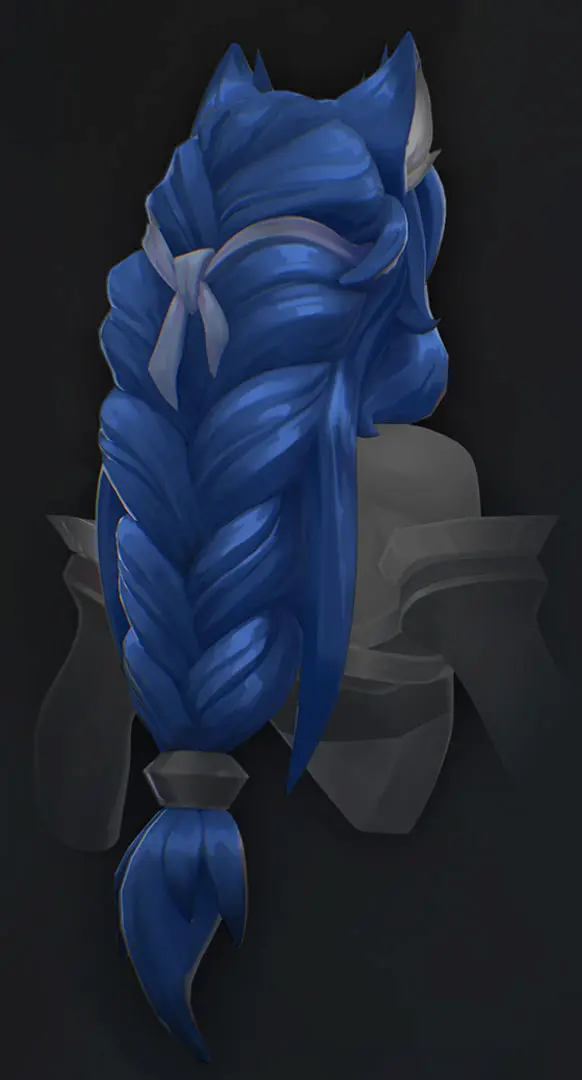
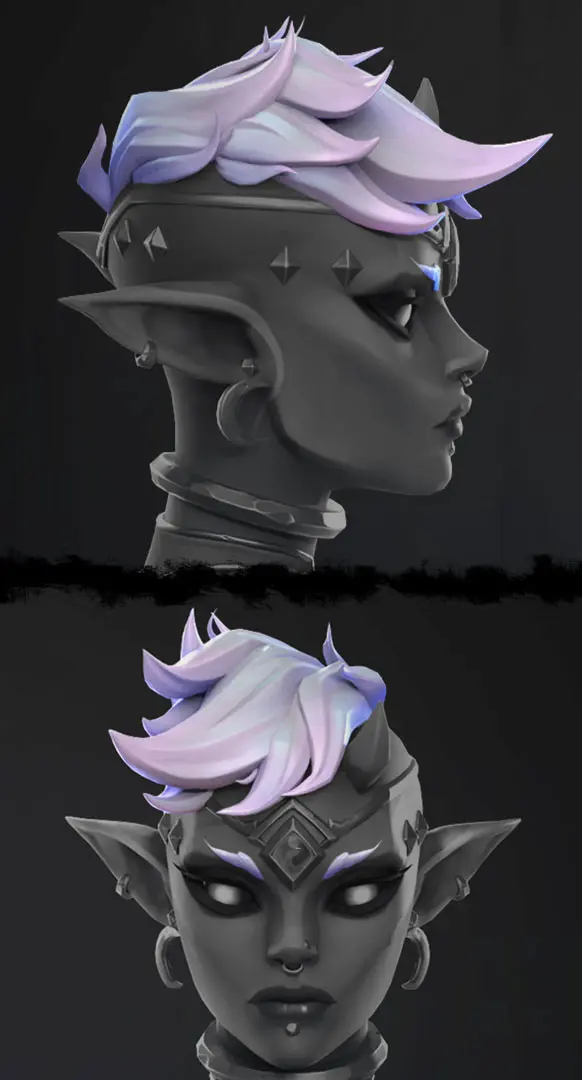
Over the past 10 years, we have worked through more than 50 projects – ranging from indie teams to AAA-level clients. Our hair assets run smoothly in live games: from the stylized world of Wayfinder to intense action projects like SMITE.
We don’t just “deliver a finished file and leave you to figure it out” – we integrate directly into the client’s Jira, Perforce, or Trello, working entirely within their pipeline.
Within 48 hours, we can onboard and connect a team dedicated to your project: an Art Director + a hair grooming specialist + a technical specialist. This is not a single freelancer handling everything, but a synchronized team focused on a specific deliverable.
FAQ
Prices start at $300 for a simple stylized hairstyle based on hair cards, and go up from $800 for a realistic hairstyle complete with an LOD mesh and physics. A comprehensive hair package for multiple characters is calculated on an individual basis.
The final price is influenced by several factors: the length and complexity of the hair, the method chosen (cards vs. strand), the presence of physical simulation, the number of LOD levels, the handoff format, and the target platform. Mobile hair is less expensive than PC/console-grade assets due to entirely different technical requirements.
A simple stylized hairstyle takes 5–8 working days. A realistic hairstyle with physics and LODs requires 10–14 working days. A complex CG groom for film takes 3–4 weeks.
Timelines are firmly locked in the contract according to a milestone structure: M1 (blockout of the shape), M2 (final grooming + textures), M3 (LODs + technical review), M4 (handoff). Every milestone corresponds to a specific date, never a vague “coming soon.”
We deliver assets in the exact format required by your engine: .abc (Alembic) for UE5 Groom systems, .fbx for hair cards in Unity or Unreal, .ma/.mb for Maya pipelines, as well as raw files from Ornatrix or XGen if necessary.
In addition to every asset, a comprehensive tech sheet is attached: draw call counts, polycounts per LOD level, UV layout screenshots, a list of used textures, and their respective resolutions.
The standard package includes up to 3 rounds of revisions within the scope of the agreed-upon technical specifications. Each iteration is logged in writing – a list of specific comments, rather than a generalized request to “redo the whole thing.”
If the technical specifications change after the start of production, this constitutes a new scope of work, which is negotiated and evaluated separately. This approach protects both parties from any “but I thought you meant something else” misunderstandings.
We work directly within the client’s toolsets: Jira, Trello, Notion, Perforce, Google Drive – depending on what is already established in your team. There is no such thing as “email us everything”: we obtain access to your version control system and work right inside it.
Onboarding takes up to 48 hours. After that, our team operates completely synchronously with the client’s internal production – eliminating communication lags and duplication of tasks.
Yes. We have extensive experience working with indie projects, including teams that have received Epic MegaGrants and successfully completed Kickstarter campaigns.
We know how to build a highly optimized hair pipeline within a limited budget – for instance, by utilizing an optimized hair cards workflow instead of a heavy strand-based setup, or through phased asset assembly aligned with your milestone schedule.
Drop us a line with your project description and budget details – we will propose a realistic option that functions perfectly for your specific team size.
From Pipeline Bottleneck to Predictable Delivery
Realistic video game hair and character hairstyles are not just a final cosmetic touch on a character. This is a complex production task carrying a high risk of scheduling delays if it is not properly structured from the very first step.
An incorrect choice of method, an un-optimized LOD scheme, ignoring draw calls, or setting up physics without factoring in the animation rig – each of these mistakes winds up costing significantly more than the entire outsourcing contract itself.
Outsourcing = technical risk mitigation and pipeline predictability at the exact stage where reworks cost the most.
VSQUAD = a contractor that integrates a thorough Technical Review into every single milestone, deploys a synchronized team of an Art Director + groomer + tech specialist, and delivers your final hair assets in a production-ready format – strictly on time, rather than “whenever it’s ready.”
Contact us → 📩 head@vsquad.art or schedule a call.
Our Game Services

Get in touch
Got a project in mind? We usually reply within a day.