


Stylized game art often looks simple on the surface, but creating textures that remain readable, technically correct, and visually cohesive inside a real-time engine is far more complicated than it appears.
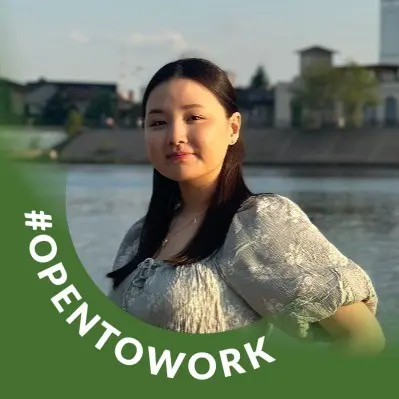
Senior and Lead Texture Artist Ulbibi Salimova has worked across stylized projects including Wayfinder, focusing on texture workflows, asset readability, and integrating hand-painted textures into modern PBR pipelines.
In this interview, she talks about the realities of game art production, texture pipelines, common pipeline mistakes, leading texture teams, and what truly makes an asset feel game-ready inside an actual engine rather than just inside a portfolio render.
Main topics:
– Stylized texture art
– PBR texturing
– Game-ready assets
– Texture pipelines
– Asset readability
– Unreal Engine workflows
– Lead artist responsibilities
– Outsourcing pipelines
Finding a Path Into Texture Art
Like many artists working in game development today, Ulbibi’s journey into 3D art started long before she ever opened a texturing tool.
Her background in traditional art became the foundation that later shaped her approach to stylized textures and material work.
Q: Could you briefly tell us how you got into 3D art and texture art?
A: I have always been fascinated by video game graphics, though I didn’t initially plan to work in 3D.
My journey into texture art began with a strong foundation in traditional art. From an early age, I studied the fundamentals of drawing, color theory, and composition. That artistic background became the solid foundation I now rely on when texturing.
Q: What made you focus more specifically on texture art?
A: For me, texturing is a way to breathe life into geometry.
Through textures, I aim to emphasize the unique features of each model, add distinct character, and bring my own artistic vision and taste to the asset’s final look.
Q: Was there a moment when texture art started to feel like “your thing”?
A: I enjoy the entire pipeline, including 3D sculpting and retro art. However, at some point, I realized that texturing is where my skills shine the most.
Thanks to years of artistic practice, this process feels the most natural to me and consistently produces the strongest results.
Building Stylized Game Art and PBR Texturing for Modern Games
Stylized texturing has changed significantly over the years, especially as more projects combine hand-painted techniques with physically based rendering pipelines.
According to Ulbibi, one of the biggest challenges today is making stylized textures feel artistic without breaking material logic or in-game lighting.
Q: What is the hardest part of making stylized textures work properly in-game?
A: The hardest part of modern stylization is integrating traditional hand-painted art into a PBR pipeline.
The main challenge is making sure the hand-painted details in the Base Color map are properly supported by technical maps like Roughness and Metallic.
The painted volumes and details still need to react correctly to in-game lighting without conflicting with the material physics.
Q: How do you keep assets readable when players see them from different distances?
A: To maintain readability, you need to constantly check the asset from the actual in-game camera distance and carefully balance materials.
Large shapes need to remain clear from afar. During the texturing process, I constantly zoom out to make sure details don’t blend together and that materials remain readable at a distance.
Q: What mistakes do junior artists most often make with stylized textures?
A: The most common mistakes are over-detailing and adding too much visual noise, which makes textures feel cluttered.
There is also often a lack of understanding of form, poor base color choices, and no clear vision of the final result.
In stylization, it’s extremely important to simplify details and work with larger color masses.
Texture Workflow and Production Reality
Even highly polished textures depend heavily on technical preparation before texturing begins.
A large part of production time is often spent solving issues that technically should have been handled earlier in the pipeline.
Q: When you start a new asset, what does your texture workflow usually look like?
A: First, I gather and prepare all the necessary technical maps.
The process begins with blocking out the base materials, defining color, and establishing the overall tone. From there, I move into detailing by building forms, adding accents, and hand-painting elements to achieve the desired stylized look.
Q: What part of texture work usually takes more time than people expect?
A: Micro-detailing and addressing feedback usually take the most time.
I always strive to polish textures thoroughly based on critiques to ensure the asset receives final approval without compromises in quality.
Q: What are the most common technical problems you see before texturing even begins?
A: The most common issues are unaligned UV shells and a messy UV workflow and inconsistent texel density across different parts of the model.
That forces artists to spend extra time hiding flaws that could have been avoided earlier in production. If I notice critical UV issues during texturing, I usually fix them myself immediately.
Q: In your opinion, what makes an asset truly game-ready?
A: An asset becomes truly game-ready when it fully meets the project’s technical specifications and can be integrated into the engine without additional adjustments.
That includes optimized topology, clean baking without artifacts, correct texel density, properly configured pivot points, and organized texture naming conventions.
Checking Assets Inside the Engine
One recurring theme throughout Ulbibi’s answers is that portfolio renders alone are never enough.
For texture artists, the final result only matters once assets are tested under actual engine lighting conditions.
Q: Do you think texture artists should always check their work inside the engine?
A: Absolutely.
A beautiful render in Marmoset or Substance Painter may work well for a portfolio, but the game engine is the final judge.
If an asset looks different in-game than it did inside the texturing software, then something failed in the process.
We create graphics for players, so textures must function correctly under real in-game lighting and post-processing conditions.
Q: What technical details should artists double-check before sending assets for review?
A: Before submitting for review, artists need to verify technical compliance, cleanliness, and readability.
That means checking texture resolution, making sure mask channels are packed correctly, hiding UV seams carefully, and ensuring there are no stretched pixels or technical artifacts.
Leading Texture Teams and Outsourcing Pipelines
As Ulbibi moved into lead roles, her responsibilities shifted from purely creating textures toward helping entire teams stay aligned.
That included onboarding artists, building clearer workflows, and improving communication across production.
Q: How does your role impact art direction in games now that you are a Lead Texture Artist?
A: The biggest shift was moving my focus away from my own work and toward supporting the team.
I started spending a lot of time reviewing textures and preparing feedback. Initially it was very time-consuming, but over time I trained artists and established a much more efficient pipeline.
Eventually the team became synchronized, consistently delivered the required quality, and the workflow became significantly faster.
Q: When managing outsourcing game art, what helps external teams understand the project style faster?
A: I value order and logic very highly, so I always share my source files as benchmarks for newcomers. That helps them understand both the layer structure and the painting logic much faster.
I also rely heavily on overpaints. I draw directly over screenshots of the model to clearly show where color, form, or volume should be adjusted.
That approach removes a huge amount of miscommunication.
Key Lessons for Modern Texture Artists
Ulbibi Salimova’s perspective highlights how modern stylized texturing sits at the intersection of artistic intuition and strict technical production requirements.
What stands out most throughout the conversation is how much successful texture work depends not only on painting ability, but also on readability, material logic, optimization, communication, and constant validation inside the engine itself.
The interview also reflects a broader reality of modern game art production: stylization is rarely about adding more detail. In many cases, the hardest skill is knowing what to simplify, what to emphasize, and how to maintain clarity across an entire game world.
For artists entering the industry, the biggest takeaway may be that strong artistic fundamentals remain just as important today as technical tools and software knowledge.
Explore more behind-the-scenes stories in our exclusive interview series. We have many more conversations with industry visionaries coming soon, so be sure to visit us again.
Get in touch
Got a project in mind? We usually reply within a day.