


A conversation about environment art, Unreal Engine production, hidden production work, technical constraints, and what game developers often miss when they look at finished 3D environments.
Context
Rick Vervuurt is a Senior 3D Environment Artist with experience across mobile games, Unreal Engine production, freelance work, and workshops.
His background includes PortalOne, 31st Union, elite3d, and Spil Games. Over the years, he has worked across environment art, Unreal Editor workflows, mobile game production, 3D asset creation, and production teams.
What makes this interview interesting is that environment art often looks simple from the outside: a level, a scene, a nice set of props, a polished visual result.
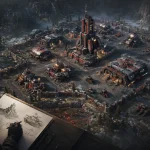
HITMAN III — Mendoza, Argentina. Environment art contribution by Rick Vervuurt at elite3d. © IO Interactive A/S ↓

But behind that result there is a lot of hidden work: layout, composition, optimization, lighting, technical limits, engine setup, feedback, and constant decisions about what matters most in-game.
The focus of this interview is Rick’s experience as an environment artist: how 3D environments are built for real games, what developers often underestimate, and what smaller teams can learn from production artists who work inside the pipeline.
Main Topics
- 3D Environment Art
- Unreal Engine Production
- Game-Ready Environments
- Environment Art Pipelines
- Gameplay Readability
- Performance Optimization
- Modular Asset Production
- Smart Asset Reuse
- Environment Planning
- Cross-Team Collaboration
- Technical Constraints
- Indie Environment Production
Interrview

Q: You’ve worked as a 3D environment artist across different teams and production setups. How has your view of environment art changed over time?
A: You can talk about what became more important with experience: composition, gameplay needs, technical limits, communication with other departments, or how environments actually work inside a game.
I think your understanding on environment art grows during your work experience, at first my focus was on making this 1 good composition, with, what i was trying to achieve, “extremely high quality assets”, that would hold up close by. This is the causation of mainly during your collage years thinking of an environment as a portfolio piece.
While when you start working in the game industry an environment needs so much more, it can not only look good from 1 or 2 specific camera angles, but it has to serve as a guide for gameplay. All we are doing is enhancing the target experience. And this experience depends on what genre of game we are making.
HITMAN III — Mendoza, Argentina. Environment art contribution by Rick Vervuurt at elite3d. © IO Interactive A/S ↓

If its a story game we want to make the player feel immersed in the environment, we want to tell a story with the assets that are placed in the scene, and the lighting that comes into the scene.
If its a shooter, the environment should support the fast past gameplay. You cant have 1000s of small little detail everywhere, it would be horrible to play in. you need good balance, between areas of rest and detail, making sure that the art supports the gameplay.
Q: When developers look at a finished environment, what do they often not see behind the final image?
You can talk about planning, blockout, scale, optimization, lighting, asset reuse, engine setup, feedback rounds, or the hidden production work that happens before something looks polished.
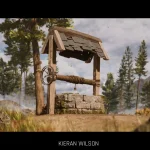
↓ Personal 3D environment artwork by Rick Vervuurt

There is a lot under the “hood” when it comes to making an environment. Like you mentioned in the examples, creating a cohesive environment takes immense planning.
Game studio budgets are tight, so a lot has to be planned around reuse, smart material structures able to be changed and reused on the use case, creating pipelines for a large team so art gets produced at a consistent level, and a constant conversation between each other and the stakeholders if what we are doing is fitting the purpose.
Q: What separates a good-looking 3D environment from an environment that actually works well in a game?
You can talk about readability, navigation, player focus, collision, performance, camera, gameplay space, lighting direction, or how art supports the player instead of just looking nice.
This touches back on the point i made before, good-looking on its own means nothing, there are many examples out there that have “good looking” art but the game is unoptimized, or the gameplay is not fun to play.
HITMAN III — Mendoza, Argentina. Environment art contribution by Rick Vervuurt at elite3d. © IO Interactive A/S ↓

At the end of the day, Gameplay/Game Design is the most important for a game, many games have fallen with something that looks good but is not fun to play.
I believe its also everyone’s responsibility to play your game, have fun together, and figure out what works and what doesn’t. No one should be “locked” into their specialization, if you have an idea to make a game better share it.
I rambled off there a bit. But when it comes to a working environment in game these need to be taken into account. Game play and level design, that sets apart a good looking environment to one that works well in game
Q: You have worked with Unreal Engine and real production pipelines. What should artists understand about the engine side of environment art?
You can talk about materials, lighting, performance, modularity, LODs, optimization, scene setup, or why an environment artist needs to think beyond the asset itself.
It is important as an environment artist to learn the engine further than just the basic implementation of set dressing and asset construction within the engine.
HITMAN III — Mendoza, Argentina. Environment art contribution by Rick Vervuurt at elite3d. © IO Interactive A/S ↓

Being able to have knowledge in blueprints, to make needed tools, or the Material Editor to make special effects, or complex master materials that improve your projects look is essential.
Besides that, knowing how an engine/rendering works at some level is great valuable knowledge, this makes you understand the impact your asset might have in a scene. Turning a blind eye to these things will cost you down the line when the environment runs at 5 fps
Q: In environment art, where do production problems usually appear first?
You can mention unclear direction, wrong scale, too much detail too early, weak references, missing technical limits, poor feedback loops, or assets that look good separately but do not work together in the scene.
Referring to a point I made before, that making an environment, what often gets missed is the planning before it all. Small errors or missing sections in the planning phase can cause huge production problems later on.
↓ Personal 3D environment artwork by Rick Vervuurt

This can be many reasons, but unclear direction, no matric guides or visual language guide for playability can cause many issues
Besides that you can have the whole production side of project management. I have been in teams before where task management was a mess, which can cause big bottle necks in the production process.
Q: How do you approach feedback when an environment needs to change because of gameplay, performance, or production limits?
You can talk about staying flexible, protecting the visual idea, cutting detail, adjusting composition, working with designers or tech artists, and finding a version that still feels strong.
HITMAN III — Mendoza, Argentina. Environment art contribution by Rick Vervuurt at elite3d. © IO Interactive A/S ↓

I am a firm believer that gameplay and level design goes first. This doesnt mean that no conversations can be opened with designers, because I feel that often with limitations and conversations together you get a better end result in comparison to when you have no limitations.
Same goes with optimizations, launching an un optimized game in this day and age is almost a guaranteed death sentence.
When limitations come across a development process, tackle the, put some good heads together and often better result comes out then what you had before
Q: Many indie and small teams want strong environments, but they have limited time and budget. What should they focus on first?
You can talk about mood, lighting, smart reuse, modular kits, strong composition, playable space, avoiding over-detailing, and choosing a few moments that really matter.
Reusability and smart material structures. You can achieve a lot with a good pipeline and a good plan. Also use what is available to you. If there are strong asset packs that fit within your project and would save 100+ or even more hours, use it. Modify it if needed.
↓ Personal 3D environment artwork by Rick Vervuurt

We experienced the same where we had to make a large scale environment with 4 people, a lot of unique assets had to be made, but since it was a jungle environment it had to feel lush. Meaning a lot of foliage had to be made. We all know that foliage can cost hundreds of hours to create.
In our case we found a perfect foliage pack that we needed. Sometimes a small investment seems large at first, but if you compare it to how much you would have spent in billable hours it doesn’t compare.
Q: What advice would you give to artists who want to move from making nice 3D scenes to creating environment art that is ready for real game production?
You can talk about technical discipline, engine knowledge, optimization, communication, taking feedback, understanding gameplay needs, and thinking like part of a production team.
Do small studies. I know im a big offender when it comes to “let me make a small personal environment project” eventually you are 200+ hours in and it’s no where near finished.
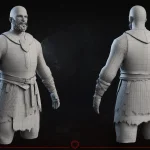
↓ Personal 3D environment artwork by Rick Vervuurt

Small studies can give you a great boost to create game ready environments. These can be a modular building, a blueprint tool to place assets in game, following a own created or found design metrics brief. So you can show you can work within parameters.
There are many ways, the best are working within a professional environment. My tip would be, dont be afraid to ask questions, to anybody, your own department or other departments. Learning about design or programming, how they think or what methods they use can be extremely beneficial for your work within the team.

Conclusion
A good game environment needs to do more than look impressive. It should help players understand where to go, support the gameplay, and run smoothly in the engine.
As Rick Vervuurt explains, much of the real work happens before the scene looks finished. Planning, reusable assets, flexible materials, clear visual rules, and regular communication can save the team from major problems later.
Smaller teams also do not need to create everything from scratch. A suitable asset pack or modular system can save hundreds of hours. What matters is choosing the right tools and making sure every part of the environment serves the game.
Explore more behind-the-scenes stories in our exclusive interview series. We have many more conversations with industry visionaries coming soon, so be sure to visit us again.
Get in touch
Got a project in mind? We usually reply within a day.