


A conversation about stylized character production, Riot / Blizzard-level pipelines, external teams, production constraints, reuse, optimization, and how to keep strong character work alive inside real game development.
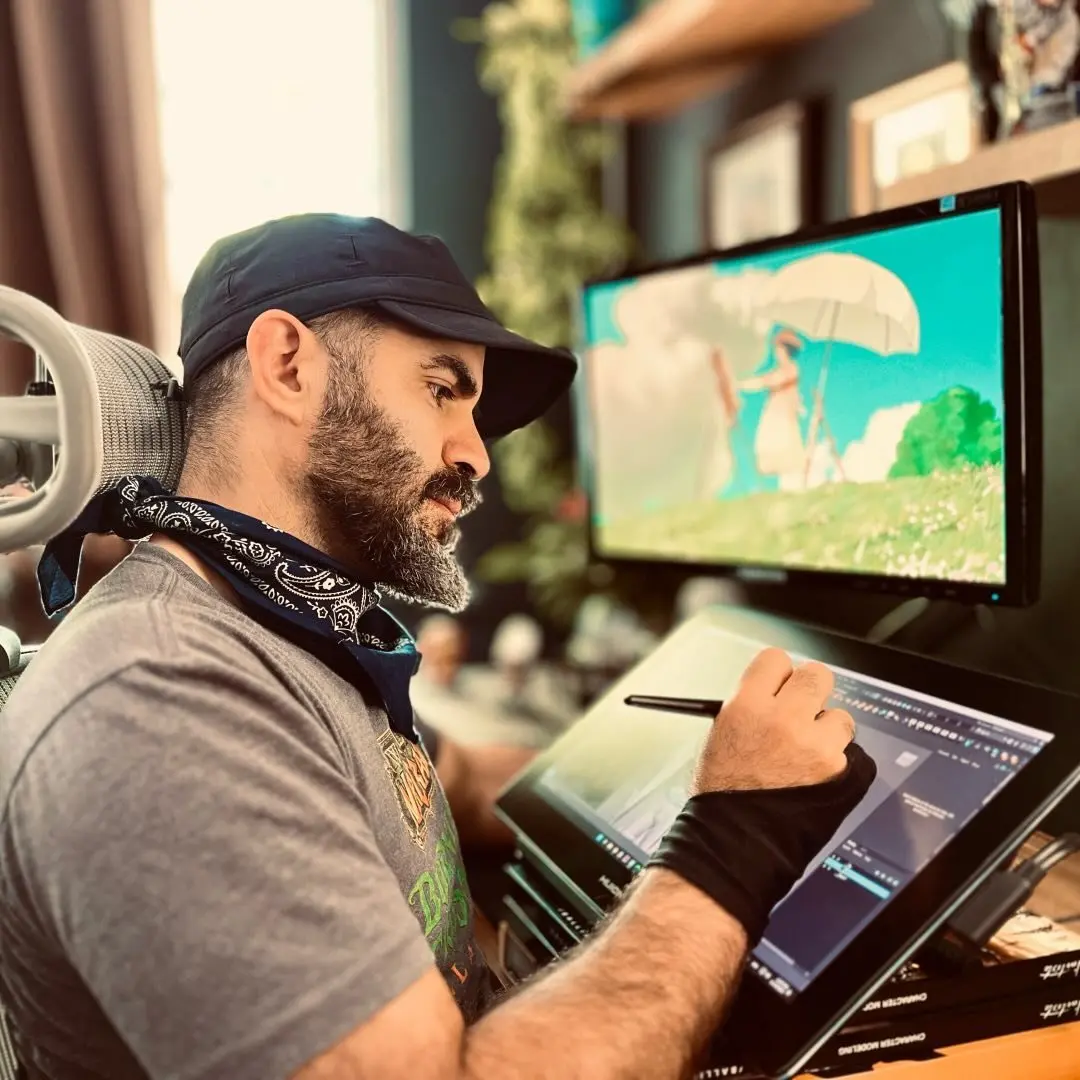
Ancelmo Toledo is a Senior 3D Character Artist with experience across Riot Games, Blizzard Entertainment, Devoted Studios, AutoAttack Games, Pretty Simple Games, Funovus and many other studios and freelance projects.
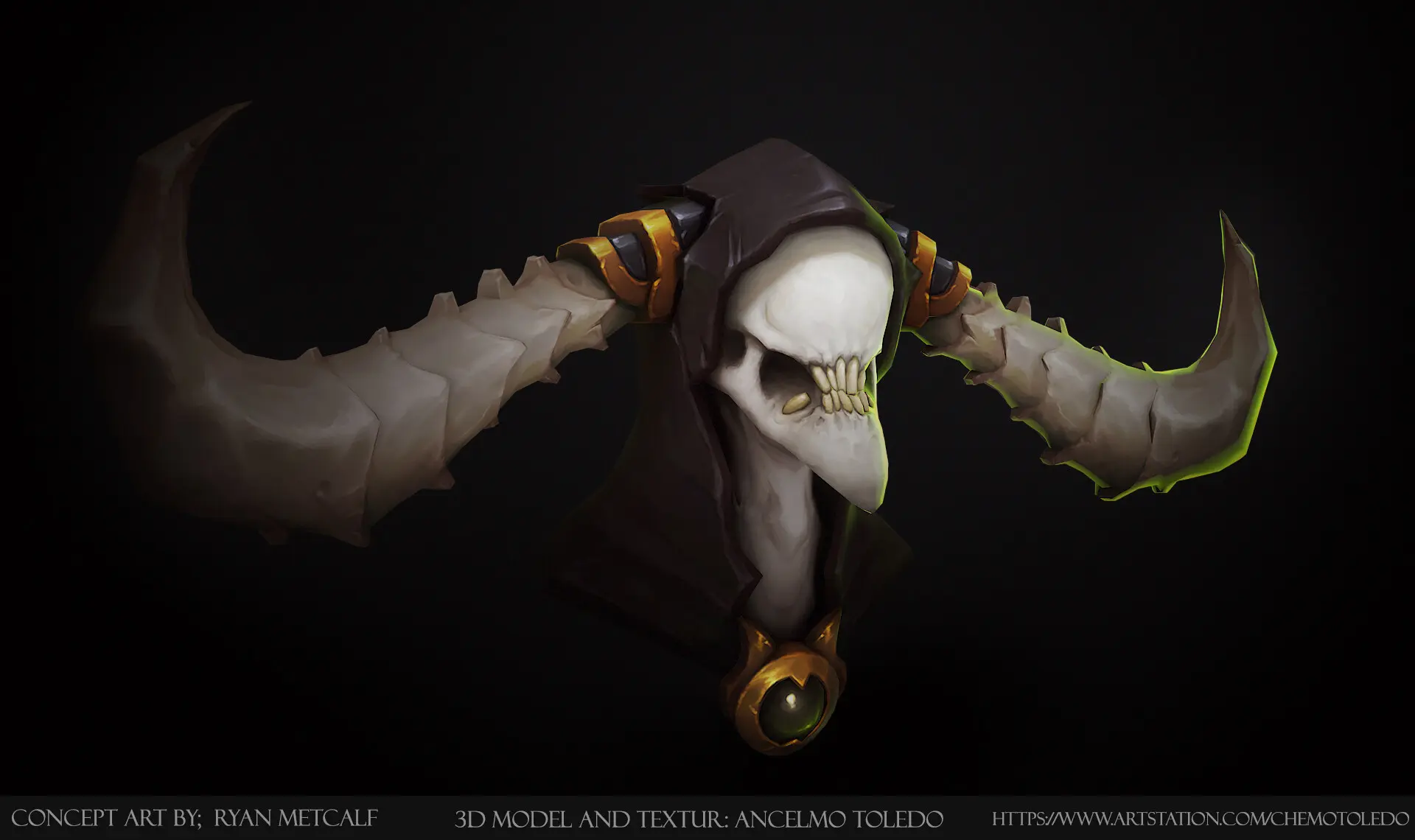
His work covers stylized characters, creatures, props, collectibles, miniatures, high-poly sculpting, low-poly modeling, texturing, baking, shaders, and production-ready game art. Alongside his studio work, he used to teach and mentor artists through Brush N Poly.
What makes this interview interesting is not only the quality of his character work, but the range of production contexts behind it. Ancelmo has worked inside major game studios, with external production teams, on stylized game assets, and as a mentor helping other artists understand professional standards.
The focus of this interview is stylized character production: how strong characters are built for real games, how large studios optimize time and budget, what external teams need to understand, how pipelines have changed, and how artists can keep craft and personality alive inside production constraints.
Main topics:
Game Art Outsourcing
Stylized Character Art
Game Art Production
Game Ready Character
Indie Game Development
Character Optimization
Interview
Q: Your profile says you loved cartoons, video games, toys, and movies since you were a kid. How much of that early love still affects the way you make characters today?
A: Yes, I think that for many of us something has to influence us in some way to act as a source of inspiration, purpose or any related words that drive us and give us the intention to wake up every day and do the work that we enjoy.
For me at my early age it was cartoons, video games, movies, collectibles and anything that has something that thrills me. Nowadays all of these ones still motivate me as same as it was when I was kid, I can say that I’m a kid inside of an adult body, but now its combined with artistic intentions, professionalism and we have to say it, to make something to live from.
Q: What makes a stylized 3D character feel appealing, not just technically polished?
A: From my point of view, I relate a 3D character or any other element we create in the video game industry as any other piece of art (as a source of inspiration and guide). In this case, it could be like a painting, a melody or an architectural artwork. For me, all pieces of art have certain similar structures and compositions.
To mention a few: consistency in art style, shape language, composition (this is a huge area that involves many other areas such as color, saturation, values, details, focal area, resting area, and other contrasting elements) silhouette, structure, or anatomy (depending on the element). In general, there is a harmony between these and many other elements that intervene to create appealing 3D stylized characters.
Q: You’ve worked inside major studios and also through external production / outsourcing environments. What feels different between internal production and external character production?
A: I think this can depend on the position and the work areas, but in general, I’d say that in an external production, the work is more linear, with established and defined processes and fairly fixed timelines.
And in an internal production, you can be a bit more open to contributing innovations, ideas, and adjustments to a process, since there’s more accessible communication with other disciplines, producers and directors, and you have a better understanding of the needs of the project(s). But you also have to respect the delivery conditions, just like in an external production.
Q: How did working around large-studio pipelines affect the way you think about character art?
A: Similar to the previous question, working in a large-studio requires more commitment/interest to help not just to do your own tasks, but to help in any way you can, it can be by improving a pipe-line, documentation, mentoring/help new hires, having more initiative to deliver your own work and try to help/improve other areas.
Growing with more responsibilities is something that for me is natural growing in a large-studio.
In synthesis, to be a more active/dynamic gear, rather than one that has to be driven by others, all of these need time and effort to acquire the necessary experience.
Q: Stylized characters can look simple from the outside, but they often need very strong production control. What do people usually underestimate?
A: Besides what I’ve mentioned in Q2, what I’ve seen so far that people underestimate or doesn’t have the enough information and experience it’s about color and light, people can misunderstand that color and light not only involves the control of values/contrast, saturation, color harmony, color theory and some many more, but also how all these attributes relate to each other to create a composition that executes a deliberate artistic intention.
Another one is a coherent structure in anatomy and shapes, respecting and maintaining the same art style, exposing solid composition within the shape language.
A recommendation that I’d like to share if may I, it’s to not focus on the brush stroke details and micro details, unless no until you develop first a good overall composition first.
Q: When a character needs to be game-ready, where do teams usually save time and budget without hurting quality too much?
A: Not speaking in a particular studio that I’ve worked before, I can mention some areas that are common from my experience to solve this question; I’ll say that in order of importance is:
- Communication in what precisely are the needs.
- Having the right people that already know that they would be able to deliver the necessary quality and within the timeframe. This can sound somewhat tricky, but normally it requires time and experience to know the production team and be aware of their strengths and weaknesses.
- Having the right tools, software, hardware, anything that helps to alleviate setbacks.
- Well established time frame to deliver what it’s need it, sometimes if there are possibilities, to have some extra time for any setbacks (normally we are always against time)
- Any extra elements that can helps in each disciplines to clear unknown areas or ambiguities, kitbashing, pipe lines that helps to improve times, tools that adapts to the needs like actions in Photoshop to create some repetitive tasks or plugins that helps in this same way.
Q: How do large teams reuse rigs, materials, shaders, or production solutions across characters?
A: I think that this question it’s similar to the previous one (Q6) I’ll say that large studios can have more “material libraries” from which to re-use or optimize production. As you mentioned in the same question, it can be in re-use rigs, animations, shaders, kitbashing models, etc.
Larger teams can have the time/need to develop a series of tools that can help to improve time for delivery, facilitate repetitive tasks and/or to make any processes more procedural.

Q: How has the character art pipeline changed over the last 10 years?
A: Personally, I’ll say that within this timeframe, it hasn’t changed that much, except for some softwares and tools that are more “easy/faster” to use, like baking maps or some retopology or increasing the polybudget, tools, smart materials, etc.
The artistic fundamentals are the same, it’s just that the tools and technology makes our daily work a bit more easy, that’s why I recommend in this article to focus more on art fundamentals then software, tools or AI.
Q: How do you see AI tools affecting character art production in the future?
A: I’m glad you asked this question, cause right now young artists and many growth artists can have doubts about if AI can take our jobs.
From my very personal perspective, AI it has, it is and it would be just a series of tools for us to create the vision of a human artistic vision. Without going so deep here, there would be new processes and the market would be fragmented even more in many different qualities/styles and of course, different budgets.
But going back to the question, AI in the character art production it’s not that easy, maybe it can create part of a 3D Sculpt from just a 2D concept, but I think that a 3D artist would need to give the right topology for the right pipeline, maybe and I hope this, AI can create good an efficient UVs for us, or a tool/filter that can polish imperfections in our 3D sculpt models, maybe a tool that can also fix painting errors in the texture.
But at the end of the day, I think that people, players, the entire market would always appreciate something that it’s hand crafted or has more of that human creativity/sense. I think that artists print their own story, style, personality, intention in any single brush stroke.
Q: You also teach and mentor artists through Brush N Poly. What do you often have to explain again and again to younger character artists?
A: There’s a couple of things or errors that I’ve noticed that many young artists and students do,repetitibly.
Art fundamentals, normally at the beginning of our career we focus on mastering the software, I mean , it’s good to know the software, but without sacrificing the things that make our characters appealing, which is the art fundamentals, in many aspects; anatomy, structure, rhythm, art style, flow, shape language, etc.
To create a solid and well directed portfolio. I’ve seen that Jr artists create and apply to a job vacancy with a portfolio that doesn’t align well on any specific job needs. So I recommend checking how to create a solid portfolio, there’s a lot of good information on the internet.
Another one it’s the interest in creating an efficient topology for video games, similar to the previous one, we focus so much on the high poly that we forget the one that always appears in the game, the low poly model.
And last but not least, to pay more attention to color and light to create appealing textures.

Q: In professional production, how do you balance personal artistic taste with the needs of the game, the art director, and the pipeline?
A: I like this question, because we’ll always want to fulfill our artistic needs in some way or another, if we don’t do this, it can create friction in our careers.
Normally I embark on projects that have something interesting to add to my career within my current personal needs. It can be in an interesting art style, experience, leveling up particular skills that I have interest in developing or something that I’m interested in.
But before all of these elements, I always consider how much time it would consume me, I always wanted to have a good balance with my work and lifestyle.
Saying this, I can manage time to fulfill my artistic needs, sometimes I’ve the pleasure that my main job satisfy my artistic needs, that’s why I mentioned that it’s good that we prepare ourselves to do what we wanted to do, so we can have the opportunities to work on projects that are interesting to our needs/taste so it can alleviate any friction.
Q: For small indie teams that want strong stylized characters but do not have huge production budgets, what should they prioritize first?
A: This is a tricky one, I think that it can depend on each studio situation, but I’ll say that something that can be useful is to start knowing what are their strengths and weaknesses so they can analyze what are their particular scopes, so from here they can see how much they are capable of doing.
From here, knowing the market’s needs, staying at the forefront of creative techniques and processes, and if for some reason they don’t have what’s needed to achieve a certain artistic level, then they may have to take time to study, practice and develop the appropriate level to create strong stylized characters.
And another one that I think that it’s one of the most important (or the most important if I could say so) is to be transparent, honest and always with good communication so everyone pulls in the same direction. Sometimes there’s no much budget or none at all, but being honest with the team so they know the real situation, this way it creates a solid relationship, so they know where they are stand up, but when things get better (cause all the effort has an intention) consider all the work that the teams has done and reward them, that’s where the transparent comes from.

Conclusion
Strong stylized characters are not built by tools alone. As Ancelmo Toledo shows throughout this interview, great character art depends on fundamentals, clear communication, production discipline, and a real understanding of how the asset will live inside the game.
For studios working with internal teams or game art outsourcing partners, the goal is the same: build characters that feel appealing, work technically, and still carry the artist’s personality. The best production process protects both quality and creativity.
Explore more behind-the-scenes stories in our exclusive interview series. We have many more conversations with industry visionaries coming soon, so be sure to visit us again.
Get in touch
Got a project in mind? We usually reply within a day.