


Your budget is getting thinner, the game is not finished, someone important leaves at the worst possible moment, and the deadline is starting to look more like a threat than a date.
Welcome to a normal morning for both an indie developer and an AAA producer.
Soraya Een Hajji is a Producer with experience across AAA game development, production planning, roadmap work, cross-discipline teams, co-development, and helping teams move through messy production moments.
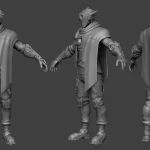
↓ Game artwork by VSQUAD Studio
The budget is different. The team size is different. But many of the hardest problems are surprisingly the same: unclear decisions, people waiting on each other, painful trade-offs, changing priorities, and the simple fact that games are made by humans who get tired, confused, excited, frustrated, and sometimes disappear.
This interview is about what indie developers can learn from AAA production without turning their small team into a corporate machine.
Main Topics:
- Indie and AAA Game Production
- Production Planning and Roadmaps
- Team Communication and Collaboration
- Project Priorities and Accountability
- Pre-Launch Production Challenges
Interview
With Soraya Een Hajji, Producer

Q: You’ve worked with AAA teams, co-development studios, and projects with many people involved. Looking back, what surprised you most about game production?
I have always prided myself on being a problem-solver, but early in my career, I didn’t wield that skill responsibly. Once I had found my own way through a thorny issue, I expected to teach others my process and just have it work.
It frustrated me when people I “helped” kept running into roadblocks that I had already “solved.” I will always be indebted to the people who slowly but surely helped me learn that I needed to adapt my process to the people, not the other way around.
↓ Game artwork by VSQUAD Studio

You really have to find that sweet spot between having a shared process that everyone understands and creating the wiggle room for different individuals to feel comfortable working within that process.
It’s one of the great challenges (and great joys) of game production for me.

Q: Indie developers and AAA producers seem to live in completely different worlds. What do they actually have in common?
The scale may be different, but the problems are the same. Getting people on the same page and keeping them there as projects evolve; watching a butterfly flap its wings over here cause a completely different system to collapse over there; and so on.
Game producers for any project always face more issues than they can solve at once, so you have to build a strong sense for where your time will have the most impact.
↓ Game artwork by VSQUAD Studio

Q: When a game project starts going off track, what are usually the first warning signs?
When you can’t define what you’re doing next or when you define goals but repeatedly fail to achieve them, your project is in trouble.
At any stage of development, you need to know what progress looks like, and if you’re working with a team, you need everyone pulling in the same direction.That’s goal setting.
Goal achievement requires accountability. The more often you pull a “this doesn’t count because…” excuse, the more your team begins to drift. If last milestone’s goals weren’t real, why would this milestone’s be?
↓ Game artwork by VSQUAD Studio

I’ve been guilty of this with a AAA team. We set ambitious goals, missed them, blamed the ambition… then set equally ambitious goals again. It’s tricky because you should have enough ambition for some goals to be at risk, but you also have to care about and learn from those failures.
When you do, your plans and predictions grow more stable over time so you can actually chart a real course. When you don’t, like my team, every plan becomes a lovely work of fiction.
Your official goals have the exact same priority as a shiny new idea or a random teammate request, since the final evaluation was going to be “this doesn’t count because…” either way. If you can’t pick a direction and stick to it, you will find yourself lost at sea.
Q: Many indie developers think they need “the perfect team.” Does that actually exist?
If you come in with a very strict idea of what you’re doing and how you’re going to do it, then the only perfect team is you, working by yourself. And that does work for some game devs!
But if you do want to work with a group, then trying to force your team down a narrow path will only leave you frustrated that they can’t do it “right” according to you.
↓ Game artwork by VSQUAD Studio

Know where you have the creative space (as well as time and budget) to not only accept but encourage changes to the plan.
The greatest advantage of working with any group is the ability to bounce off each other, spark ideas, and find solutions together that you never could have found alone.
When you can tap into that advantage, then you’ll find it’s less about creating “the perfect team” and more about discovering that the game you make together is an exhilarating alchemy that only your unique combination of human beings could have created.
Q: What should a founder or small team prepare before asking other people to join the project?
Share what you have now, and plan for the finish line.
You want new team members to be excited about your game, so you have to be able to tell them (or better yet, show them) what your game feels like and what you’re trying to do with it.
↓ Game artwork by VSQUAD Studio

You should also be able to tell them about yourself and your team. What makes you good to work with? What compensation can you offer and what hours do you expect? Be up front about that, even if it’s hard to talk about.
Finally, show that you can plan for the future. Excitement is good fuel to boost the start of a project, but it will fizzle out when the realities of a long timeline and conflicting expectations come to call.
Even a lightweight roadmap shows that you know how to put thought into the process and priority of transforming your earliest prototype into a game that achieves what you’ve set out for it.
Q: What happens when feedback is messy, emotional, or unfair, but the project still needs to move forward?
Focus on the value you can pull out of the feedback, no matter how it’s delivered. If that’s too hard to do in the moment, take notes and review them later.
Circle that back to the original person as action items so they know what the follow-up looks like and can see that progress being made.
Now that said, there are times when you have to filter bad feedback without stopping to address the way it was delivered, but those times are relatively few.
↓ Game artwork by VSQUAD Studio

The person giving bad feedback to you is also giving it to other team members, so even if you personally feel like you can handle it, remember that there’s a ripple effect.
So yes, handle the bad feedback, but then use your own professional manner to bring up the root issue with the person who delivered the feedback.
Maybe you frame it as an offer to help them get their feedback understood more often. Maybe you tell them directly that their approach has a negative impact.
But don’t keep taking hits and think that you’re doing the project a favor. How teammates treat each other (and that includes you!) matters.
Q: In small teams, people often leave at the worst possible moment. How can a project survive that?
Whenever a person leaves, it always feels like the worst possible moment. You were expecting them to stay with you all through to the end! Alas, people’s journeys take them different places.
As a producer, you can help stabilize the project for those possibilities by making sure information flows along several paths.
↓ Game artwork by VSQUAD Studio

Structure tasks so there are two collaborators sharing information back and forth. Create templates to make documentation easier before you ask for it; that lessens the strain of asking someone who’s already busy to add more time to their work.
I often help my team set up Ask-Me-Anything meetings or show-and-tell presentations where the preparation can be as lightweight as “run the game and screenshare what you’re working on.”
You’ll soon find that you’re not just preparing for a worst case scenario of someone leaving – you’re actually building better touchpoints and strong information sharing habits across your team.
Q: What can indie developers learn from AAA production, and what should they avoid copying?
Production is ultimately about creating clarity. AAA teams rely on a lot of tools to get there (sprint rituals, Jira workflows, approval chains) but even in AAA you have to be careful not to bury people under process.
The real questions are: what problem are we trying to solve and will this tool actually help?
Big studios need more structure because they’re coordinating hundreds of people. Small teams don’t, but they still benefit from asking “where do we feel shaky?” and pulling just enough from the producer toolbox to tighten things up.
↓ Game artwork by VSQUAD Studio

When I was producing Which Wizard with a team of four, we hit a point where we were spinning our wheels. We kept revisiting old decisions and losing track of what mattered next.
So we borrowed from Scrum – not full ceremonies, just enough to create alignment. Every few weeks we had one dedicated meeting to clean up the backlog, re‑prioritize, and commit to the next chunk of work. It gave us a rhythm again.
That little bit of structure helped us break out of a months‑long rut and start moving with purpose.
That’s the sweet spot for indies: take the tools that create clarity, and craft something DIY to suit your team.
Q: If you could give one piece of advice to an indie developer trying to finish their first serious game, what would it be?
That last stretch pre-launch is the hardest. If you’ve built a great cadence for yourself and have good estimates about how much work you can get done in a given period of time… throw them out.
Your time will be consumed by marketing efforts, last minute pivots, platform validation, QA and playtest feedback, and more team management than ever before.
↓ Game artwork by VSQUAD Studio

Whether indie or AAA, I always advise anyone in a lead role to reduce their pre-launch workload to “nice-to-have” instead of “must-have” work… and to be very tough with yourself about those categories.
Your pre-launch begins when you have enough game finished to make room for that shift. Otherwise, the inevitable last minute demands on leadership will turn you into a roadblock that halts all progress.
That final mile is when all that effort to build strong priorities, clear goals, and a collaborative team all comes together.

Conclusion
Indie developers and AAA producers may work at very different scales, but both face the same basic challenge: keeping a game moving when plans change, people get tired, budgets shrink, and decisions become difficult.
Soraya’s experience can help small teams understand that production is not corporate decoration. It is the work that keeps people aligned, protects the project from slowly falling apart, and gives a game a real chance to be finished.
Get in touch
Got a project in mind? We usually reply within a day.