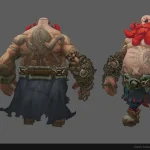



Starting 3D production without a clear concept may seem like a faster and more affordable approach.
In reality, it often creates additional production risks and leads to expensive rework later.
Without an approved concept, the 3D artist is not simply modeling an asset. They are also making important design decisions during production—often with limited visual direction and no clear target for approval.
The character’s shape, proportions, costume, style, materials, level of detail, and role in the game still need to be defined. When these decisions are made during modeling, even a small change can affect several stages of the production pipeline.
The team will have to make these decisions either way. The real question is where it wants to pay for them: earlier, during a flexible 2D concept stage, or later, when changing the design in 3D becomes slower and more expensive.

The Common Production Mistake
A common mistake is skipping the concept stage to save time or budget and moving directly into 3D.
This approach can work when the design, references, proportions, and visual style are already clearly defined. If they are not, production can quickly turn into a costly revision cycle:
- modeling the first version
- presenting it for review
- receiving major design feedback
- changing proportions or costume elements
- rebuilding parts of the model
- repeating the approval process
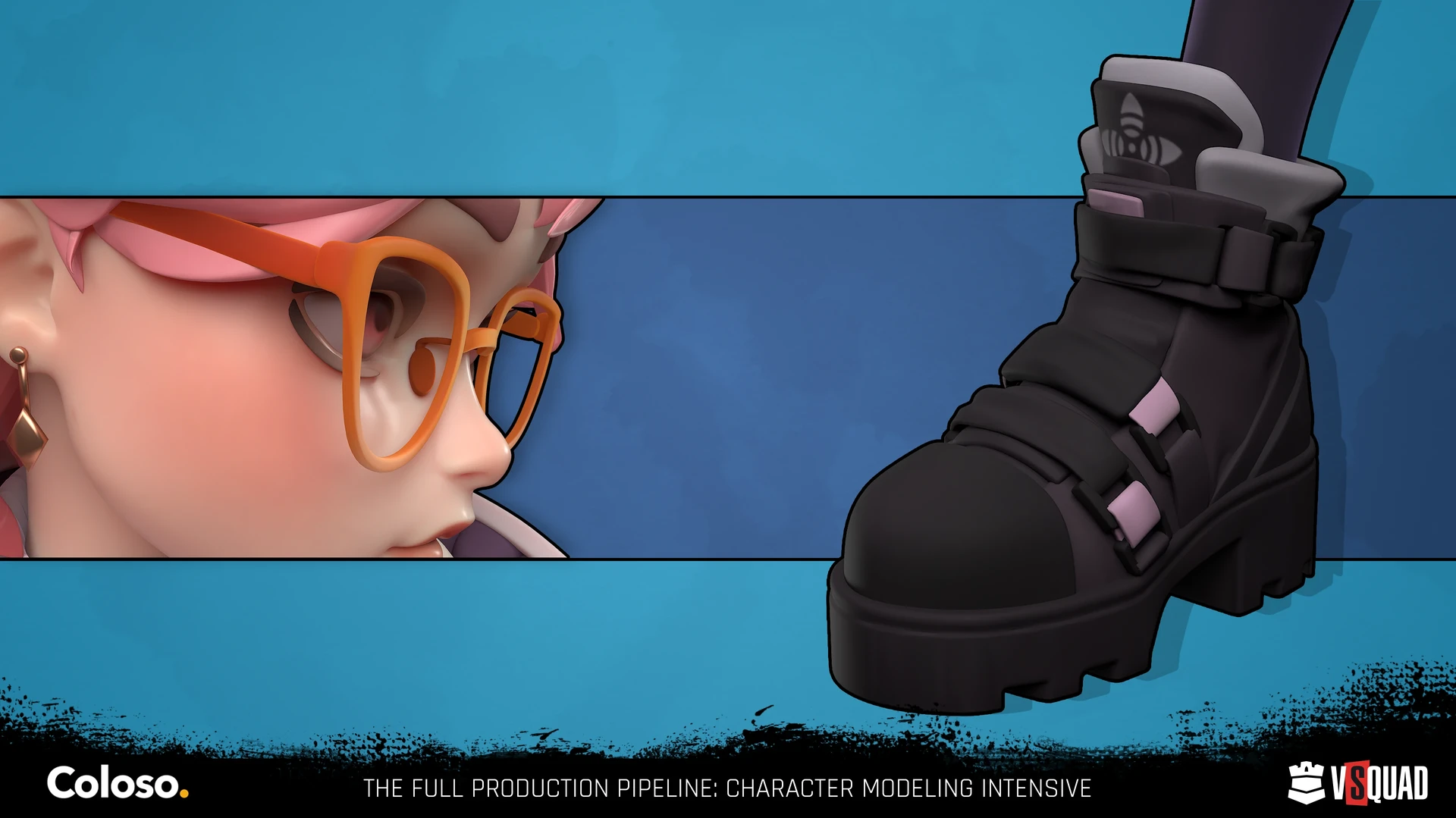
At that point, the 3D artist is using production time to solve design problems that could have been explored faster in 2D.
This does not eliminate the concept stage. It simply moves it into a slower and more expensive part of the pipeline.

Why “We Can Figure It Out in 3D” Is Risky
Some 3D artists can design directly in 3D.
However, artists who can do this well are relatively rare, and their work is usually more expensive.
Even with an experienced artist, the game team still needs to review and approve the visual direction. If the main idea changes after 3D production has started, the cost of revisions becomes much higher.

A quick shape adjustment in 2D can become hours of rework in 3D. A costume change in a sketch may require updates to the sculpt, topology, UVs, textures, materials, rigging, and approval process.
That is why “we can figure it out in 3D” is not always a safe production plan.
What a Concept Pass Should Solve
A concept pass does not need to be a polished illustration. Its purpose is to resolve the most important visual and production decisions before modeling begins.
At this stage, the team should define the character’s silhouette, body proportions, head and facial design, costume structure, and main shapes. The concept should also clarify the intended art style, material logic, and level of detail.

Production requirements matter as well. The design should account for the character’s gameplay role, typical camera distance, animation needs, and visual differences from other characters in the game.
The goal is not to create beautiful 2D artwork for its own sake. It is to give the team something clear to approve and provide the 3D artist with a reliable target for production.
When a Simple Concept Is Enough
Not every project needs a long concept art phase.
Sometimes the visual direction is already clear, and the team only needs a quick concept pass before 3D production begins.
A simple concept may be enough when the project already has:
- Strong visual references
- A clearly defined target style
- Existing character examples
- Approved body proportions
- Established material rules
- A clear gameplay role
- A defined camera distance
- A tightly controlled production scope

In this situation, a simple concept pass can be more practical than a polished illustration.
Its purpose is to confirm the direction and remove the most expensive unknowns before the character is modeled.
What VSQUAD Does
Before moving into 3D, VSQUAD can create or refine a concept pass.
This can be a fast visual direction check rather than a long concept art phase.
Depending on the project, it may include:
- quick sketches
- silhouette options
- proportion adjustments
- style corrections
- costume or armor logic
- simplified material notes
- front or three-quarter views
- callouts for important details
- production notes for the 3D artist
This gives the game team a clearer visual direction to approve before the expensive production stage begins. It also allows the 3D artist to work with fewer assumptions.

Why This Protects the 3D Budget
Changes made during 3D production rarely affect only the character’s appearance. A major design update may require adjustments to the sculpt, model, topology, UVs, textures, materials, rig, animation tests, and engine integration. It can also trigger additional feedback and approval rounds.

This is why even a simple concept pass can save more than it costs. It reduces the risk of building the wrong version of the asset and discovering the problem after several production stages have already been completed.
For indie teams, this is especially important because budgets are usually limited. Skipping concept art may appear cheaper at first, but the cost often returns later as expensive 3D rework.
For larger teams, an approved concept also helps maintain visual consistency across a character lineup, enemy set, or larger group of related assets.

The Result
A clear concept gives the team an approved direction and allows the 3D artist to work with fewer assumptions. It reduces the risk of using expensive production time for basic design decisions and helps prevent major rework after modeling begins.
The goal is simple: make important design decisions before they become expensive to change.
Get in touch
Got a project in mind? We usually reply within a day.