


Suppose you have a character concept. A cool design, an interesting silhouette – you can already see it in the game. And then the inevitable question arises: how much will it cost? One freelancer quotes $300, while another asks for $8,000. A studio writes “from $2,500.” It is unclear why there is such a wide range, and it is even more unclear whom to trust.
This is normal. Pricing in 3D is complex and multifaceted, and at first glance, it seems chaotic. In reality, there is logic behind every price tag: complexity, region, pipeline, the specialist’s level, and the number of services included in the cost. Once you understand this logic, everything falls into place.
This article will break down what a realistic 3D model price on the market is in 2025–2026, what influences it, and how to avoid overpaying – or how not to skimp where saving isn’t worth it.
Why the Question "How Much Does a 3D Character Cost" Has No Single Answer
If you google “how much does a 3D character model cost” and see a range from $500 to $40,000, it is not clickbait or a mistake. This is the market.
A character for a mobile casual game with 2,000 polygons and a basic set of textures is one type of job. A protagonist for an AA action game with high-poly sculpting, retopology, full PBR texturing, hair grooming, rigging, and a set of animations is quite another. Technically, these are both “3D characters,” but in terms of labor intensity, they differ like a bicycle from a motorcycle. This complexity determines how much does a 3D model cost in each specific instance.
Additionally, the price depends on who is doing the work and from where. A specialist from North America or Western Europe charges $80–150/hour. A studio from Eastern Europe charges $40–70/hour. A freelancer from Southeast Asia charges $15–40/hour. For the same result, the difference in the final total can be significant.
Real Figures: How Much a 3D Character Model Costs
Here is an approximate breakdown by character types and performers:
By Character Type:
| Model Type | Average Cost |
|---|---|
| Basic character (freelancer, small studio) | $1,000 – $5,000 |
| Stylized character for mid-core game | $2,000 – $5,000 |
| Stylized / cinematic AAA | $2,500 – $20,000 |
| Photorealistic or studio-level | $4,000 – $20,000+ |
By Performer Level (Hourly Rates):
| Specialist | Rate |
|---|---|
| Junior freelancer | $15 – $30/hour |
| Mid-level freelancer | $30 – $80/hour |
| Senior freelancer | $50 – $150+/hour |
| Studio / agency | $50 – $200+/hour |
These figures are neither a ceiling nor a guarantee. The final amount is always calculated for a specific project.

Fun Fact
The first fully 3D character in video games appeared in 1992 in the arcade game Virtua Fighter – and it cost SEGA developers an entire research program. The model consisted of only ~1,200 polygons. Today, a single piece of equipment for a AAA character can contain more geometry than that entire character did.
What Really Influences the 3D Modeling Price
Complexity and Polycount
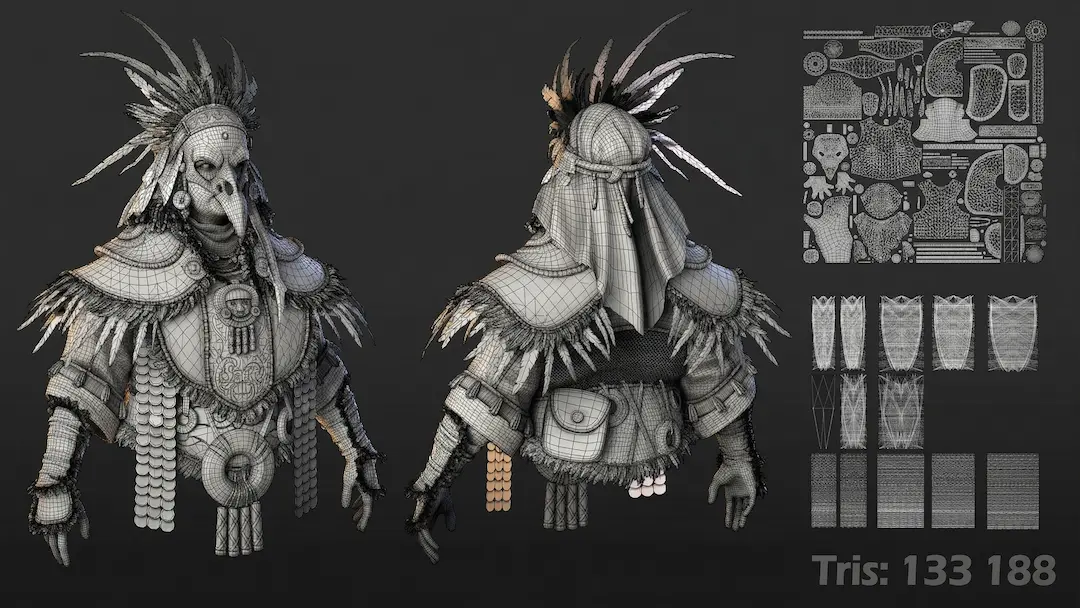
The more detailed the model, the more time is required for sculpting, retopology, and baking. A simple NPC with 5,000–15,000 polygons and a main character with 80,000–150,000 polygons represent entirely different workloads. Highly detailed models with elaborate armor details, faces, and clothing require weeks rather than days.
This is the primary factor that sets the 3D modeling price for high-end assets.
Texturing and Shading
UV unwrapping, PBR textures (albedo, roughness, metallic, normal map), hand-painted styles, or realistic finishes – each of these points adds hours. This is especially true if hand-painted styling is required to match a specific art direction. This is a separate discipline, and a good texture artist is valued accordingly.
Hair and Fur Grooming
This is one of the most expensive items in the pipeline. Realistic hair, beards, and fur elements – working in Ornatrix or Yeti requires specialization. Not every generalist has these skills, and those who do value their time highly.
Rigging and Animation
If a character needs to move, a rig is required. A basic skeleton for a game character, a facial rig for cutscenes, and cloth or hair physics are all separate tasks. Animations are calculated by the piece or by the second, and they can double the budget for a character.
Platform and Technical Requirements
A mobile game requires optimization for draw call optimization and polygon budget. A Console/PC project involves completely different budgets. If a model is intended for an Unreal Engine with Nanite, that is one thing. If it is for WebGL with strict limitations, it is another. Technical requirements determine both the volume of work and the competencies needed.
Deadlines
Urgency means additional costs. If something is needed faster than usual, studios and freelancers typically add 25–50% to the rate. This is not greed; it is the real cost of shifting priorities and working overtime.
Freelancer, Agency, or Outsource Studio: What to Choose
Freelancer – Optimal for a small, clearly defined volume of work. One character, a clear brief, and a non-critical deadline. The price is lower, but the risks are higher: illness, ghosting, or inconsistent quality. You can find them on Upwork or ArtStation.
Agency – A small team with a project manager. Flexibility is higher than with a freelancer but lower than with a large studio. This works well for mid-scale projects.
Outsource Studio – Necessary if you need a full team: several artists, an art director, QA, and a clear pipeline. It costs more on paper, but due to well-established processes, it often turns out cheaper in the end – fewer reworks and fewer lost iterations. This is the format most AA and AAA teams work with.
According to Grand View Research, the global 3D modeling market was valued at $7.1 billion in 2024 and continues to grow at double-digit rates. Automation tools are lowering the price for basic assets, but the quality tier for main characters is still determined by human expertise – and here, the price is justified.
Character Production Stages: What are You Paying for
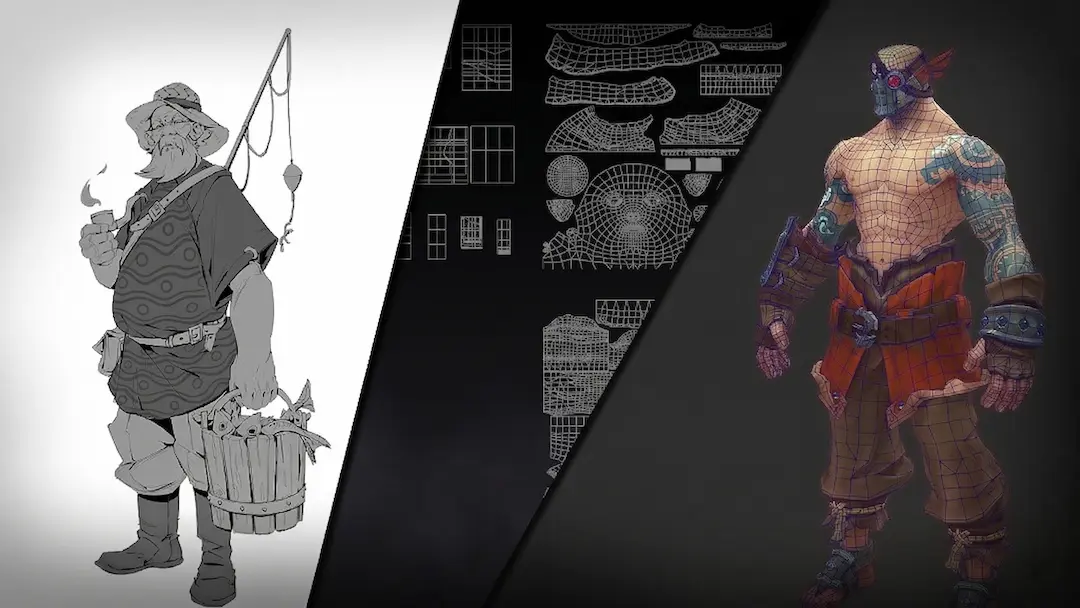
To understand the price, it is useful to know which stages the production of a 3D character actually consists of. It is not a single process; it is a chain where every link adds value.
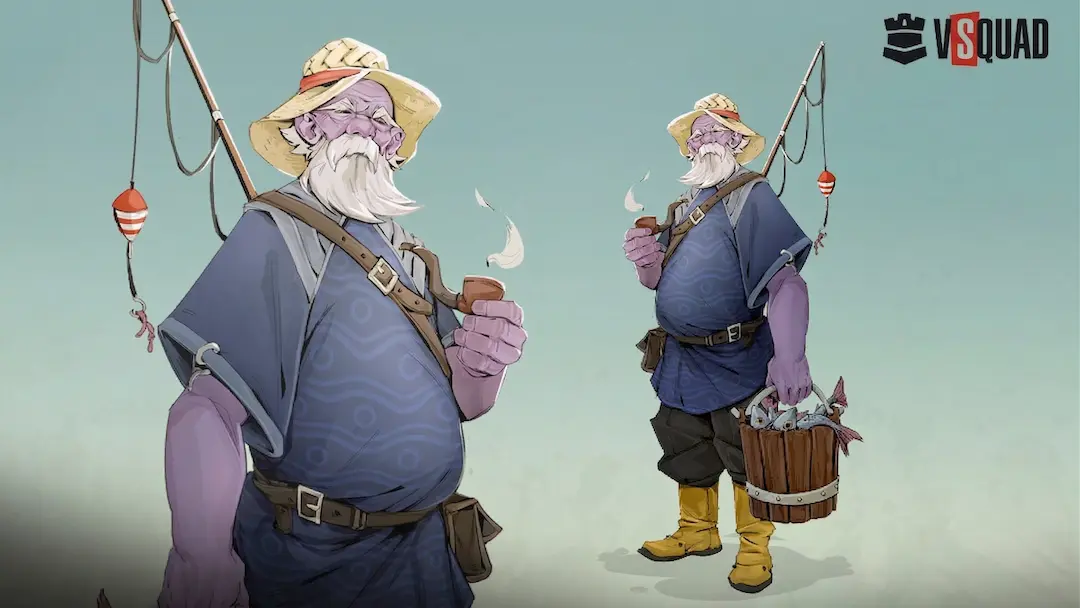
Concept and Art Direction. If you don’t have a ready-made concept, it needs to be created. A concept artist develops the silhouette, details, and color scheme. This is a separate job that costs $200–1,500+ depending on the complexity and the number of iterations.
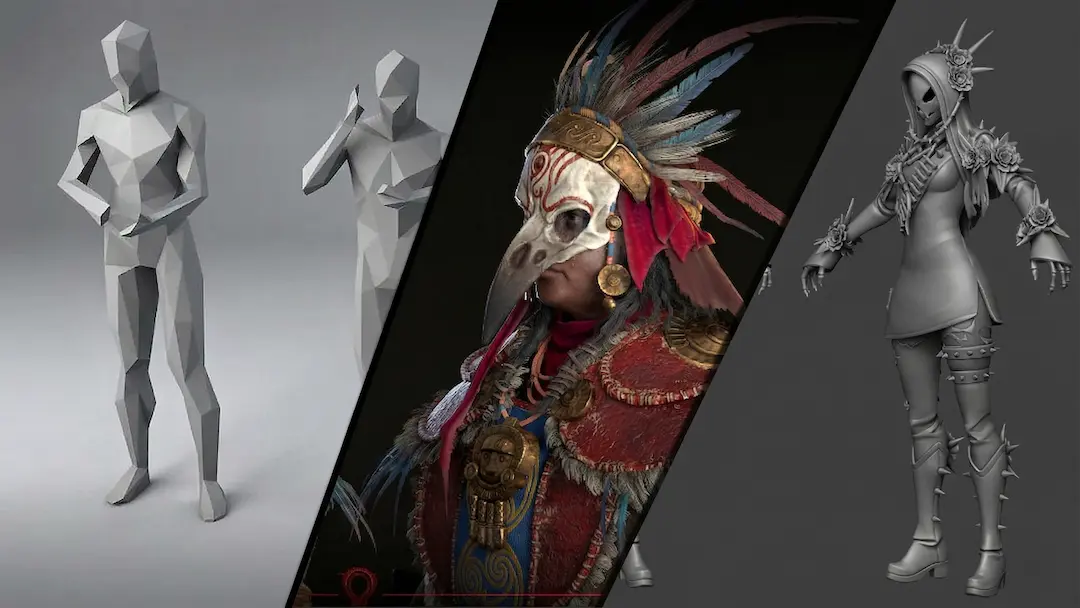
High-poly Sculpting. The artist sculpts a detailed model in ZBrush or a similar program. This is the foundation of everything: muscles, clothing folds, and skin micro-relief. The more complex the character, the more hours are spent at this stage.
Retopology. A high-poly model doesn’t go directly into the engine – it is too heavy. Retopology creates a clean, optimized mesh with correct edge loops for deformations. Without high-quality retopology, animation will look poor.
UV Unwrapping and Baking. Layout, transferring details from high-poly to low-poly through baking normal maps, AO, and curvature. This is a technically meticulous stage – errors here will show up in the final render.
Texturing. PBR textures in Substance Painter or equivalent: albedo, roughness, metallic, normal map, and emissive if needed. Hand-painting for stylization takes more time than a procedural approach.
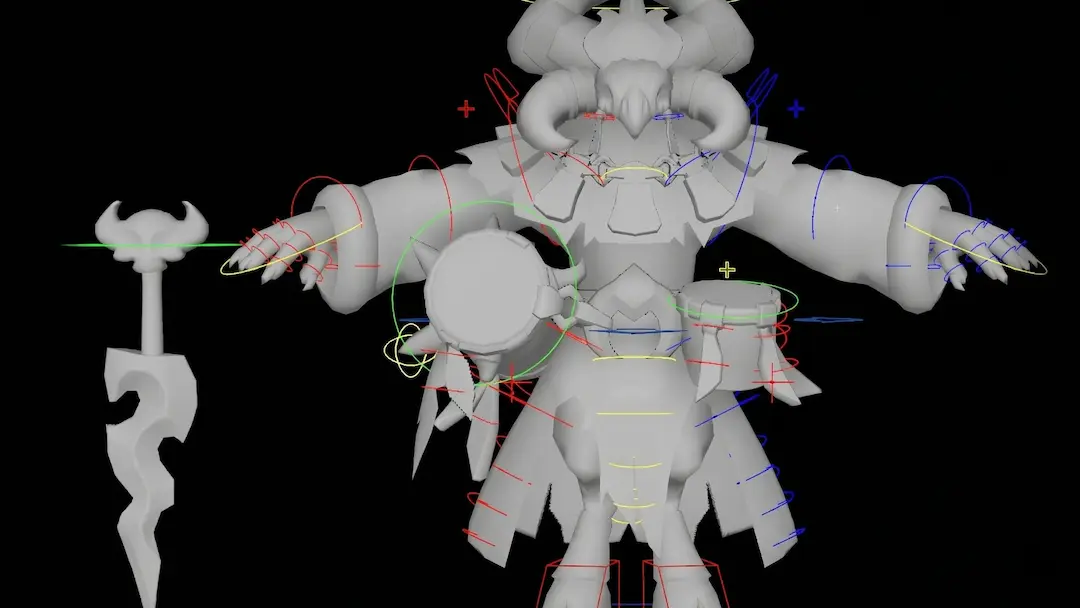
Rigging. Skeleton and skin weights – so that the character deforms correctly during movement. A facial rig for cutscenes is a separate specialization and requires an additional budget.
Final Optimization and Export. LOD versions for different distances, material setup for a specific engine (Unreal, Unity, Godot), and verification in the editor. Without this, a model might look great in a portfolio but break in production.
When you see a low price, it is worth asking: which of these stages are actually included in the cost? Sometimes “cheap” simply means a smaller volume of work, not a more efficient artist.
How to Understand if the 3D Modeling Services Price is Adequate
Here are a few practical markers:
Too cheap is also a risk. $200 for a game-ready character with textures is either very simplified work, a stock asset, or a future headache with rights and quality. Therefore, verify that the 3D modeling services price aligns with industry standards.
Portfolio decides everything. Look at the style. If a studio makes cartoony characters and you need realism, these are different competencies. Look for works that are as similar as possible to what you need.
Clarify what is included in the cost. A basic mesh is one thing. Mesh + textures + rig + LODs + export to engine is quite another. A good briefing at the start saves money at the finish.
Monitor communication. If a request is not answered for 24 hours, feedback is poorly understood, or intermediate stages are not shown, it is a signal. A normal pipeline involves regular updates.
How to Save Without Losing Quality
Several working strategies:
– Stylization is cheaper than realism. If the game style allows it, low-poly or stylized characters require fewer hours for sculpting and textures.
– A clear brief equals fewer edits. Every iteration costs money. Concept art, references, and technical requirements should all be provided at the start.
– Prioritize by importance. The main hero deserves a premium budget. Background NPCs can be made with less detail.
– Pilot asset. Before ordering 20 characters, order one. Check the pipeline, quality, and communication.
How to Determine 3D Model Commission Prices When Working With an Artist
If you are an artist yourself and looking for an answer to the question of how much to charge for 3D modeling, the logic is the same, just from the other side. Focus on:
– The hourly rate for your region and level.
– Task complexity: Calculate the hours, multiply by the rate, and add a 15–20% buffer.
– Included services: Modeling, textures, rig, LOD – each is accounted for separately when setting your 3D model commission prices.
– Urgency: Rush projects cost more; this is an industry standard.
To establish fair market rates, it is useful to study real first-hand experience in hiring artists – Game Developers have published such breakdowns with specific figures and briefing tips.
About VSQUAD Studio
VSQUAD Studio has been a full-cycle outsource studio since 2015. Over ten years, we have implemented more than 50 projects for teams from the USA, Norway, Germany, Brazil, and other countries. Our work can be found in Wayfinder, Darksiders Genesis, Battle Chasers, Ruined King, and SMITE. We join a team within 48 hours – with an art director, artists, and a clear pipeline. Winners of the Consumer Choice 2024.
If you need a specific cost calculation for your project, write to us: head@vsquad.art
FAQ
A basic game character with a low polycount and standard textures will cost between $1,000 and $3,000. If you need a rig and a basic set of animations, add another $500–1,500 on top.
A studio is not just one person, but a team with an art director, QA, and an established process. There is less risk, consistent quality, and manageable deadlines. The difference in price is often compensated by savings on reworks.
Most often, rigging, animations, LOD versions for different platforms, and export for a specific engine are separate items. Always clarify at the start exactly what is included in the cost.
The standard rush coefficient in the industry is an additional 25–50% to the base rate. If the deadline is critical, warn about it immediately – this allows for team planning and avoids misunderstandings.
Yes, and this is the correct practice. A pilot asset allows you to check the pipeline, style, communication, and quality before you invest the budget into a full batch.
Create a clear brief: style, platform, polycount, and whether you need a rig and animations. Send it to 2–3 studios or several freelancers and compare the estimates. This will give you a real market snapshot for your specific task.
What is Behind the Price
The cost of 3D modeling is not a random number. Behind it are hours of sculpting, iterations in Marvelous Designer, dozens of texture maps, and years of artist practice. By understanding what makes up the cost, you can make informed decisions: where to save without losing quality and where saving is not worth it.
If you are looking for a team for a specific project, VSQUAD Studio is ready to discuss the details. No extra words, straight to the point.
Have a project? Contact us —> 📩 head@vsquad.art or schedule a call.
Get in touch
Got a project in mind? We usually reply within a day.