



Finished games are often judged by what players can see.
Players notice mechanics, visuals, content updates, progression systems, and polish. What they rarely see is the production discipline that allows those things to exist in the first place.
Behind every successful game sits a long chain of decisions about scope, priorities, team structure, market positioning, and execution. For founders building their own studios, those decisions are often more important than the original idea itself.
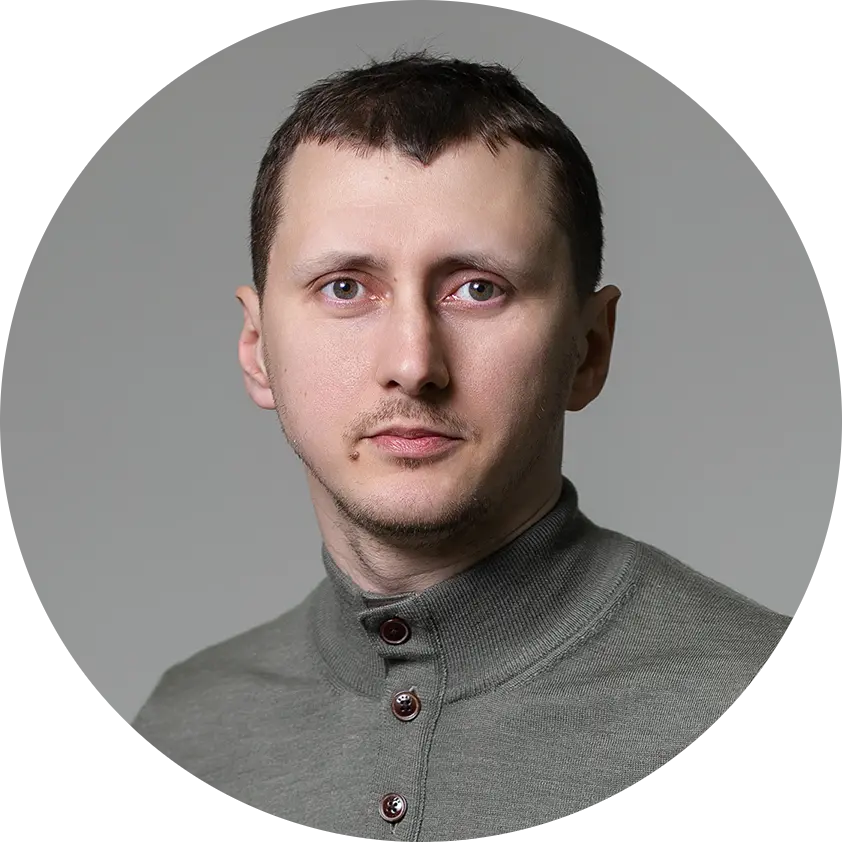
Robert Wasser has spent more than two decades navigating both sides of the games industry. Before co-founding Wild Labs in Stockholm, he spent over thirteen years at DICE and EA, working in leadership roles across large-scale game productions. Later, he co-founded Wild Games, a mobile studio backed by Supercell, before launching Wild Labs and returning to the challenge of building games in a smaller, more entrepreneurial environment.
His experience spans AAA development, mobile games, live operations, team leadership, studio creation, and product strategy.
In our interview for VSQUAD, Robert shares the production lessons that stayed with him from large-scale development, explains why scope remains one of the biggest threats to game teams, and discusses what founders should learn from AAA production without blindly copying it.

Main Topics:
– Game production
– Studio leadership
– Team building
– Market validation
– AAA production
– Startup development
Why Production Is About Clarity
Many developers associate production with schedules, meetings, milestone reviews, and project management software.
Production leaders often see it differently.
The real purpose of production is not to create more process. It is to create enough clarity that talented people can make good decisions without constantly waiting for approval. This becomes increasingly important as projects grow in complexity. Large teams create more dependencies, more communication challenges, and more opportunities for misunderstandings. At the same time, small startups face a different problem: they simply do not have enough people to solve every issue through management oversight.
In both cases, clarity becomes one of the most valuable production tools available.
Q: You spent many years inside DICE and EA before founding your own studios. What production lessons from that time still stay with you today?
A: At DICE and EA, I worked on large-scale games with big teams, heavy dependencies, global collaboration, live operations, and very high expectations from players. In that kind of environment, you learn quickly that production is not just about schedules and meetings. It is about creating clarity so talented people can do their best work.
The lesson that still stays with me is the importance of intent. People need to understand not only what they are doing, but why it matters. If the team only understands the task, they can execute. If they understand the intent, they can make better decisions without waiting for permission. That becomes even more important in a smaller studio. You cannot solve everything with process, and you cannot have leadership involved in every detail. You need a team that understands the goal, the constraints, the player, and the business reality.
Another lesson is that scope is one of the most dangerous things in game development. Big games do not fail only because the idea is bad. They often fail because the team tries to build too much, too late, with too many dependencies and not enough hard decisions. Good production is often about forcing those hard decisions earlier.
The last thing I would mention is live development. Once you have worked on games that players return to over time, you stop thinking of a game as a single release. You start thinking about loops, retention, content, community, operational rhythm, and how the team learns from real player behavior. That mindset is very useful when building your own studio.
Building a Studio Without a Safety Net
One of the biggest misconceptions about founding a game studio is that it simply means having more freedom.
In reality, founders often trade organizational support for responsibility.
Large companies have entire departments dedicated to recruiting, finance, legal operations, publishing support, HR, and business development. Most of that infrastructure becomes invisible until it disappears. The transition from established studio to startup forces leaders to think beyond game development and into company building.
Q: What changed the most for you when you moved from a large studio environment into building your own studios?
A: The biggest change is that you cannot take anything for granted.
In a large studio, even in a senior role, you are still operating inside a well-established system. There are departments responsible for recruiting, finance, legal support, publishing, HR, and countless other functions that help the company run. Many of those systems become invisible simply because they work. That infrastructure allows people to focus deeply on their own responsibilities.
When you build your own studio, that safety net disappears.
Suddenly, you are building the system while trying to operate inside it. You are thinking about the game, the team, the budget, hiring, contracts, fundraising, company culture, market positioning, and product direction all at once.
Every decision feels closer. Every mistake feels larger.
The pace changes as well. Small companies can move incredibly quickly compared to larger organizations. Decisions that might take weeks in a AAA studio can happen in a single conversation. That speed is powerful, but it comes with risk. Bad decisions travel just as fast as good ones. A weak hire, unclear priorities, or unrealistic scope can affect the entire company almost immediately because there are fewer buffers protecting the team.
Ownership changes too.
Inside a large company, you can care deeply about the project, but ultimately it still belongs to a larger organization. As a founder, everything becomes personal. The company reflects your decisions, your leadership, and your ability to adapt when things go wrong. That can be a tremendous source of energy, but it can also become dangerous if you become emotionally attached to an idea that is no longer working.
For me, the transition was largely about learning how to combine the discipline of AAA development with the realities of a startup environment.
You need structure, but not bureaucracy.
You need ambition, but not delusion.
You need speed, but not recklessness.
What Small Studios Should Learn From AAA Development
Many founders look at successful AAA studios and assume their success comes from complex processes, detailed documentation, and large organizational structures. Robert believes that assumption misses the point. The value of AAA production is not found in the paperwork. It is found in the discipline behind it.
Large studios develop processes because they need ways to coordinate hundreds of people working toward a common goal. Smaller teams face different challenges and should be careful about copying solutions designed for much larger organizations.
The lesson is not to copy the machinery but to understand why the machinery exists.
Q: Large studios often have structure, process, and many specialists. Smaller teams need speed and focus. What should founders learn from big production, and what should they avoid copying?
A: Founders should learn the discipline, not copy the machinery. Large studios are very good at managing complexity. They create alignment, ownership, planning cadences, review structures, milestones, and ways of coordinating large groups of people around a shared goal.
Those principles matter regardless of team size.
Even a small studio needs clarity around priorities, decision-making, quality expectations, scope, and ownership. What small teams should avoid is copying process without understanding why it exists. A large organization may require specific approval flows, meetings, documentation, or reporting structures because hundreds of people depend on them. A five-person team usually does not. For smaller studios, process should be lightweight and practical.
If a process helps the team make better decisions, keep it. If it creates noise without adding value, remove it.
One of the biggest mistakes founders make is assuming that professionalism means more process.
It does not.
Professionalism means understanding what matters, making decisions based on reality, and consistently following through.
At any given moment, a team should be able to answer a few simple questions:
— What are we trying to prove?
— What player experience are we building toward?
— What is our riskiest assumption?
— What are we deliberately choosing not to do?
— Who owns the next decision?
And perhaps most importantly:
— Does the team genuinely believe in what it is building?
Process can support conviction, but it cannot replace it. When people understand the direction and believe in it, teams can stay lean and move quickly. When they do not, additional process often serves only to hide deeper problems.
Finding the Balance Between Passion and Market Reality
Every founder faces the same tension at some point.
Should the team build the game they are passionate about, or should they build the game the market appears to want?
Following trends too closely often produces generic products. Ignoring the market entirely can lead to years of effort spent on something players never asked for. The challenge is finding the intersection between enthusiasm and opportunity. The best projects tend to emerge when a team’s unique interests align with a real audience need.
Q: When you build a new game, how do you balance personal creative ambition with what the market actually seems to need?
A: I think you have to respect both sides.
If you only chase the market, you risk building something generic. If you only follow personal creative ambition, you risk building something nobody asked for.
The best place is usually where the team’s genuine obsession meets a real market opportunity. As a founder, you need to ask yourself why your team is uniquely positioned to make this game.
What do you understand better than others? What excites you enough to push through the difficult stages of development?
At the same time, you need to be honest about the audience.
Who is this game for? Why would players care? What are they already playing instead?
I do not believe the market should dictate every creative decision. That often leads to weak products. However, the market should challenge your assumptions.
Loving an idea is not enough.
You need to understand the audience, genre expectations, platform realities, acquisition channels, retention challenges, content requirements, and competitive pressures.
Creative ambition gives a game its identity. Market understanding gives it a chance to survive.

Evaluating Crowded Genres
Q: In a market where many teams are chasing similar genres and trends, how do you look for a space that is still worth entering
A: You have to be very honest about whether you are entering a market with a real angle or just copying what already worked for someone else. A crowded genre is not automatically bad; it can mean there is demand. But if the market is crowded and you do not have a sharp point of difference, you are in trouble.
I look for a few specific criteria:
- Is there a strong audience behavior already there?Are players spending time, money, and attention in this space?
- Are there frustrations or underserved needs? Sometimes players like a genre but are tired of how it is being executed.
- Can our team bring something credible and distinctive? That might be production quality, a design twist, a tone, a business model, a platform approach, or a specific understanding of the audience.
- Is the scope realistic for us? A market might be attractive, but if the cost of entry is too high, it is not a good opportunity for that team.
The mistake is to look at a successful game and think, “we can make one of those”. The better question is, “what has changed that creates room for us now?”
Filtering External Noise
Q: Before committing to a direction, how much should founders test the idea with investors, publishers, advisors, or other people outside the team?
A: You should test it enough to expose weak thinking, but not so much that you outsource your conviction. Outside feedback can be very useful, especially from people who understand the market, funding, publishing, or the genre. They can tell you if your pitch is unclear, if your scope looks unrealistic, if your audience is vague, or if your business assumptions are weak.
But feedback can also become noise. If you ask ten people, you may get ten different opinions, and many of them will be reacting from their own context.
Investors might think about fundability.
Publishers might think about portfolio fit.
Advisors might think from past experience.
All of that is useful, but none of it replaces founder judgment. Founders should use outside feedback to sharpen the idea, not to decide whether they believe in it. Even after more than 20 years in the games industry, I still think it is hard to look at a game in an early state and accurately extrapolate what the final experience might become.
If that is hard for people who have made games for a long time, it will be even harder for someone seeing your prototype for the first time.
That is why you need to be specific about what you are testing.
— Are you testing the market?
— The pitch?
— The team credibility?
— The business model?
— The fantasy?
— The prototype?
If you ask vague questions, you get vague feedback. Listen carefully, look for patterns, but keep ownership of the vision.
Building the Early Team: Trust, Overlap, and Playbooks
Q: How do you think about building a team when every hire can change the company?
A: In a young studio, every hire is a culture decision, a production decision, and a business decision at the same time. In a startup, you cannot afford people who are only good in narrow conditions. Early teams need people who can handle uncertainty, communicate clearly, take ownership, and still care about quality when things are messy.
Seniority can help, but seniority alone is not enough. Some senior people are great in large systems but struggle when the structure is not already built. In a small studio, you need people who can both do the work and help shape how the work gets done. At Wild Games, we worked with a few interns as well, and it was interesting to see how clearly this showed up. Some people thrived with the freedom and uncertainty, while others struggled without more structure around them.
Trust is critical. As CEO, I try to be open and transparent about decisions, priorities, and the state of the studio. In return, I expect the team to show the same transparency back —not in a soft way, but in a very practical way:
— Can this person make good decisions when I am not in the room?
— Can they disagree without creating politics?
— Can they raise risks early?
— Can they stay focused when the studio is under pressure?
At Wild Labs, we have published our Playbook on our website. Part of the reason is to be clear about how we think and work, so we attract people who would actually thrive in a studio like ours. Early hiring is not just about skills; it is about fit, trust, ownership, and whether someone makes the company stronger by being in it.
I also think founders need to be careful about hiring too early. Every person adds cost, complexity, and communication overhead. But hiring too late can also break the team if the founders are carrying too much for too long. The right early hires multiply the company; the wrong hires consume it.
Ruthless Scope and Large Ambition
For many first-time founders, the biggest trap is the desire to realize their “dream game” in all its imagined scale. In an attempt to compete with industry giants, young studios often fall into a vicious cycle of endlessly adding new features, mechanics, and modes, hoping to make their project better. However, experienced producers know that feature creep is the ultimate killer of independent projects, burning through budgets long before the game ever finds its true shape.
Q: If you could give one honest production lesson to a founder building their first game studio, what would it be?
A: Be ruthless about scope, but not small in ambition.
A lot of founders confuse ambition with size. They think an ambitious game needs more features, more systems, more content, more modes, more everything. Usually, that is how you kill the game before it has a chance. The real job is to find the smallest version of the idea that still proves the magic.
That takes discipline. It means cutting good ideas. It means saying no to things you personally like. It means being honest about money, team capacity, time, and whether the game is actually getting better or just getting bigger.
Production is not there to reduce creativity. Good production protects creativity from collapsing under its own weight. So my advice would be:
• know what you are trying to prove,
• build around that,
• and make the hard decisions early.
The hard decisions do not disappear because you avoid them; they just become more expensive.

The Perspective of Intent-Driven Design and Smart Scoping
Robert Wasser’s insights accurately highlight a reality we navigate every day at VSQUAD Studio: a game’s success is rarely determined by the sheer volume of features, but by a ruthless discipline in managing scope. When a team tries to build too much, too late, the project risks collapsing under its own weight before it ever reaches players.
Whether we are crafting high-quality 2D and 3D art or stepping in to provide full-cycle game development it is clear that no asset or mechanic exists in a vacuum. Every element sits inside a larger production ecosystem, carrying technical dependencies, pipeline costs, and budget implications. A character, environment, or kit shouldn’t just look beautiful. It must serve a distinct gameplay intent and be built with a clear understanding of the project’s business and technical realities.
“Production is not there to reduce creativity. Good production protects creativity from collapsing under its own weight.”
Great games are not built by endless feature creep. They are forged through the ability to make hard trade-offs early, streamline production pipelines, and collaborate with the right full-cycle partners who multiply the studio’s capabilities rather than adding to its complexity.
Explore more behind-the-scenes stories in our exclusive interview series. We have many more conversations with industry visionaries coming soon, so be sure to visit us again.
Get in touch
Got a project in mind? We usually reply within a day.


